
Disclosure: This post may contain affiliate links. If you buy through them, we may earn a small commission at no extra cost to you.
As an Amazon Associate I earn from qualifying purchases.
The Bottom Line: Sandals That Don’t Make Plantar Fasciitis Worse
The best supportive sandals for plantar fasciitis have real arch support, a heel cup or heel cradle, cushioning that does not collapse, and straps that keep your foot stable. If a sandal is flat, floppy, or makes you grip with your toes to keep it on, your plantar fascia may end up doing extra work every step.
Quick Answer
Supportive sandals can work for plantar fasciitis if they act more like supportive shoes than flimsy flip-flops. Look for a contoured footbed, arch support, heel stability, secure straps, and enough cushioning to soften impact on hard surfaces.
Medical note: This guide is educational and based on personal experience plus reputable medical sources. It is not a diagnosis or treatment plan. If your heel pain is severe, persistent, worsening, or affecting how you walk, please talk with a qualified healthcare professional.
This Guide Is for You If…
- You love sandals but your heel does not love flat flip-flops.
- You want summer footwear that does not leave you limping later.
- You need arch support and heel stability, not just “soft and cute.”
- You want to know when sandals are fine — and when sneakers are the smarter move.
Flip-flops: easy, breezy, and for plantar fasciitis, often a direct flight to Heel Scream City. We have both done the “quick trip outside” that somehow turns into 3,000 surprise steps and a cranky heel the next morning.
The good news is you do not have to wear hot sneakers all summer long. There are sandals that give your foot real support while still letting your toes enjoy a little freedom and fresh air.
Want the big picture? Start here:
Best Footwear for Plantar Fasciitis 2026: The Ultimate Guide.
1) Why Most Sandals Make Plantar Fasciitis Mad
Plantar fasciitis usually gets worse when your foot keeps taking repeated stress without enough support. That is why reputable medical sources commonly recommend supportive shoes, arch support, cushioning, stretching, and other conservative care steps instead of flat, unsupportive footwear during flare-ups.
A lot of sandals fail the test because they are too flat, too floppy, or too loose. Your foot ends up doing extra work every step just to stay stable. That may not seem like much in the moment, but your heel tends to send you the bill later.
References:
Mayo Clinic: Plantar Fasciitis Diagnosis & Treatment |
Cleveland Clinic: Plantar Fasciitis
2) The 4 Plantar Fasciitis-Friendly Sandal Features That Actually Matter
- Real arch support: actual shape and structure, not just soft foam pretending to be helpful.
- Heel cup or heel cradle: helps keep your heel stable instead of sliding around.
- Secure straps: your toes should not have to grip the sandal to keep it on.
- Cushioning that does not collapse: especially under the heel, where a lot of the pounding happens.
Action Box: The 60-Second Sandal Reality Check
- [ ] Do I feel arch support, not just squish?
- [ ] Is there a heel cup or heel cradle?
- [ ] Do the straps keep my foot stable?
- [ ] Am I not gripping with my toes to keep it on?
- [ ] Would I trust this on a hard floor for 30 to 60 minutes?
3) Cheap Flip-Flops vs Real Support Sandals
Here is the plain-English difference:
- Cheap flip-flops: flat, floppy, unstable, and often a bad bargain for heel pain.
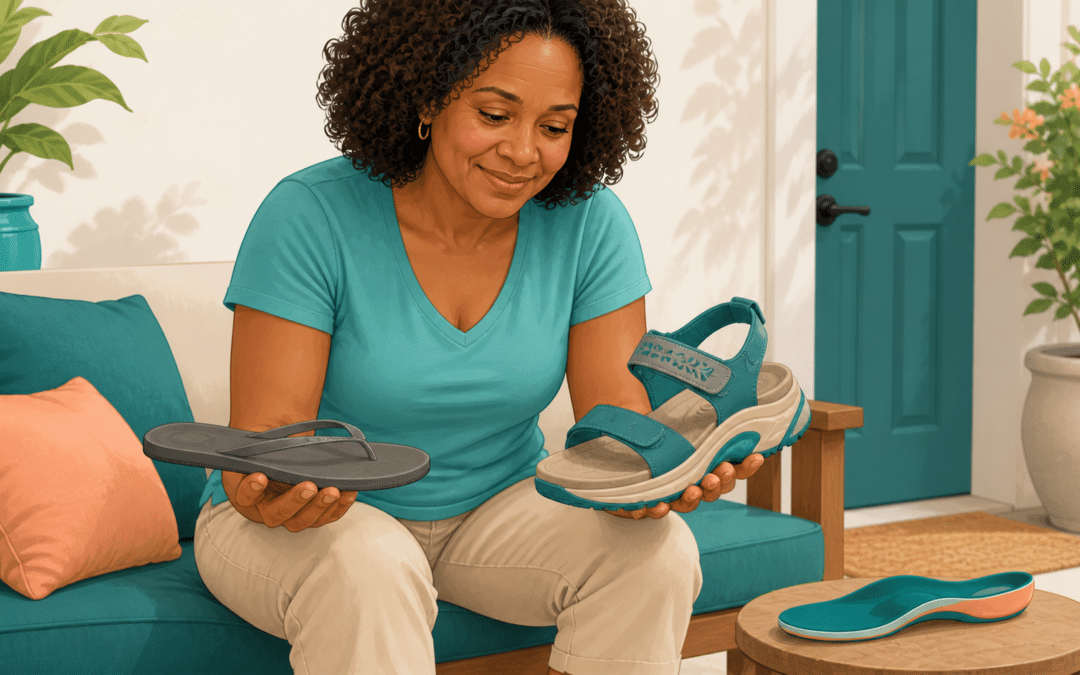
- Support sandals: structured footbed, more stable heel position, and straps that let your foot relax instead of fight the shoe.
If you are already in a flare-up, supportive shoes are often the safer bet, especially for longer walking or standing. Sandals can absolutely work, but they need to be genuinely supportive, not just marketed with happy words and beach vibes.
Reference:
Cleveland Clinic: Plantar Fasciitis
4) Supportive Sandal Picks
These are common support-sandal options people often look at for plantar fasciitis comfort. The key is not the logo. The key is whether your foot feels stable, supported, and calm in the actual model you choose.
- Soft recovery-style cushioning:
OOFOS - Orthotic-friendly, adjustable support:
OrthoFeet sandals - Dressier support styles:
Vionic sandals
Quick note: the best sandal is usually the one your foot stays stable in, especially at the heel. If you feel your heel sliding around, your plantar fascia is usually the poor sap that pays for it.
5) When Sandals Are Smart — and When Sneakers Win
- Good times for sandals: quick errands, casual summer days, indoor use, post-work decompression, or beach/pool situations if the sandal is actually supportive.
- Sneakers usually win when: you will be walking a lot, standing for hours, carrying weight, or your plantar fasciitis is already flaring hard.
Lisa’s caution: “Sandals are freedom. But if my heel is already mad, I go back to supportive sneakers until the flare cools off.”
For heavier walking days, see
Sneaker Confidential: Everyday Shoes for Plantar Fasciitis That Don’t Betray You.
6) Fit and Break-In Still Matter, Even With Sandals
- Break them in slowly: 30 to 60 minutes the first day, then build up.
- Watch for toe-gripping: if you are clawing to keep the sandal on, that is a red flag.
- Try them later in the day: feet swell, so fit for real life, not morning optimism.
- Replace them when the support collapses: flattened footbeds are basically a pain boomerang.
If you want a broader look at support and inserts, also see
Why Insoles Matter for Plantar Fasciitis in 2026
and
2026 Guide: When to Replace Your Plantar Fasciitis Shoes.
7) The Sandal Mistakes That Quietly Cost You
- Keeping “yard sandals” by the door: those quick trips become real mileage fast.
- Choosing soft over stable: squishy is nice, but unstable squishy is still a problem.
- Ignoring heel slide: if your heel is wandering, your foot is working overtime.
- Wearing dead sandals out of habit: if the footbed is flattened, the sandal has retired. It just forgot to tell you.
FAQ: Sandals and Plantar Fasciitis
Q: Are flip-flops always bad for plantar fasciitis?
A: A lot of them are too flat and unstable. If a flip-flop is truly supportive with arch support and heel stability, it can work for some people, but most cheap pairs do not qualify.
Q: Do I need a heel cup in a sandal?
A: It helps a lot. A heel cradle or heel cup reduces sliding and helps keep your foot aligned with each step.
Q: Can I wear sandals all day?
A: Maybe, but if your plantar fasciitis is flaring, all-day sandals often backfire. Shorter outings are usually the safer test.
Q: Are recovery sandals enough for long walks?
A: Not always. Recovery sandals can feel great after activity, but for longer walks, many people do better in supportive sneakers or walking shoes.
Q: What is the fastest way to tell if a sandal is wrong for me?
A: If you feel worse after a short test wear, or you are gripping with your toes to keep it on, send it back. Your feet do not need character-building footwear.
Q: When should I see a healthcare professional?
A: If pain is severe, persistent, or not improving with supportive changes and basic home care, it is time to get evaluated.
Wrap-Up: Summer Feet, Not Summer Regret
Plantar fasciitis does not mean you are sentenced to sneakers forever. Pick sandals with real arch support, heel stability, cushioning, and secure straps, then wear them strategically instead of assuming every sunny day is a flip-flop emergency.
Your heel should not have to file a complaint with HR every time the temperature hits 80.
Next steps:
Back to the Footwear Pillar Guide
and, for the broader relief plan,
Healing Plantar Fasciitis Naturally: 5 Proven Home Remedies for Fast Relief.
Keep reading
- Start here: Best Footwear for Plantar Fasciitis 2026: The Ultimate Guide
- Vionic vs OrthoFeet vs Skechers for Plantar Fasciitis
- When to Replace Plantar Fasciitis Shoes
- Best Slippers for Plantar Fasciitis in 2026
Medical Disclaimer: Bob and Lisa are not doctors. We’re sharing personal experience and practical, empathy-first guidance. For medical advice, diagnosis, or treatment plans, please consult a qualified healthcare professional. We reference reputable sources for general education.