
Disclosure: This post may contain affiliate links. If you buy through them, we may earn a small commission at no extra cost to you.
Quick Answer: The Best Slippers Protect You From Your Own Floors
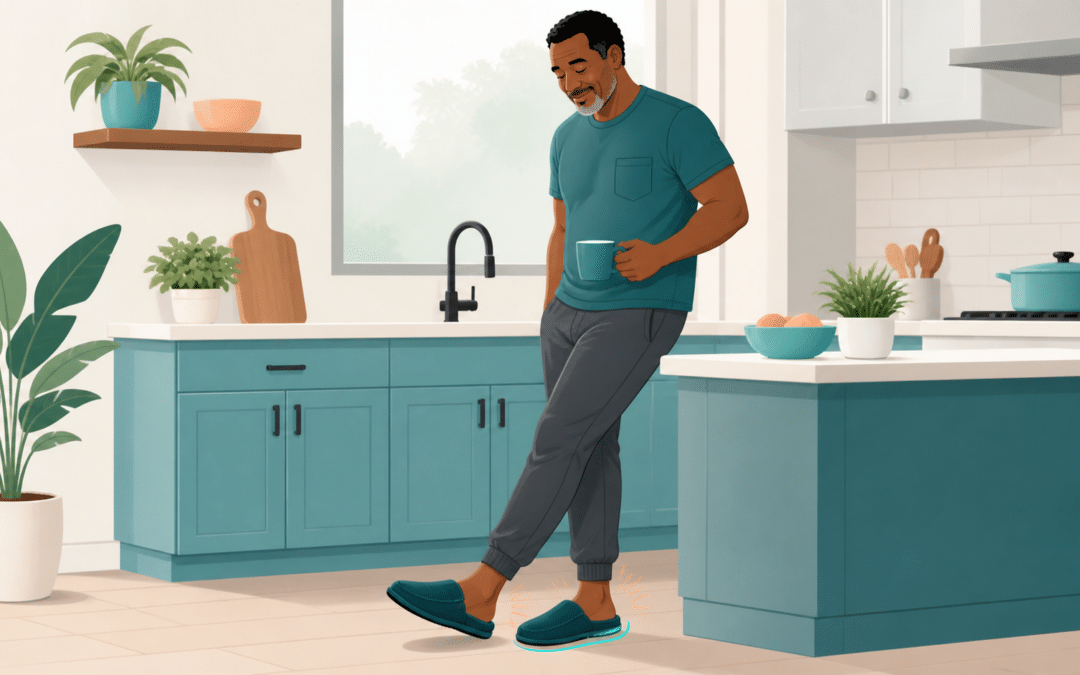
The best slippers for plantar fasciitis have real arch support, a stable heel area, cushioning that does not collapse, and a secure fit that keeps you from shuffling or toe-gripping. If hard floors make your heel pain worse, supportive slippers or house shoes can help you avoid barefoot steps at home — one of the sneakiest ways plantar fasciitis keeps poking the bear.
Medical Note
Supportive slippers are not a cure for plantar fasciitis. They are a practical comfort and protection tool. If your heel pain is severe, sudden, spreading, or not improving with home care, check with a qualified healthcare professional.
Home Should Not Be a Heel-Pain Ambush
Home is supposed to be where your feet relax.
Then plantar fasciitis shows up, points at the kitchen floor, and says, “Ah yes, the perfect place to restart the war.”
If you limp across tile in the morning, avoid standing at the counter, or do that suspicious little heel-sparing hobble when nobody is watching, this guide is for you.
Because one of the simplest plantar fasciitis upgrades is also one of the easiest to ignore: stop walking barefoot on hard floors.
Want the big picture? Start with our footwear hub: Best Footwear for Plantar Fasciitis.
This Guide Is for You If…
- You have heel pain that gets worse on hardwood, tile, vinyl, concrete, or other hard floors.
- Your first steps in the morning feel like stepping on a hidden Lego brick from the underworld.
- You spend time standing in the kitchen, laundry room, garage, basement, or workshop.
- Your current slippers are soft but flat, floppy, crushed, or slippery.
- You want an easy indoor footwear upgrade before buying more complicated plantar fasciitis gear.
1) Why Barefoot at Home Can Keep Plantar Fasciitis Angry
Plantar fasciitis is commonly linked to irritation and strain in the thick band of tissue that supports the arch of your foot. Repeated impact, poor support, worn-out shoes, and hard surfaces can all make the problem harder to calm down.
That is why medical sources commonly recommend supportive footwear, arch support, cushioning, stretching, and avoiding barefoot walking during recovery.
Helpful references: Mayo Clinic: plantar fasciitis diagnosis and treatment | Cleveland Clinic: plantar fasciitis | AAOS OrthoInfo: plantar fasciitis and bone spurs
Lisa’s version is painfully simple: “My third bout of plantar fasciitis started because I got lazy about wearing support in the house. Barefoot on hard floors was not my finest strategic decision.”
Action Box: The 10-Second Home Floor Test
- [ ] Do your heels feel worse after walking barefoot on tile, hardwood, or concrete?
- [ ] Are your first few steps in the morning the worst part of the day?
- [ ] Do you stand on hard floors while cooking, doing dishes, or sorting laundry?
- [ ] Do your feet feel tired, sore, or unsupported indoors?
- [ ] Are your current slippers soft but basically flat pancakes with fluff?
If you checked one or more boxes, supportive slippers are not a luxury. They are part of your home-defense system.
2) What Makes a Slipper Good for Plantar Fasciitis?
The best slippers for plantar fasciitis are not just fuzzy. Fuzzy is nice. Fuzzy is emotionally supportive. But your plantar fascia does not care if your slippers look like sleepy teddy bears if the footbed underneath is flatter than a defeated pancake.
Look for these features first:
- Real arch support: Choose a contoured footbed that supports the arch instead of a flat foam pad.
- Heel cup or heel cradle: A more stable heel area helps keep your foot from wobbling around inside the slipper.
- Secure fit: The slipper should stay with your foot without forcing you to curl your toes to keep it on.
- Cushioning that holds up: Heel cushioning should feel protective, not mushy and collapsed after a few weeks.
- Grippy sole: You want traction on slick floors, especially if you are moving from carpet to tile or stairs.
- Indoor/outdoor sole: Useful for mailbox missions, dog duty, garage trips, and other “I’ll only be outside for ten seconds” lies we all tell ourselves.
Bob’s tip: “I used to wear backless slippers and shuffle around like a budget zombie. If your slippers make you shuffle, they are not helping the mission.”
3) Slippers vs. House Shoes: Which Is Better?
The names get used interchangeably, but there is a useful difference:
- Slippers usually lean softer, warmer, and more lounge-focused.
- House shoes usually have more structure, a firmer sole, and better heel containment.
For plantar fasciitis, the winner is not the label. The winner is the structure.
A supportive slipper can work beautifully. A flat house shoe can still be a heel-pain trap. Your foot does not care what the product page calls it. Your foot cares whether it gets arch support, heel stability, and shock absorption.
4) The Slipper Styles That Usually Work Best
Here is the field guide version — because wandering through slipper listings without a plan is how a person ends up buying something that looks cozy and performs like a wet sandwich.
Supportive Closed-Back Slippers
These are often a strong choice because they hold the heel better than a loose mule. If you are dealing with active heel pain, a closed-back or more secure slipper may reduce the need to grip with your toes.
Orthotic-Friendly House Shoes
Some house shoes have removable insoles, which can be handy if you already use an over-the-counter or custom orthotic. This can be a good middle ground between a slipper and a full indoor sneaker.
Supportive Slides
A supportive slide can work if it has a deep heel cup, arch support, and enough strap coverage to keep your foot stable. But flimsy slides and cheap flip-flop-style house footwear are usually not your heel’s best friends.
Amazon Associate Statement
As an Amazon Associate I earn from qualifying purchases. We only mention products or product categories that fit the practical support features discussed in this guide.
5) Supportive Slippers and House Shoes to Consider
These are not magic slippers. Sadly, nobody has issued the wizard-grade plantar fascia footwear yet. But these are the kinds of supportive indoor options many people look at first when home floors are making heel pain worse.
- Orthotic-friendly supportive house shoes: OrthoFeet slippers / house shoes
- Deep heel cup support slides: Spenco supportive slides
- Cozy moc-style slippers with a sturdier sole: Acorn moc slippers
Lisa’s note: “For me, plush lining is great, but support matters more. A soft slipper with no structure feels nice for five minutes. Then my heel starts writing complaint letters.”
If you need more structure than slippers can give you, consider wearing supportive indoor shoes instead. Our hub guide can help you compare footwear categories: Best Footwear for Plantar Fasciitis.
6) Fit Rules: How to Avoid Buying the Wrong Slippers
A supportive slipper still has to fit your actual foot, not the imaginary foot the manufacturer seems to think everyone owns.
- No toe-gripping: If you have to curl your toes to keep the slipper on, try a more secure upper or closed-back design.
- No heel wobble: Your heel should feel guided, not like it is wandering off to start a side quest.
- No arch jab: Arch support should feel supportive, not like a small angry turtle under your foot.
- No crushed footbed: If the cushioning flattens quickly, the slipper may stop protecting your heel.
- No slick sole: Slippers should not turn your kitchen into a low-budget ice rink.
If you already use inserts, look for slippers or house shoes with removable insoles. For more on why inserts matter, read: Why Insoles Matter for Plantar Fasciitis.
7) The Home Habit That Makes Slippers Work Better
Supportive slippers help reduce unnecessary irritation from hard floors. But they work best as part of a simple recovery routine: stretching, sensible activity, and supportive footwear outside the house too.
A quick calf stretch or plantar fascia stretch in the morning and evening can help reduce tension pulling through the heel and arch. Harvard Health and AAOS both discuss stretching as part of conservative plantar fasciitis care.
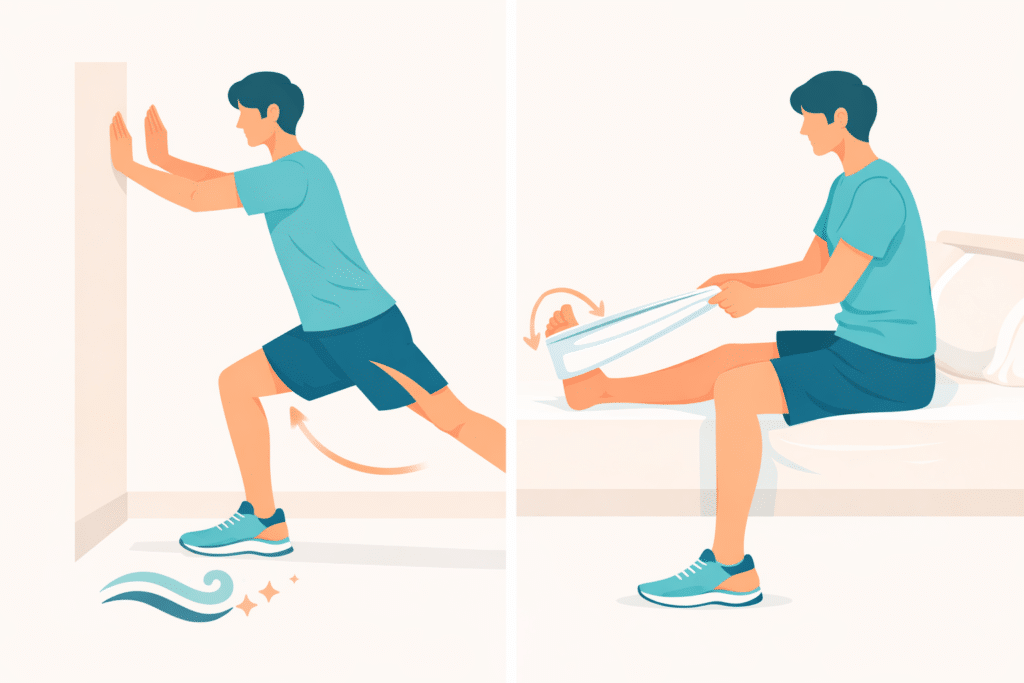
Standing wall calf stretch + seated towel stretch
Helpful stretch references: Harvard Health: plantar fasciitis symptoms, causes, and treatments | AAOS OrthoInfo: stretches and nonsurgical care
8) When Slippers Are Not Enough
Supportive slippers are useful, but they are not always enough. If your heel pain is flaring hard, you may need more structure than a slipper can provide.
That might mean wearing a supportive sneaker indoors for a while, using inserts, avoiding long standing sessions, stretching consistently, or asking a healthcare professional whether other options make sense.
- Severe morning pain: ask a professional whether a night splint is appropriate for your situation.
- Old flattened footwear: worn-out shoes and slippers may stop giving the support your feet need. See: When to Replace Your Plantar Fasciitis Shoes.
- Pain that will not improve: do not keep throwing slippers at a problem that needs evaluation.
FAQ: Slippers for Plantar Fasciitis
Q: Are slippers actually good for plantar fasciitis?
A: They can be, if they have real arch support, cushioning, and heel stability. Flat, floppy slippers may feel cozy but still leave your plantar fascia unsupported.
Q: Should I wear slippers instead of going barefoot at home?
A: If hard floors aggravate your heel pain, supportive slippers or house shoes are usually a smarter choice than going barefoot.
Q: Are backless slippers bad for plantar fasciitis?
A: Not always, but they can be a problem if they make you shuffle or curl your toes to keep them on. A secure fit is usually better.
Q: Are house shoes better than slippers?
A: Sometimes. House shoes often provide more structure and heel containment. But a supportive slipper can still work well if it has arch support, cushioning, and a secure fit.
Q: Can I put orthotics in slippers?
A: Sometimes. Look for slippers or house shoes with removable insoles and enough depth to fit your insert without crowding your foot.
Q: When should I replace plantar fasciitis slippers?
A: Replace them when the footbed flattens, the heel feels less stable, the sole becomes slippery, or your heel pain starts creeping back.
Q: When should I see a healthcare professional?
A: If pain is severe, persistent, worsening, or not improving with supportive footwear and basic home care, get evaluated.
Final Takeaway: Make Home the Place Your Heels Recover
If plantar fasciitis is flaring, barefoot-at-home can keep the irritation cycle going. Supportive slippers and house shoes give your feet protection every time you cross the kitchen, stand at the sink, or make the heroic journey from couch to coffee.
Start with structure: arch support, heel stability, cushioning, secure fit, and a sole that will not betray you on hard floors.
Next steps: Read the full footwear hub here: Best Footwear for Plantar Fasciitis. For the broader home-care plan, see: Healing Plantar Fasciitis Naturally: 5 Proven Home Remedies for Fast Relief.
Keep reading
- Start here: Best Footwear for Plantar Fasciitis 2026: The Ultimate Guide
- Supportive Sandals for Plantar Fasciitis 2026
- Vionic vs OrthoFeet vs Skechers for Plantar Fasciitis
- Office Shoes for Plantar Fasciitis: 9-to-5 Comfort
Medical Disclaimer: Bob and Lisa are not doctors. We’re sharing personal experience and practical, empathy-first guidance. For medical advice, diagnosis, or treatment plans, please consult a qualified healthcare professional. We reference reputable medical sources, including Mayo Clinic, Cleveland Clinic, Harvard Health, and AAOS OrthoInfo, for general education.