
Disclosure: This post may contain affiliate links. If you buy through them, we may earn a small commission at no extra cost to you.
What are the best strengthening exercises for plantar fasciitis relief?
The best strengthening exercises for plantar fasciitis relief include towel stretches, towel scrunches, heel raises, rolling massage, and wall calf stretches. Together, they help improve foot strength, calf flexibility, arch support, and daily pain control.
Medical note: Bob and Lisa are not doctors. We’re sharing what helped us and what reputable medical sources commonly recommend. If your pain is severe, persistent, worsening, or affecting how you walk, see a qualified healthcare professional.
This guide is for you if:
- your heel pain is worst first thing in the morning,
- you want simple exercises you can do at home,
- you need to strengthen your feet without expensive equipment,
- or you keep getting flare-ups because your calves, arches, or feet are tight and weak.
Part of our home-treatment series: For the full recovery overview, start with our Healing Plantar Fasciitis Naturally: 5 Proven Home Remedies for Fast Relief guide.
Building a Foundation for Your Feet
Plantar fasciitis can turn everyday movement into a painful negotiation with your own feet. You stand up, your heel complains, and suddenly walking to the coffee maker feels like crossing the Oregon Trail in bad shoes.
Stretching helps loosen tight tissue. But long-term relief often also depends on strengthening the muscles that support your arch, stabilize your heel, and reduce strain on the plantar fascia.
In this guide, we’re going to walk—carefully—through five simple exercises that can help support plantar fasciitis recovery. As Lisa often reminds me, our feet have a lot of colorful names in everyday language, but when they hurt, we usually only have one word for it:
“Ouch.”
If your feet feel extremely tight first thing in the morning, start gently. Do not launch into exercise like you’re training for the Foot Olympics. Begin with light stretching, then build gradually.
Good next step: If morning stiffness is your biggest problem, also see our step-by-step plantar fasciitis stretch guide.
Bob & Lisa’s simple exercise rule:
Start easy. Stay consistent. Stop if you feel sharp pain. Plantar fasciitis recovery is not about heroic suffering. It is about calmly doing the boring stuff until your foot stops acting like a tiny drama goblin.
Before You Start: Exercise Safety Basics
These exercises should feel like gentle work, not punishment. Mild pulling, stretching, or muscle effort is normal. Sharp pain is not.
- Start slowly. Try fewer reps at first and build up.
- Use support. Hold a wall, counter, or chair when balance is involved.
- Do not force painful motion. Your foot is not a rusty hinge that needs brute strength.
- Wear supportive footwear afterward. Do not do the exercises and then walk barefoot on hard floors.
As an Amazon Associate I earn from qualifying purchases.
Helpful setup:
You do not need fancy gear for these exercises. A towel, a chair, a wall, and a tennis ball can get you started. If you want dedicated tools, a massage ball or foot roller can make rolling work easier, and supportive plantar fasciitis slippers or recovery sandals can help keep your progress from getting undone by barefoot walking at home.
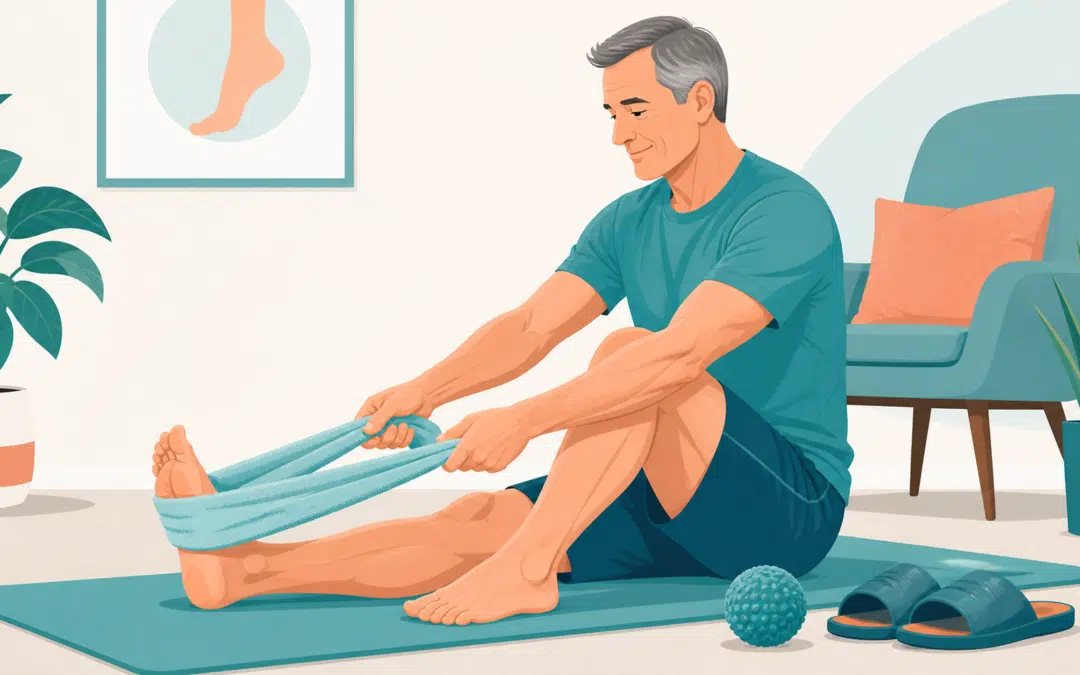
1. The Towel Stretch: The Morning Wake-Up
This gentle move targets both the plantar fascia and the calf muscles. It is especially useful before your first steps of the day, when plantar fasciitis often feels the angriest.
How to do the towel stretch
- Sit on the floor, your bed, or a firm chair with one leg extended.
- Loop a towel or resistance band around the ball of your foot.
- Gently pull the towel toward you while keeping your leg straight.
- Hold for 15–30 seconds.
- Repeat 3 times per foot.
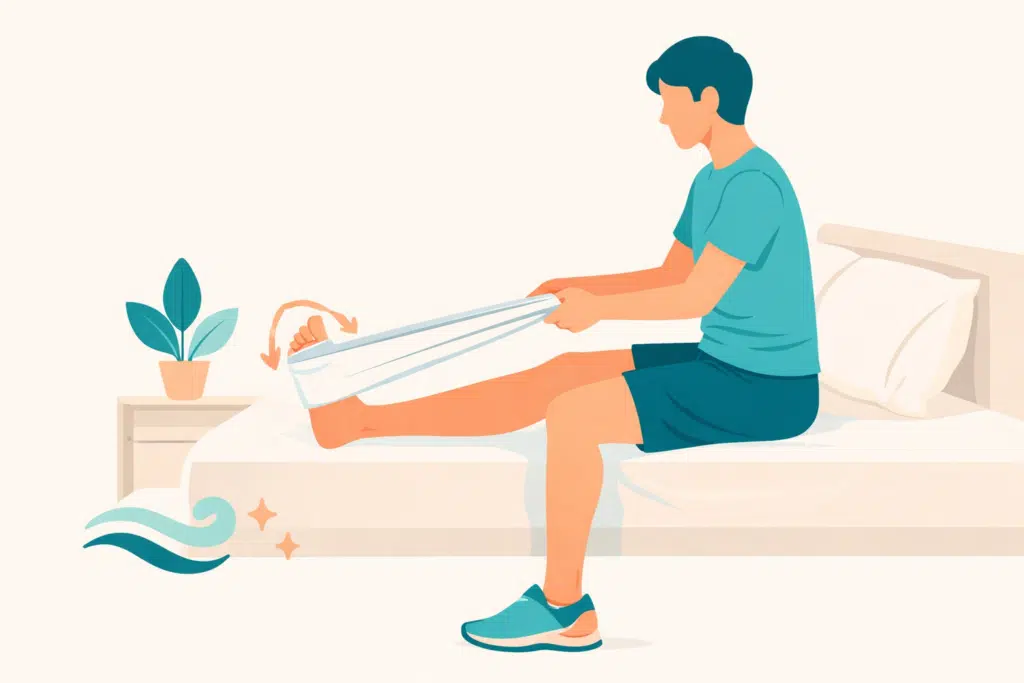
Seated towel stretch for plantar fasciitis relief.
Bob’s aside: If you have lower back problems like I do, regular calf stretching can make a surprising difference. A nurse once taught me this stretch when I asked her opinion about back surgery. Sometimes the simple stuff earns its keep.
Medical Authority: National Library of Medicine – Plantar Fascia Stretching Effectiveness
2. Towel Scrunches: Strengthen the Small Foot Muscles
Towel scrunches help strengthen the small muscles in your feet and toes. Those muscles help support your arch, which can reduce daily stress on the plantar fascia.
This is not glamorous. You are basically making your toes do laundry. But your feet may thank you.
How to do towel scrunches
- Sit in a chair with your feet flat on the floor.
- Place a small towel under one foot.
- Use only your toes to scrunch the towel toward you.
- Relax your toes and repeat.
- Try 1–2 minutes per foot at first, then build gradually.
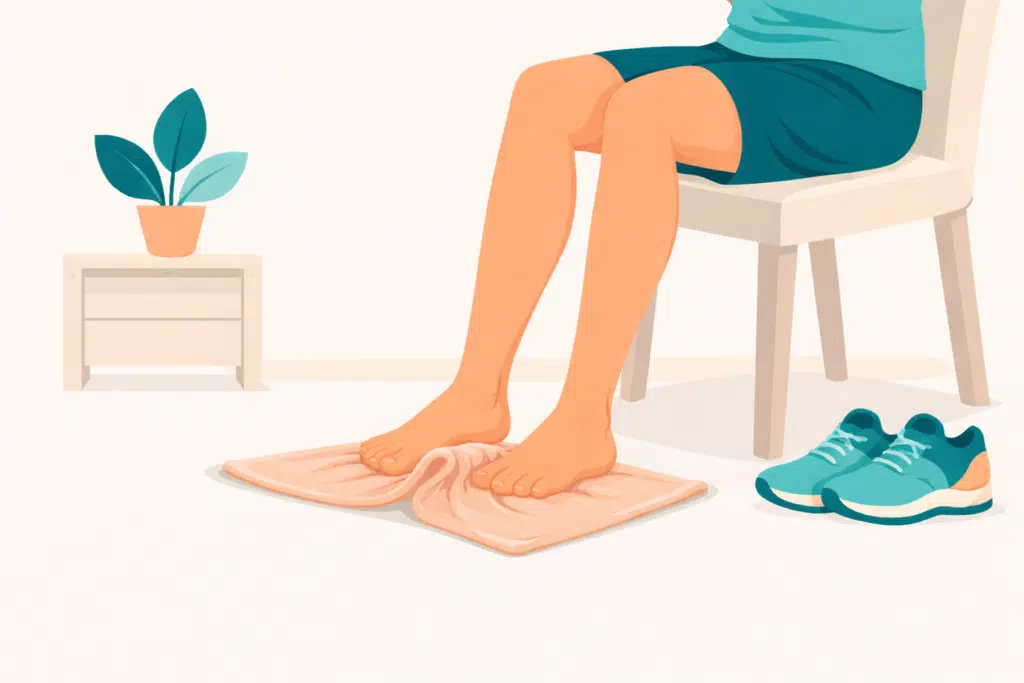
Towel scrunches help strengthen the small muscles that support your arch.
Common mistake: Do not grip so hard that your foot cramps. This should feel like controlled strengthening, not a toe-powered wrestling match.
Medical Authority: AOFAS – Plantar Fasciitis
3. Calf Raises: Build Support From the Ground Up
Stronger calves can help reduce strain on your heel and arch. Calf raises also help improve lower-leg strength and control, which matters every time you walk, stand, climb stairs, or pretend you are “just going to do one quick errand.”
How to do calf raises
- Stand with your feet about shoulder-width apart.
- Hold a sturdy counter, wall, or chair for balance.
- Slowly rise onto your toes, lifting your heels off the ground.
- Pause briefly at the top.
- Lower your heels slowly and with control.
- Start with 1 set of 10 reps. Build toward 2 sets of 15–20 reps as tolerated.
Bob’s Reality Check: Lisa says I should hold onto a sturdy counter for this, especially since I’m 68 and have a reputation for being “clumsy.” I prefer the term “coordinate-challenged,” but she has a point. Do not fall over trying to fix your feet.
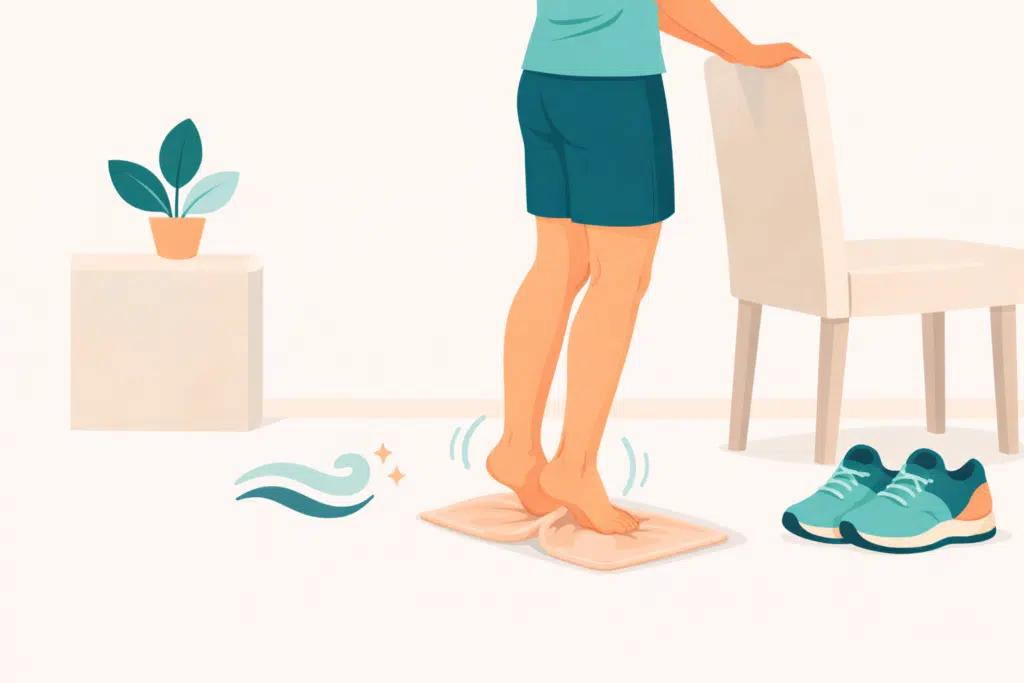
Heel raises build calf strength, but use support if your balance is questionable.
Make it easier: Use both feet and a counter for support.
Make it harder later: Once pain is under control and balance is solid, you can progress slowly—but do not rush. Your foot is not impressed by macho nonsense.
Medical Authority: Harvard Health – Stretches to Help Ease Plantar Fasciitis
4. Rolling Massage: Calm the Angry Arch
Rolling your foot over a small object can massage the plantar fascia and help the bottom of the foot feel less tight. It is especially useful after standing, walking, or wearing shoes that were apparently designed by someone who hates humanity.
How to do rolling massage
- Sit in a chair with your foot resting on a tennis ball, massage ball, foot roller, or frozen water bottle.
- Slowly roll from the ball of your foot toward the heel.
- Focus on the arch area, especially just in front of the heel.
- Use moderate pressure only.
- Start with 1–2 minutes per foot.
Lisa’s Tip: Frozen water bottles are great because you get massage and cold therapy in one move. It is like a mini-spa day for your heels, assuming your spa has fluorescent lighting and a freezer.
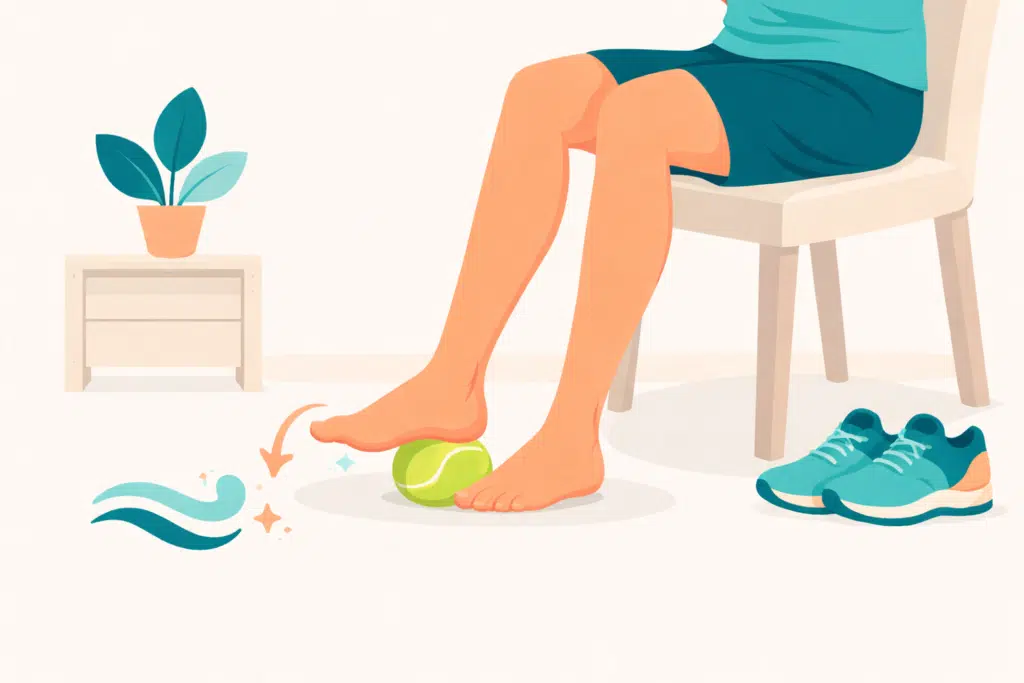
Helpful tool: Many readers find a dedicated plantar fasciitis massage ball or foot roller easier to control than a tennis ball. A firmer texture can help you keep the pressure steady without chasing a tennis ball across the room like a confused house cat.
Medical Authority: Mayo Clinic – Plantar Fasciitis Diagnosis & Treatment
5. Wall Calf Stretch: Loosen the Chain
Tight calves can increase tension through the Achilles tendon and plantar fascia. That is why the wall calf stretch shows up so often in plantar fasciitis routines.
This stretch is simple, effective, and deeply unglamorous. Perfect.
How to do the wall calf stretch
- Stand facing a wall with your hands flat against it.
- Step one foot back, keeping that leg straight.
- Keep the back heel flat on the floor.
- Bend your front knee and slowly lean toward the wall.
- Hold for 20–30 seconds.
- Repeat 3 times per side.
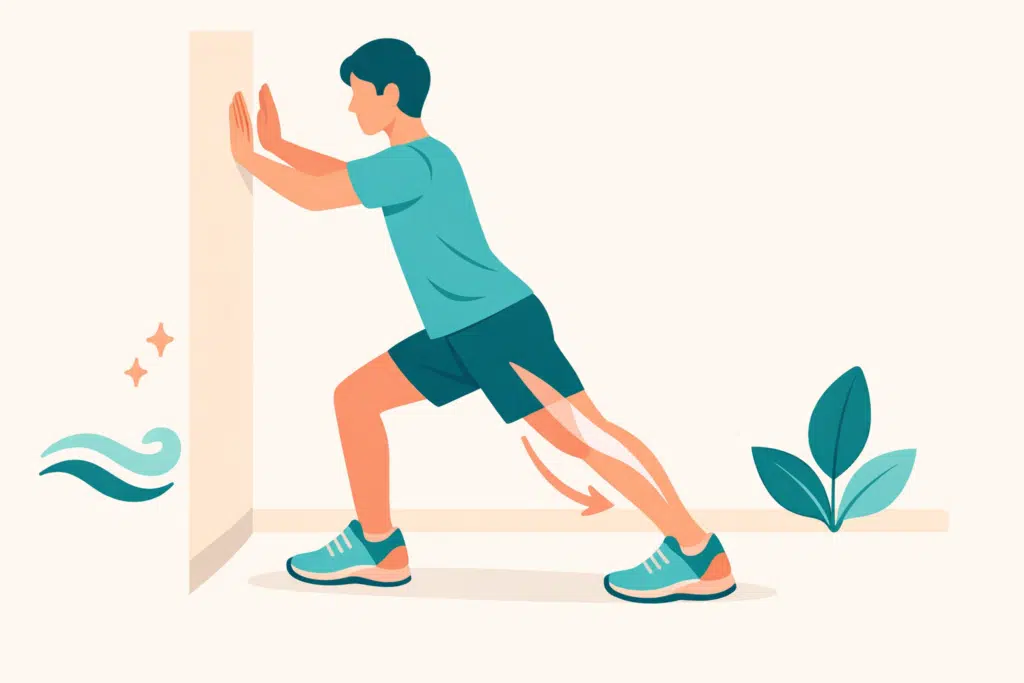
Standing wall calf stretch for plantar fasciitis relief.
Good next step: For a fuller stretching routine, see our Effective Stretches for Heel Pain Relief: Step-by-Step guide.
Medical Authority: AAOS – Plantar Fasciitis and Bone Spurs
Which Exercise Should You Start With?
If you are overwhelmed, start with the exercise that matches your biggest problem.
| If your main problem is… | Start with… | Why it helps |
|---|---|---|
| First-step morning pain | Towel stretch | Gently loosens the fascia and calf before walking |
| Weak arches or foot fatigue | Towel scrunches | Strengthens small muscles that help support the arch |
| Weak calves or poor lower-leg support | Calf raises | Builds strength and control through the lower leg |
| Tight, sore arch | Rolling massage | Helps reduce tightness and makes the foot feel less angry |
| Tight calves | Wall calf stretch | Reduces tension that can pull through the heel and fascia |
A Simple 7-Day Starter Routine
Do not try to become a plantar fasciitis ninja on day one. Start with a simple routine you can actually repeat.
- Morning: Towel stretch before your first serious walking.
- Midday or evening: Towel scrunches for 1–2 minutes per foot.
- Evening: Rolling massage for 1–2 minutes per foot.
- Daily: Wall calf stretch, 3 rounds per side.
- Every other day: Calf raises, starting with 1 set of 10.
Do not undo the work:
After you stretch and strengthen, protect your feet. Walking barefoot on hard floors can restart the irritation cycle. Supportive indoor footwear matters, especially first thing in the morning.
Home support option: Browse supportive plantar fasciitis slippers or recovery sandals on Amazon.
When to Stop or Get Checked Out
These exercises should help you build strength and flexibility over time. They should not make your pain sharply worse.
Consider getting medical help if:
- your pain is severe,
- you are limping or changing how you walk,
- your symptoms keep getting worse,
- you have numbness, tingling, major swelling, or unusual symptoms,
- or you have tried conservative care for several weeks with no real improvement.
There is no bonus prize for suffering longer than necessary.
FAQ: Strengthening Exercises for Plantar Fasciitis
Should I stretch or strengthen first?
If your foot is stiff or painful, start with gentle stretching first. Strengthening is important, but it usually goes better when the tissue is warmed up and not screaming at you.
How often should I do plantar fasciitis exercises?
Many people do best with gentle daily stretching and several strengthening sessions per week. Start small and build gradually. Consistency matters more than intensity.
Can these exercises make plantar fasciitis worse?
They can if you push too hard, do too much too soon, or ignore sharp pain. Keep the movements controlled and gentle. Back off if your pain increases.
Do I need special equipment?
No. A towel, chair, wall, and tennis ball can get you started. A massage ball, foot roller, or supportive slippers can make the routine easier, but they are optional.
Should I keep walking while doing these exercises?
Often, yes—but only if walking does not make your pain worse. Supportive shoes, good inserts, and shorter walks may help. For more guidance, see our Walking with Plantar Fasciitis guide.
Consistency Wins the Race
Plantar fasciitis is stubborn, but consistency is its kryptonite. Stretch a little. Strengthen a little. Massage a little. Support your feet better. Then repeat.
This is not about forcing your foot into submission. It is about giving your arch, heel, and calf muscles the support they need so your plantar fascia can calm down and recover.
Bob’s golden rule still applies:
If it hurts sharply, be gentle. Recovery is not a toughness contest.
Ready for the next step?
Medical Disclaimer: Bob and Lisa have no medical training. We share personal experience and practical, empathy-first guidance. For diagnosis, treatment, or medical advice, consult a qualified healthcare professional.