
Disclosure: This post may contain affiliate links. If you buy through them, we may earn a small commission at no extra cost to you.
Can you keep walking with plantar fasciitis?
Yes, many people can keep walking with plantar fasciitis if they use supportive shoes, avoid barefoot walking, start with short distances, stretch before and after, and use cold therapy if pain flares afterward. The key is moderation: walking should not sharply increase your heel pain.
Medical note: Bob and Lisa are not doctors. We’re sharing what helped us and what reputable medical sources commonly recommend. If your pain is severe, persistent, worsening, or affecting how you walk, see a qualified healthcare professional.
This guide is for you if:
- you want to stay active without making your heel pain worse,
- walking feels good at first but hurts later,
- you are not sure whether to rest or keep moving,
- or you need a simple walking plan that includes shoes, stretching, pacing, and recovery.
Part of our home-treatment series: For the full recovery overview, start with our Healing Plantar Fasciitis Naturally: 5 Proven Home Remedies for Fast Relief guide.
Walking with Plantar Fasciitis: The “Can I Still Move?” Question
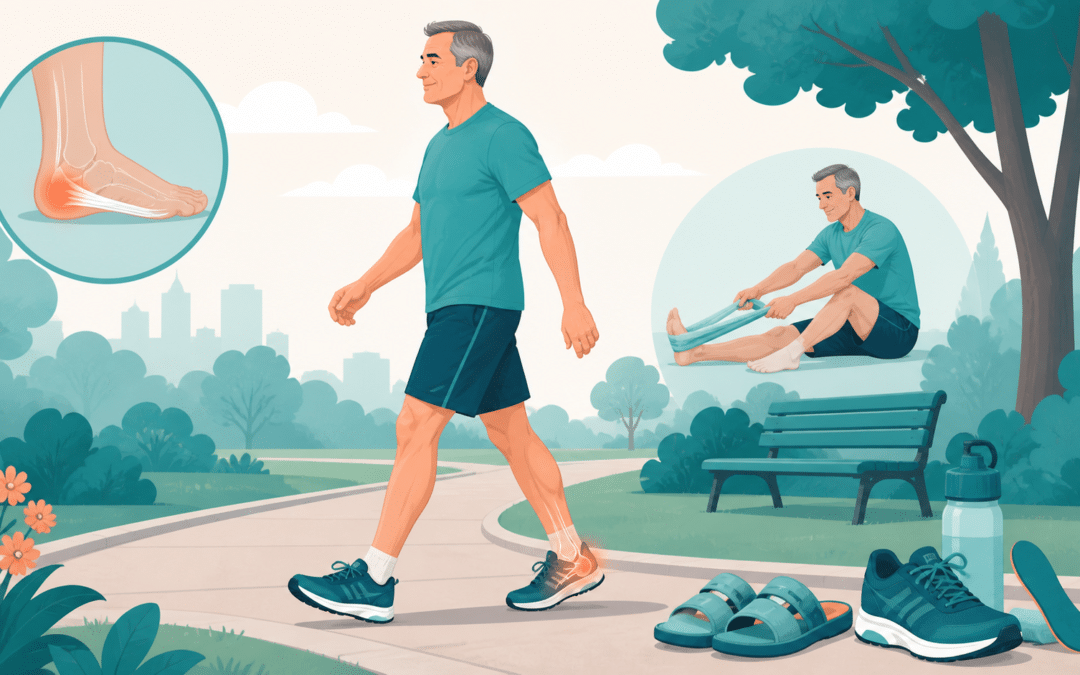
Walking with plantar fasciitis can feel like tiptoeing through a minefield. One minute you’re fine. The next minute your heel reminds you that it has opinions, and apparently they are all angry.
Lisa knows this feeling all too well. After three separate bouts with plantar fasciitis, she has had her share of “I am done with this foot” moments. Her low point came on a trip near Lake Como in Italy, when she ended up hobbling into a grocery store just to buy a bag of frozen peas to numb her foot because she could not take another step.
Not exactly the romantic Italian travel moment people put in brochures.
But here’s the good news: plantar fasciitis does not always mean you have to stop walking completely. With supportive footwear, shorter walks, better pacing, stretching, and recovery habits, many people can stay active without turning every walk into a heel-pain horror show.
The trick is knowing the difference between smart movement and stubbornly marching into pain because your brain has confused “discipline” with “bad plan.”
Bob & Lisa’s walking rule:
Walking should help you stay mobile, not punish your foot into submission. If a walk sharply increases your pain during or after, scale back. Shorter, smarter walks beat heroic hobbling every time.
1. Start with Supportive Footwear
Your shoes are the first big decision. Walking with plantar fasciitis in flat, flimsy, worn-out, or unsupportive shoes is like trying to drive across Minnesota in February on bald tires. Technically possible. Deeply unwise.
For plantar fasciitis, the right walking shoes should usually provide:
- Arch support: helps reduce strain on the plantar fascia.
- Cushioned heels: helps absorb impact with each step.
- Stable heel counter: helps keep the foot from wobbling around inside the shoe.
- Enough structure: the shoe should not fold in half like a tortilla.
Lisa’s Tip: “I absolutely love OrthoFeet shoes and slippers. Let’s be real—a lot of orthopedic shoes are so ugly my cats would probably try to hide them. OrthoFeet actually look good and feel like luxury for your feet.”
As an Amazon Associate I earn from qualifying purchases.
Support matters indoors too:
A lot of people wear decent shoes outside, then come home and walk barefoot on hardwood, tile, or concrete. That can keep re-triggering heel pain. If your first steps in the morning are brutal, put supportive slippers or recovery sandals next to the bed.
Walking shoe option: Browse supportive walking shoes for plantar fasciitis on Amazon.
Indoor support option: Browse supportive recovery slippers on Amazon.
More footwear help: See our full Best Footwear for Plantar Fasciitis guide and our supportive slippers guide.
Medical resource: Cleveland Clinic — How to Find the Best Walking Shoes
2. Use the Slow-and-Steady Approach
It is tempting to “walk it off.” That phrase has caused more bad decisions than bargain-bin office chairs.
With plantar fasciitis, your goal is not to prove toughness. Your goal is to move enough to stay active without increasing irritation. That means shorter walks, easier surfaces, and gradual progress.
- Start short: Try 5–10 minutes instead of launching into a long walk.
- Choose flat ground: Avoid hills, uneven trails, and hard concrete at first.
- Watch the after-effect: If pain spikes later that day or the next morning, your walk was probably too much.
- Increase gradually: Add distance slowly only if your foot tolerates it.
Simple walking test:
If you can walk and your pain stays mild during the walk, does not worsen afterward, and is not worse the next morning, you are probably in a reasonable zone. If your heel complains louder afterward, pull back.
Medical resource: Mayo Clinic – Plantar Fasciitis Diagnosis & Treatment
3. Stretch Before and After You Walk
Stretching is one of the simplest ways to reduce tension through the calf, Achilles tendon, and plantar fascia. If your foot is especially cranky first thing in the morning, gentle stretching before walking can make those first steps less dramatic.
Two useful basics:
- Wall calf stretch: Stand facing a wall, step one foot back, keep the heel down, and lean forward until you feel a calf stretch. Hold 20–30 seconds.
- Towel stretch: Sit with your leg extended, loop a towel around the ball of your foot, and gently pull toward you.
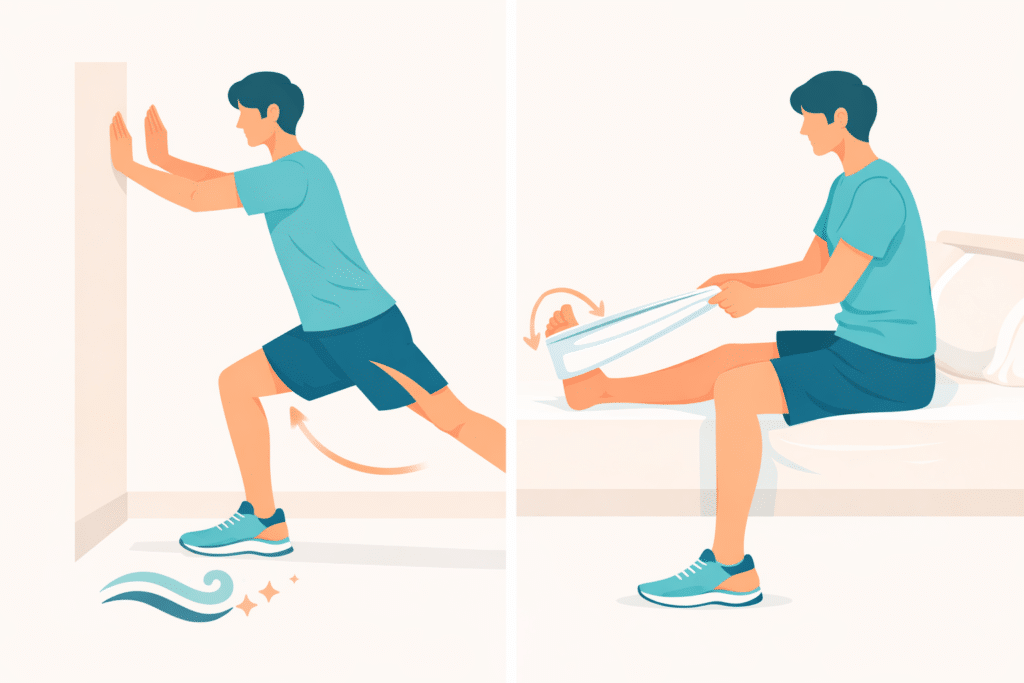
Standing wall calf stretch and seated towel stretch can help prepare your feet before walking.
Good next step: For a fuller routine, see our heel pain relief stretches guide and our strengthening exercises for plantar fasciitis relief guide.
Medical resource: Harvard Health – Stretches to Help Ease Plantar Fasciitis
4. Pay Attention to Walking Form
How you walk matters. If your foot rolls inward too much, if your shoes are worn unevenly, or if you are limping to avoid pain, you may be adding stress to your plantar fascia.
A few basics:
- Try for smooth heel-to-toe motion: Land gently and roll through the foot instead of stomping.
- Avoid overstriding: Shorter, controlled steps are usually easier on sore heels.
- Check your shoe wear: Uneven wear patterns can be a clue that your gait or shoe support needs attention.
- Do not ignore limping: Limping can create problems up the chain in your knees, hips, and back.
Bob’s Tip: I’m not the most coordinated guy, so I looked up videos from physical therapists to see what a healthier walking pattern should look like. There are plenty of free guides out there. Just make sure the advice is coming from someone qualified, not “Random Internet Wizard #47.”
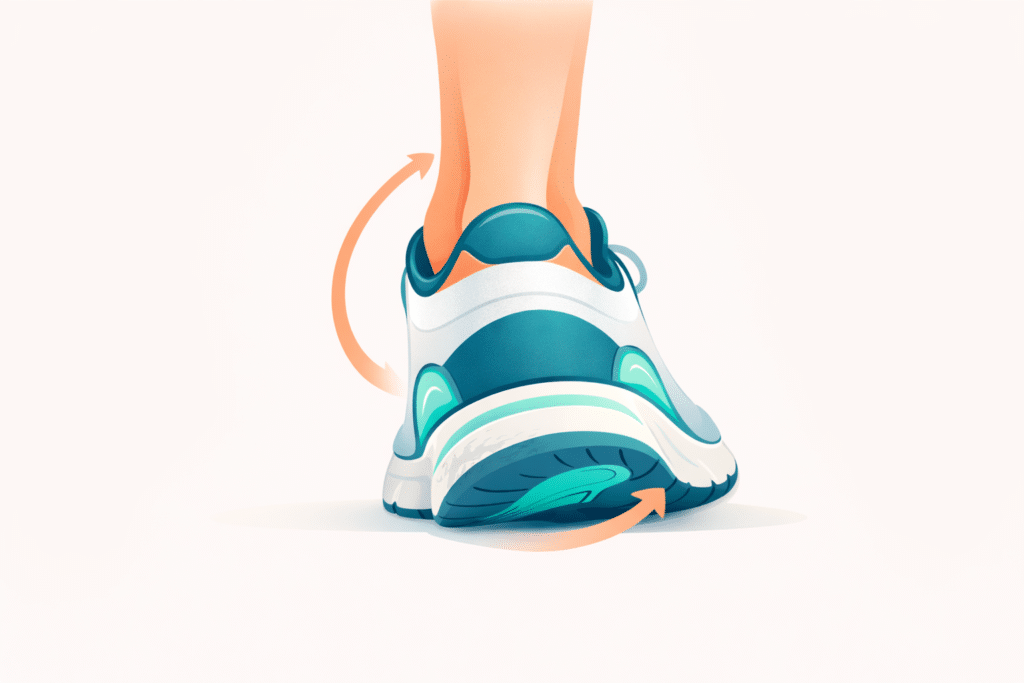
Uneven shoe wear may be a sign that your walking mechanics or support need attention.
Medical resource: AOFAS – Plantar Fasciitis
5. Recover After the Walk
If your heel feels sore after walking, cold therapy can help calm things down. It is not magic, but it can reduce the “angry foot” feeling enough to help you keep your recovery routine on track.
- Frozen bottle roll: Roll your arch over a frozen water bottle for 5–10 minutes while seated.
- Gel ice wrap: Useful if you want something less awkward than chasing a frozen bottle around the floor.
- Lisa’s frozen peas method: If you are traveling or desperate, a bag of frozen peas can conform nicely to the foot. Italy proved that one.
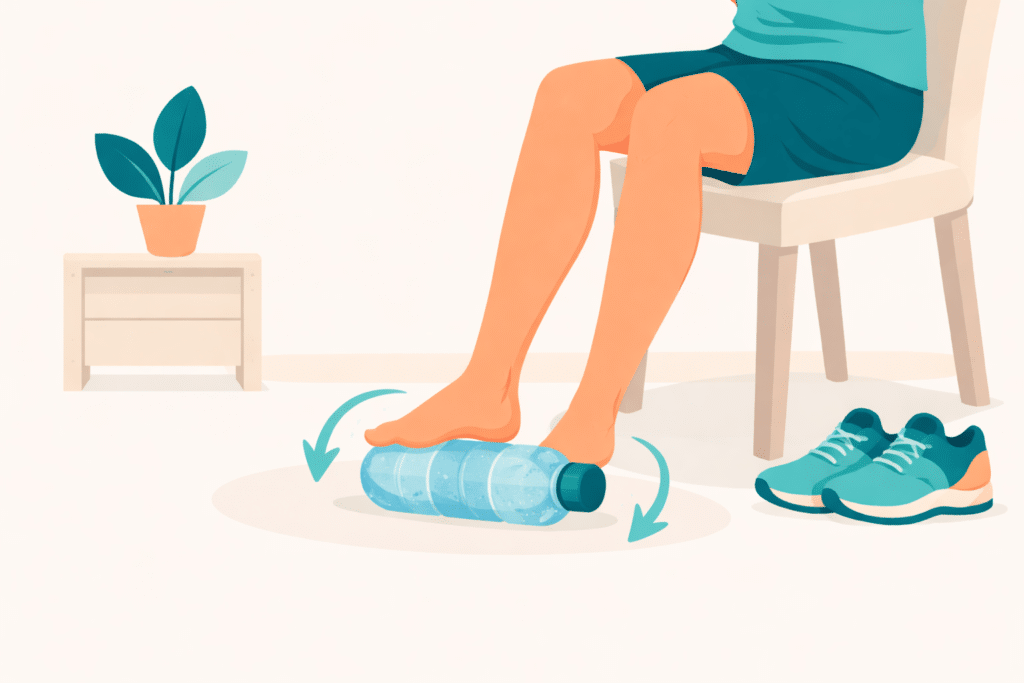
A frozen water bottle roll can combine cold therapy with gentle arch massage after walking.
Cold therapy option: Browse gel ice wraps for plantar fasciitis on Amazon.
Medical resource: NIH / PMC – Cold Therapy and Plantar Fasciitis
Recommended Gear for Walking with Plantar Fasciitis
You do not need to buy everything. Start with the weakest link in your current setup.
| If your problem is… | Consider… | Why it may help |
|---|---|---|
| Your walking shoes are flat, flimsy, or worn out | Supportive walking shoes | Better arch support, cushioning, and heel stability |
| Your shoes are decent but need more support | Orthotic inserts | Adds structure and support inside your current shoes |
| Your feet swell or feel tired after walking | Compression socks | May help with comfort and post-walk support |
| You walk barefoot at home | Supportive slippers or recovery sandals | Protects your foot during short indoor trips |
Insole help: If your shoes are nearly new but still not supportive enough, see our insoles basics guide.
Common Walking Mistakes to Avoid
- Walking barefoot: Especially on hard floors. Lisa finally made real progress when she stopped going barefoot at home.
- Doing too much too soon: If your foot hurts more later, your walk may have been too long.
- Skipping recovery: Stretching and cold therapy are not fancy, but they help.
- Wearing dead shoes: Shoes can look fine but have worn-out support.
- Ignoring limping: Limping changes your mechanics and can create new problems.
Your Pain-Smart Walking Checklist
- [ ] Check your shoes for worn tread or collapsed support.
- [ ] Wear supportive shoes or slippers before your first steps of the day.
- [ ] Stretch calves and feet before walking.
- [ ] Start with short, flat walks.
- [ ] Stop if pain becomes sharp or changes your gait.
- [ ] Use cold therapy after walking if your heel flares up.
- [ ] Track whether pain is worse later that day or the next morning.
A Simple 7-Day Walking Restart Plan
If you have been scared to walk, or if you keep overdoing it, try this simple restart plan.
- Day 1: 5–10 minutes on flat ground. Stretch before and after.
- Day 2: Rest or do gentle stretching only.
- Day 3: Repeat the same short walk if Day 1 did not worsen symptoms.
- Day 4: Rest, stretch, and check your shoes.
- Day 5: Add a few minutes only if your heel tolerated the earlier walks.
- Day 6: Rest or do light movement.
- Day 7: Review: Is your heel calmer, the same, or angrier? Let that answer guide next week.
Bob’s rule: The next morning tells the truth. If your heel is worse when you get out of bed, yesterday’s walking plan was too aggressive.
FAQ: Walking with Heel Pain
Is it okay to walk with plantar fasciitis?
Often, yes, as long as walking does not sharply increase your pain. Short, flat walks in supportive shoes are usually smarter than long walks, hills, hard surfaces, or “pushing through.”
Should I walk through plantar fasciitis pain?
No. Mild discomfort may happen, but sharp pain or worsening pain is a warning sign. If walking makes your symptoms worse, reduce distance, improve footwear, stretch, and consider medical guidance.
Is walking barefoot at home bad for plantar fasciitis?
For many people, yes. Barefoot walking on hard floors can keep re-irritating the plantar fascia. Supportive slippers or indoor recovery sandals are often a better choice.
What shoes are best for walking with plantar fasciitis?
Look for arch support, heel cushioning, a stable heel counter, and enough structure that the shoe does not collapse easily. Brands many people consider include OrthoFeet, Brooks, ASICS, Vionic, and other supportive walking-shoe brands.
Can insoles help if my shoes are still good?
Yes, sometimes. If your shoes still have good cushioning but lack arch support, over-the-counter insoles may help. See our insoles basics guide for more detail.
What should I do after walking if my heel hurts?
Scale back your next walk, stretch gently, and try cold therapy such as a frozen water bottle roll or gel ice wrap. If pain keeps worsening, get checked by a healthcare professional.
Wrap-Up: Walk Smarter, Not Meaner
Walking with plantar fasciitis does not have to turn into a misery march. With supportive shoes, shorter distances, stretching, smart pacing, and post-walk recovery, many people can stay active without beating up their heels.
The goal is not to stop moving forever. The goal is to move in a way your foot can tolerate.
That means: support first, distance second, ego last.
Try these next:
Medical Disclaimer: Bob and Lisa have no medical training. We share personal experience and practical, empathy-first guidance. For diagnosis, treatment, or medical advice, consult a qualified healthcare professional.