

The Bottom Line: Can You Walk with Plantar Fasciitis?
Yes, you can and should walk with plantar fasciitis, provided you prioritize support and moderation. To walk pain-free, you must wear shoes with dedicated arch support and cushioned heels, start with short distances on flat ground, and perform calf stretches before and after your outing. Avoiding barefoot walking and using cold therapy (rolling a frozen water bottle under your arch) post-walk are essential steps to prevent further inflammation.
Disclosure: This post may contain affiliate links. If you buy through them, we may earn a small commission at no extra cost to you.
Walking with plantar fasciitis can feel like tiptoeing through a minefield—each step a sharp reminder of that nagging pain in your heel. I know that feeling all too well. Lisa here, and after three separate bouts with PF, I’ve had my fair share of “meltdowns.” My low point? A trip to a village near Lake Como in Italy where I ended up hobbling into a grocery store just to buy a bag of frozen peas to numb my foot because I couldn’t take another step.
But here’s the good news: plantar fasciitis doesn’t have to stop you in your tracks. With the right strategies, tools, and a bit of patience, you can stay active without making things worse. In fact, when done correctly, walking can actually help you heal instead of hurt.
For our full, comprehensive guide on healing, see our Healing Plantar Fasciitis Naturally: 5 Proven Home Remedies for Fast Relief.
1. Your First Line of Defense: Supportive Footwear
Your shoes are the most critical factor in whether your walk feels like a workout or a torture session. According to the Cleveland Clinic, your footwear should focus on three key areas:
- Arch Support: This redistributes pressure and reduces the strain on your plantar fascia.
- Cushioned Soles: A soft landing absorbs impact, protecting your heel.
- Stable Heel Counter: This keeps your foot aligned and prevents the “wobble” that aggravates the fascia.
Lisa’s Tip: “I absolutely love OrthoFeet shoes and slippers. Let’s be real—a lot of ‘orthopedic’ shoes are so ugly my cats would probably try to hide them. OrthoFeet actually look good and feel like luxury for your feet.”
Reference: Cleveland Clinic — How To Find the Best Walking Shoes
2. Master the “Slow and Steady” Approach
It is tempting to try and “walk off” the pain, but the Mayo Clinic warns that overdoing it can aggravate symptoms and delay your recovery.
- Plan Your Route: Stick to flat, even terrain initially.
- Listen to Your Body: If you feel discomfort or fatigue, that is your cue to head home.
- The 10% Rule: Gradually increase your distance by no more than 10% each week to allow your feet to adapt.
Reference: Mayo Clinic – Plantar Fasciitis Diagnosis & Treatment
3. Stretch Before (and After) You Step
Stretching is a game-changer because it warms up the muscles and reduces the “pull” on your heel. Harvard Health recommends these two staples:
- Wall Calf Stretch: Stand facing a wall, step one foot back, and lean forward until you feel the stretch in your calf. Hold for 15–30 seconds.
- Towel Stretch: Sit with your legs out, loop a towel around the ball of your foot, and gently pull toward you.
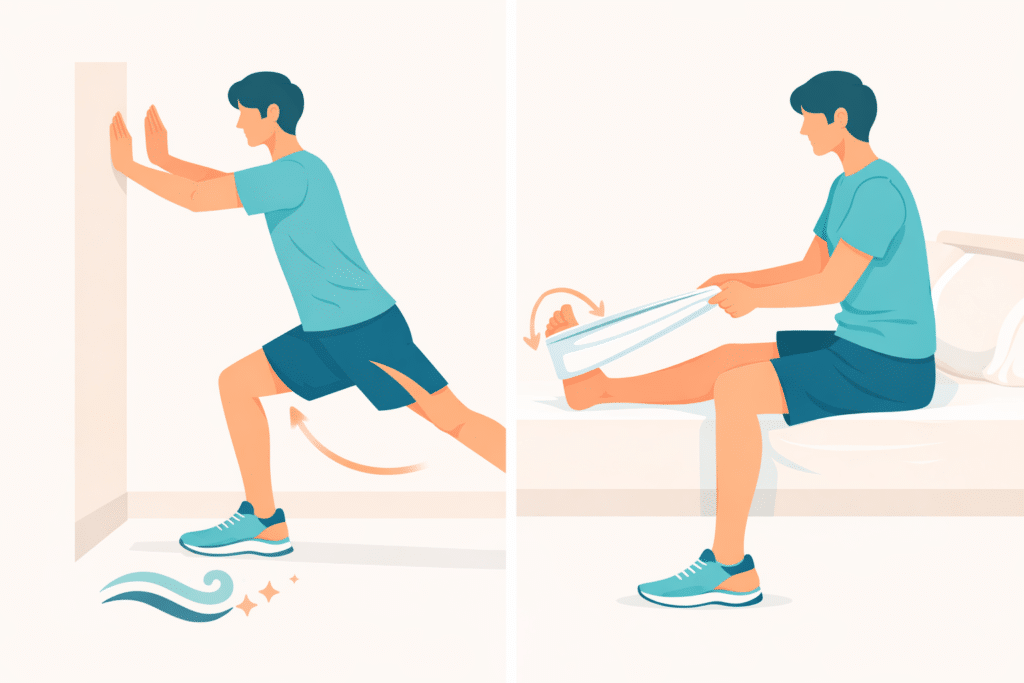
Standing wall calf stretch + seated towel stretch
Reference: Harvard Health – Stretching Exercises
If you want more step-by-step stretch help, see our heel pain relief stretches guide.
4. Perfect Your Walking Form
How you walk matters just as much as where you walk. The American Orthopaedic Foot & Ankle Society suggests focusing on your gait to minimize strain:
- Heel-to-Toe: Strike the ground with your heel first, then roll smoothly through to the ball of your foot.
- Avoid (big word warning) Overpronation: Don’t to let your foot roll inward as you step. The difficult part is that we get so used to doing it we don’t even notice it. Check the bottom of your shoe. If it’s not wearing flat across the sole or heel, you may need to talk to a medical professional to see if there’s a way to fix it.
Bob’s Tip: “I’m not the most coordinated guy, so I just looked up videos on YouTube. There are plenty of free guides by physical therapists that show you exactly how a healthy walk should look. Just make sure the advice is coming from a pro!”
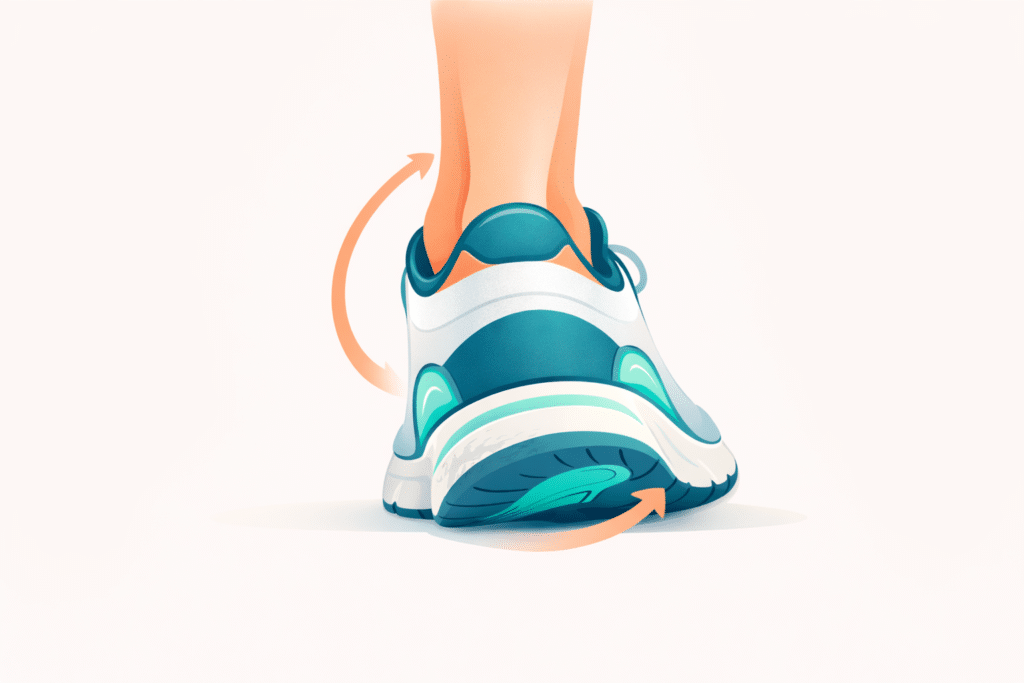
Overpronation in a running shoe
Reference: AOFAS – Walking Tips
5. Post-Walk Recovery: The Cold Truth
If your feet feel sore after your walk, cold therapy is your best friend. It reduces inflammation and soothes tired muscles, as noted by the National Institute of Health.
- The Frozen Bottle Roll: Roll your arch over a frozen water bottle for 5–10 minutes.
- The ‘Lisa’ Method: If you’re in a pinch, a bag of frozen peas works wonders. It conforms to the shape of your foot perfectly!
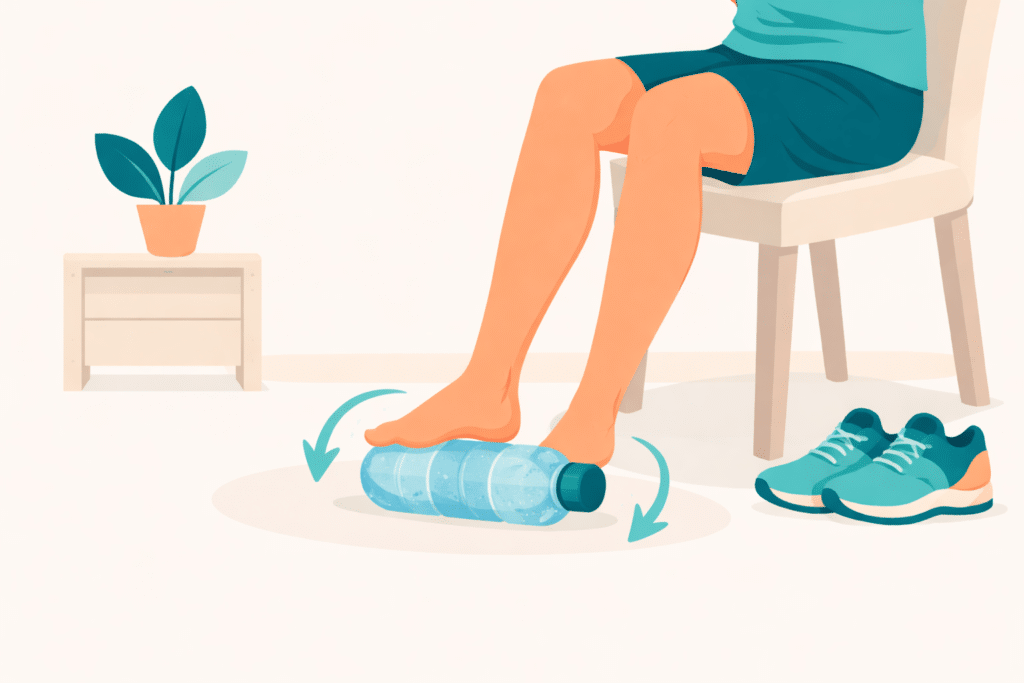
Frozen water bottle roll (or substitute a bag of frozen peas. Then cook for dinner!)
Reference: NIH – Cold Therapy for Plantar Fasciitis
Recommended Gear for Pain-Free Walking
- Walking Shoes: Supportive walking shoes for plantar fasciitis.
- Orthotic Inserts: Recommended orthotic inserts. (This is where being cheap can really cost you. And if you’re a big person, get the 200+ inserts.)
- Compression Socks: To reduce plantar fasciitis induced swelling (and no, they don’t all look like your grandmother’s compression socks).
Common Mistakes to Avoid
- Walking Barefoot: Lisa finally got rid of PF when she stopped going barefoot! (Okay, not entirely. I still walk around barefoot in the yard. I can’t help myself.)
- Ignoring Pain: Discomfort is your body’s way of saying “slow down.”
- Skipping Recovery: Alternate walking days with rest. (I find those days perfect for a double-shot of cocoa blended into a cup of hot milk. Okay, we live in Minnesnowta!)
Action Box: Your Pain-Free Walking Checklist
- [ ] Check your tread: Are your shoes worn out? Replace them if the support has faded.
- [ ] Never go barefoot: Even inside the house, wear supportive slippers (like OrthoFeet).
- [ ] Pre-walk stretch: Spend 5 minutes on your calves.
- [ ] Ice it down: Use cold therapy for 10 minutes after you return home.
- [ ] Schedule rest: Alternate walking days with low-impact rest days.
FAQ: Walking with Heel Pain
Q: Is it okay to walk barefoot if I’m only at home?
A: No. Even short distances on hard floors can strain the plantar fascia. Lisa finally got rid of her PF for good only after she stopped going barefoot entirely.
Q: Should I walk through the pain?
A: No. Pain is your body’s signal to slow down. If walking increases your symptoms, take a break and reassess your footwear or distance.
Q: What are the best shoe brands for walking?
A: We highly recommend OrthoFeet for their combination of style and medical-grade support. Other excellent options include Brooks, ASICS, and Vionic.
Q: My shoes are practically new. What about insert brands for walking?
A: We recommend starting with over-the-counter Superfeet Green or PowerStep Pinnacle. If you want to dig deeper into insoles and inserts, we’ll be covering that in more detail in our dedicated insoles basics post.
Wrap-Up
Walking with plantar fasciitis does not have to turn into a misery march. With supportive shoes, a little stretching, smart pacing, and some post-walk recovery, you can stay active without beating up your heels.
For more help with healing at home, see our Healing Plantar Fasciitis Naturally: 5 Proven Home Remedies for Fast Relief.
Medical Disclaimer: Bob and Lisa are not doctors. We’re sharing our personal experiences as long-time plantar fasciitis sufferers, along with information from medical sources. Please consult a qualified medical professional before starting a new exercise or recovery routine.