
Disclosure: This post is for educational purposes. If a page we link to contains affiliate links, we may earn a small commission at no extra cost to you.
The Bottom Line: Dead Insoles Can Bring Heel Pain Back
Insole maintenance and replacement matter because plantar fasciitis support wears down over time. A good insole can help support your arch, stabilize your heel, and cushion impact, but once the foam flattens, the heel cup collapses, or the arch support softens, it may stop doing the job you bought it for.
Quick Answer: When Should You Replace Plantar Fasciitis Insoles?
Replace plantar fasciitis insoles when the arch support feels flattened, the heel cup no longer holds your heel, the cushioning feels compressed, odor will not go away, or your heel pain starts creeping back even though your shoes and routine have not changed. For daily use, many insoles need replacing every few months to a year, depending on your body weight, activity level, shoe type, and insole materials.
A good plantar fasciitis insole is like a loyal sidekick. It shows up, takes abuse, absorbs impact, supports your arch, and asks for almost nothing in return.
But even the best sidekick eventually gets tired. Foam compresses. Top covers wear. Heel cups lose shape. Support that once felt firm starts to feel suspiciously like a wet pancake in disguise.
And that matters because when your insole stops supporting your foot, your plantar fascia may start getting irritated again. If your morning heel pain returns and nothing else has changed, your insole may be waving a tiny white flag from inside your shoe.
If you are still choosing your first pair, start with Best Insoles for Every Budget and Lifestyle. If you need help matching insoles to specific footwear, see Which Insole Fits My Favorite Shoe?.
This Guide Is for You If…
- You bought plantar fasciitis insoles and want them to last longer.
- Your insoles are starting to look tired, flat, or funky.
- Your heel pain improved, then started sneaking back.
- You are not sure whether to clean your insoles, replace them, or hold a tiny funeral.
- You want a practical replacement timeline without needing a spreadsheet, a lab coat, or a committee hearing.
Medical note: Insoles can help many people with heel pain, but they are not a cure-all. If your pain is severe, persistent, worsening, or comes with numbness, swelling, diabetes concerns, balance problems, or trouble walking normally, check with a qualified healthcare professional.
1) Why Insole Maintenance Matters for Plantar Fasciitis
Plantar fasciitis often flares when the tissue under your foot gets overloaded again and again. That is why supportive shoes, arch support, stretching, and sensible activity changes show up so often in conservative care advice.
A good insole can help by doing three basic jobs:
- Supporting the arch so the plantar fascia is not doing all the heavy lifting.
- Stabilizing the heel so your foot is not wobbling around inside the shoe.
- Cushioning impact so every step is not a tiny hammer blow to your heel.
But those benefits depend on the insole still having structure. Once it loses shape, it may still look like an insole, but functionally it has joined the witness protection program.
References: Mayo Clinic: plantar fasciitis treatment, Cleveland Clinic: plantar fasciitis care.
Lisa’s note: “When my heel pain started coming back, I blamed my shoes first. Then I pulled out the insole and realized the arch had flattened like it had given up on life.”
Action Box: The 30-Second Insole Check
- [ ] Does the arch still feel firm and shaped?
- [ ] Does the heel cup still cradle your heel?
- [ ] Is the cushioning still springy, not dead-flat?
- [ ] Is the top cover intact, not peeling, torn, or bunched?
- [ ] Does your foot still feel stable inside the shoe?
2) How to Clean Insoles Without Wrecking Them
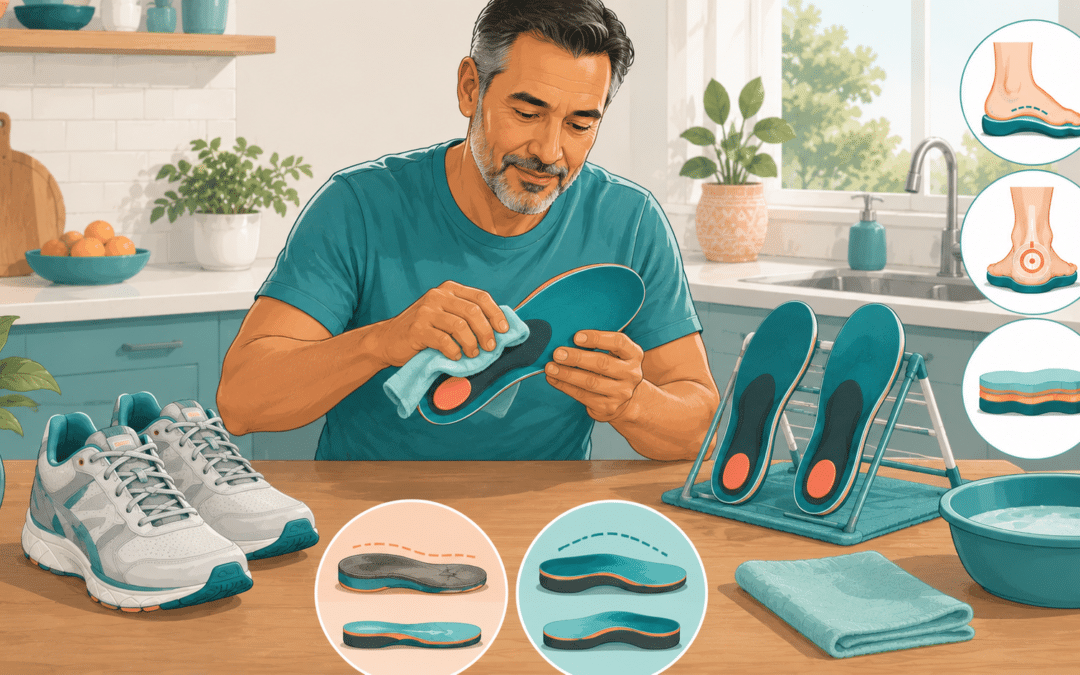
Most insoles do not need a dramatic spa day. They need gentle cleaning, regular drying, and protection from heat. Think “wipe down and air out,” not “industrial power wash.”
Step 1: Remove Them from the Shoe
After a sweaty walk, workout, or long day, pull the insoles out so both the shoe and insole can dry. Moisture trapped inside the shoe can feed odor and break materials down faster.
Step 2: Wipe with Mild Soap and Water
Use a damp cloth or sponge with mild soap. Wipe the top and bottom gently. Do not soak the insole unless the manufacturer specifically says it is washable.
Step 3: Air Dry Completely
Let the insole dry at room temperature. Do not put it in the dryer, on a radiator, in direct high heat, or in a hot car. Heat can warp plastics, shrink foam, loosen glue, or turn your carefully chosen support into a modern art project.
Bob’s hard-earned warning: “I once got aggressive with cleaning and treated an insole like a dirty dish. It came out cleaner, yes. Also lumpy, sad, and about as useful as a damp tortilla.”
| Do This | Avoid This |
|---|---|
| Remove insoles after sweaty use. | Leaving damp insoles trapped in closed shoes. |
| Spot-clean with mild soap and water. | Soaking unless the brand says it is safe. |
| Air dry at room temperature. | Dryer, heater, direct sun, or hot car. |
| Inspect them regularly. | Waiting until heel pain returns with a marching band. |
3) When to Replace Insoles: The Big Red Flags
Insoles rarely announce their retirement politely. They usually fail quietly, then your heel starts asking why the morning floor has become a medieval interrogation device again.
- The arch is flattened: If the raised support feels soft, crushed, or lower than it used to, it may no longer be supporting your foot well.
- The heel cup has collapsed: A deep heel cup should help guide and steady the heel. If it has warped or flattened, that stability is gone.
- The cushioning is compressed: Foam that no longer rebounds is not absorbing impact the way it once did.
- The top cover is peeling or bunched: Wrinkles, loose fabric, or shifting layers can create irritation and hot spots.
- The odor will not quit: If cleaning and drying do not help, the materials may be too far gone.
- Your pain is returning: If your shoes, routine, and activity level are the same but heel pain is creeping back, inspect the insole.
PFI Rule of Thumb
If the insole no longer changes how your foot feels inside the shoe, it is probably no longer doing enough to earn its parking spot.
4) Replacement Timeline: How Long Do Insoles Usually Last?
There is no single magic number because insoles wear differently depending on use. A runner, a warehouse worker, and someone who only wears an insole for errands are not asking the same thing from the same piece of foam.
| Use Pattern | Typical Replacement Window | What to Watch |
|---|---|---|
| Daily high-impact use Running, training, long walks | Often closer to 3–6 months | Flattened cushioning, sore heels after workouts, loss of bounce. |
| Daily work use Standing, concrete floors, long shifts | Often around 4–9 months | Arch collapse, heel cup wear, end-of-day heel ache. |
| Moderate everyday use Errands, office, casual walking | Often around 6–12 months | Comfort fading slowly, support feeling less noticeable. |
| Occasional use Dress shoes, special shoes, seasonal boots | Sometimes a year or longer | Dryness, cracking, odor, fit changes. |
If you are using insoles for running or high-impact activity, see Runners’ Relief: Best Insoles for High-Impact Activities for more on impact, shoe fit, and replacement pressure.
5) Rotate Insoles If You Wear Them Every Day
If you rely on insoles every day, one of the simplest tricks is rotation. Two pairs can last better than one pair getting stomped into submission every single day.
- Alternate between shoes: Give each pair time to dry fully.
- Match insoles to shoe type: A thick athletic insole may belong in sneakers, not dress shoes.
- Keep a backup pair: If your main pair suddenly fails, you are not left hobbling around while waiting for replacements.
For shoe-specific matching, use Which Insole Fits My Favorite Shoe?. For budget versus premium replacement decisions, compare Dr. Scholl’s vs WalkFit and Superfeet vs PowerStep.
6) Can You Revive Old Insoles?
Sometimes you can freshen an insole. You usually cannot resurrect one.
Cleaning may help with odor. Air drying may help with moisture. A careful re-mold may help some heat-moldable models if the brand allows it. But once foam is permanently compressed or the support structure is warped, you are not fixing it with optimism and a paper towel.
Heat-moldable insoles deserve special caution. If you use them, follow the manufacturer’s directions exactly. Do not improvise with high heat, microwaves, broilers, or “I saw this online” energy. Your feet deserve better than kitchen-based chaos.
For more on that middle ground between OTC and custom, read Heat-Moldable Insoles: DIY Comfort or Just a Gimmick?.
Action Box: The “Keep or Replace?” Test
- Keep it if it is cleanable, still shaped, still supportive, and still fits your shoe correctly.
- Replace it if the arch is flat, the heel cup is warped, the foam is crushed, or your heel pain has returned.
- Ask for help if your pain is not improving, your gait feels off, or you are unsure whether the issue is the insole, the shoe, or your foot mechanics.
7) Don’t Forget the Shoe Around the Insole
Sometimes the insole gets blamed when the shoe is the real villain twirling its mustache in the corner.
If your shoes are worn out, twisted, compressed, or unstable, even a good insole may struggle. You want the shoe and insole working together: the shoe provides the platform, and the insole fine-tunes the support.
If you suspect the shoe is the problem, see When to Replace Your Plantar Fasciitis Shoes and Best Footwear for Plantar Fasciitis 2026: The Ultimate Guide.
FAQ: Insole Maintenance and Replacement
Q: How often should I replace plantar fasciitis insoles?
A: It depends on use. Daily runners or people on their feet all day may need replacement in a few months, while moderate or occasional users may get closer to six months, a year, or sometimes longer. Replace sooner if support or cushioning breaks down.
Q: Can I wash plantar fasciitis insoles?
A: Usually, gentle spot-cleaning with mild soap and water is safer than soaking. Always check the manufacturer’s care instructions because some foams, covers, adhesives, or heat-moldable materials can be damaged by soaking or high heat.
Q: Can I put insoles in the dryer?
A: No. Air dry them at room temperature unless the manufacturer gives different instructions. Heat can warp support structures, damage foam, and loosen adhesives.
Q: Why did my heel pain come back after my insoles helped?
A: One possibility is that the insoles wore down. Check the arch support, heel cup, cushioning, and shoe fit. Also consider changes in shoes, activity, walking surface, body weight, or recovery routine.
Q: Should I replace shoes and insoles at the same time?
A: Sometimes, especially if both are worn out. But they do not always fail on the same schedule. Inspect both. A good insole in a bad shoe may still underperform.
Q: Is odor a sign that insoles need replacing?
A: Sometimes. Mild odor may improve with cleaning and drying. Persistent odor that does not respond to care can be a sign the materials are too far gone.
Q: Can old insoles make plantar fasciitis worse?
A: Worn-out insoles may stop giving the support or cushioning your feet need. That can allow stress to build again, especially if you are also wearing worn-out shoes or spending long hours on hard floors.
Wrap-Up: Take Care of the Support That Takes Care of You
Good insoles are not forever gear. They are working parts. They absorb impact, support your arch, stabilize your heel, and quietly take abuse every time you walk, stand, run, shop, cook, travel, or chase the dog away from your slipper.
So give them a little care. Air them out. Clean them gently. Keep them away from heat. Inspect them before your heel has to file a formal complaint.
And when they are done, replace them. Not because you love spending money on foot gear, but because your feet deserve support that still shows up for duty.
Next steps: return to Best Insoles for Every Budget and Lifestyle, compare Superfeet vs PowerStep, or learn Why Insoles Matter for Plantar Fasciitis.
Medical Disclaimer: Bob and Lisa are not doctors. We’re sharing personal experience and practical, empathy-first guidance. For medical advice, diagnosis, or treatment plans, please consult a qualified healthcare professional. We reference reputable sources for general education.
Keep reading
- Start here: Best Insoles for Every Budget and Lifestyle
- Why Insoles Matter for Plantar Fasciitis Relief
- How to Choose the Right Insoles for Plantar Fasciitis Guide
- Troubleshooting Insole Woes & Common Mistakes