
Disclosure: This post may contain affiliate links. If you buy through them, we may earn a small commission at no extra cost to you.
As an Amazon Associate I earn from qualifying purchases.
The Bottom Line: The Right Insole Still Has to Fit the Shoe
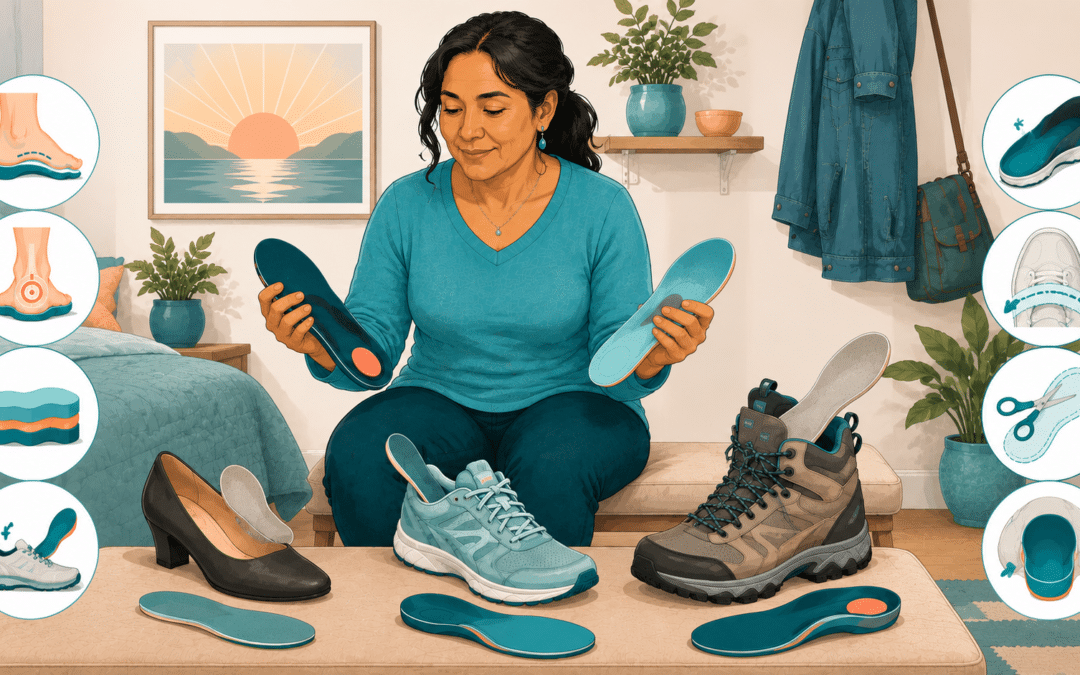
The best insole for plantar fasciitis is not just the one with the most arch support. It is the one that fits your foot, fits your shoe, and still leaves enough room for your toes to behave like toes. A thick, heroic-looking insert can be useless if it turns your favorite shoe into a medieval toe crusher.
Quick Answer: Which Insole Fits My Shoe?
For dress shoes, look for low-profile insoles. For sneakers and athletic shoes, medium-volume insoles usually work best because many athletic shoes have removable liners. For boots, you can often use thicker, firmer insoles with deeper heel cups. For sandals, skip loose inserts and choose sandals with built-in arch support instead.
Ever tried squeezing a grand piano into a studio apartment? That is what it can feel like when you jam a thick arch-support insole into a sleek dress shoe.
On the other hand, putting a flimsy little insert into a roomy hiking boot can feel like bringing a cocktail napkin to a pillow fight. Technically something is there. It is just not doing enough useful work.
This guide is about matching the right insole to the right shoe so your plantar fascia gets support without your toes filing a workplace grievance.
If you want the bigger buyer guide first, start with Best Insoles for Every Budget and Lifestyle. If you need the beginner version, see Insoles Basics for Plantar Fasciitis. And if you want the “why this matters” explanation, read Why Insoles Matter for Plantar Fasciitis.
This Guide Is for You If…
- You bought a good insole, but it makes your favorite shoe feel too tight.
- You are trying to decide whether an insert will work in dress shoes, sneakers, boots, or work shoes.
- Your heel needs support, but your toes need breathing room.
- You are not sure when to trim an insole and when to give up on the shoe.
- You want a practical, Bob-and-Lisa-style shoe-fit checklist before buying more inserts.
Medical note: Insoles can help many people with plantar fasciitis, but heel pain can have more than one cause. If your pain is severe, persistent, getting worse, or comes with numbness, swelling, diabetes concerns, or trouble walking normally, get evaluated by a qualified healthcare professional.
1) First Rule: Shoe Volume Matters
Before you fall in love with any insole, ask one boring but essential question:
How much room does this shoe actually have inside?
That is shoe volume. Some shoes have a lot of interior space. Others have the emotional warmth of an airline economy seat. If your shoe is already snug, adding a thick orthotic can lift your foot too high, squeeze your toes, rub your heel, or make the shoe unstable.
| Shoe Type | Typical Interior Room | Best Insole Match |
|---|---|---|
| Dress shoes | Low volume, narrow, less forgiving | Thin, low-profile arch support |
| Sneakers / athletic shoes | Medium to high volume, often removable liner | Medium-volume structured insole |
| Work boots / hiking boots | Usually higher volume, more depth | Firmer support, deeper heel cup, thicker cushioning |
| Sandals | Usually no secure insert space | Built-in arch support, not loose inserts |
Bob’s rule: “If the insole makes the shoe fit worse, the mission has failed. A good insert in the wrong shoe is still the wrong setup.”
2) Dress Shoes: Slim Support or Bust
Dress shoes are tricky because they often have less depth, less cushioning, and less room for error. Many taper at the toe. Some have non-removable liners. Some look terrific and support your feet about as well as a polite rumor.
For plantar fasciitis, you still want arch support and heel stability. But in dress shoes, the insole has to be thin enough that your foot does not get shoved into the upper like a sandwich in a zip-top bag.
Action Box: Dress Shoe Insole Check
- [ ] Choose a low-profile insert.
- [ ] Avoid thick heel cushioning if the shoe is already shallow.
- [ ] Check that your toes are not cramped.
- [ ] Make sure your heel does not pop out while walking.
- [ ] If the shoe has no room, consider a more supportive dress shoe instead.
Lisa’s note: “I once tried to force a thick cushy insole into a dressier shoe. My heel felt better for about four minutes, then my toes started negotiating surrender terms.”
For more help with this exact category, see Dress Shoes for Plantar Fasciitis and Office-Appropriate Shoes for 9-to-5 Comfort.
3) Sneakers and Athletic Shoes: Usually the Easiest Upgrade
Sneakers and athletic shoes are usually the friendliest place to test plantar fasciitis insoles. Many have removable factory liners, enough interior depth, and a shape that can handle a structured insert.
The key phrase is removable factory liner. Pull it out before adding the new insole. Do not stack a serious orthotic on top of a flimsy factory insert unless you enjoy mysterious tightness, heel slippage, and wondering why your shoe suddenly feels like it shrank in the laundry.
- Everyday sneakers: medium-volume insoles usually work well.
- Running shoes: avoid overstuffing an already cushioned shoe.
- Walking shoes: look for steady support, not just marshmallow softness.
- Roomy athletic shoes: can often handle firmer support and a deeper heel cup.
For athletic-shoe help, see 2026 Athletic Shoes That Won’t Punish Your Fascia and Everyday Shoes for Plantar Fasciitis.
If you already know you want a more supportive premium insole for sneakers, compare Superfeet vs PowerStep. For a budget starting point, compare Dr. Scholl’s vs WalkFit.
4) Boots: Roomier, But Still Not Foolproof
Boots can be excellent insole candidates because they often have more depth and structure than dress shoes. Hiking boots, winter boots, and work boots may all have removable liners or enough room for a thicker orthotic.
But boots can still go sideways if the insole slides, lifts your heel too high, or crowds your toes under a stiff toe box.
- Hiking boots: look for firm arch support, a deeper heel cup, and stable fit on uneven ground.
- Winter boots: make sure the insole does not reduce warmth or circulation by making the boot too tight.
- Work boots: prioritize shock absorption, stability, and enough toe room for long standing days.
Bob’s tip: “Boots can take a bigger insole, but bigger is not automatically better. If your heel is lifting or your toes are jammed, retreat and regroup.”
For deeper boot guidance, see Work Boots for Plantar Fasciitis, Hiking Boots for Plantar Fasciitis, and Winter & Outdoor Boots for Plantar Fasciitis.
5) Sandals: Don’t Try to MacGyver Loose Inserts
Sandals and flip-flops are the troublemakers in this story. Most of them do not securely hold a removable insole. Trying to tape, glue, or Velcro an insert onto a sandal footbed is usually not a brilliant orthopedic innovation. It is usually how you create a weird, slippery foot sandwich.
For sandals, look for built-in arch support, a shaped footbed, a decent heel cup, and secure straps. If the sandal is flat, floppy, and unsupportive, an insert probably will not rescue it.
For that category, read Supportive Sandals for Plantar Fasciitis.
6) Slippers and House Shoes: Don’t Forget the Home Base
A lot of plantar fasciitis misery happens at home. People wear decent shoes outside, then shuffle around barefoot or in floppy slippers inside. Their plantar fascia gets no support right when it wants a quiet evening.
Some house shoes and slippers can take an insole if they have enough room and a removable liner. But many cannot. If your slipper is soft, floppy, and has no structure, a loose insert may slide around like a greased hockey puck.
Better move: choose supportive slippers or house shoes with built-in arch support. Start with Slippers for Plantar Fasciitis.
7) The Trim-to-Fit Test
Many over-the-counter insoles are designed to be trimmed at the toe. This is useful, but it also creates an opportunity to turn a perfectly good insert into expensive confetti.
Here is the safer way:
- Remove the old factory liner from the shoe.
- Place it on top of the new insole.
- Trace the toe area lightly if needed.
- Cut conservatively. You can always trim more.
- Slide the new insole into the shoe and make sure it lies flat.
Bob’s 30-Second Fit Test
- [ ] The insole lies flat with no curling at the toe.
- [ ] Your heel sits securely without slipping up and down.
- [ ] Your toes can wiggle.
- [ ] The arch support feels supportive, not like a rock under your foot.
- [ ] You can walk across the room without changing your gait.
8) When the Shoe Is the Problem
This is the part nobody wants to hear. Sometimes the insole is not failing. The shoe is.
If your shoe twists like a dish towel, collapses at the heel, pinches your toes, or has no room for a supportive insert, it may not be a plantar-fasciitis-friendly shoe. At that point, trying a seventh insole is like putting better tires on a shopping cart.
APMA advises looking for shoes that support the foot front and back, are stiff in the middle, bend at the ball of the foot, and do not twist easily. Mayo Clinic also recommends supportive shoes with good arch support, cushioning, and thick soles as part of plantar fasciitis self-care.
References:
APMA: how to choose the right shoe,
Mayo Clinic: plantar fasciitis treatment and supportive shoes,
Cleveland Clinic: supportive shoes and orthotics.
9) Helpful Shopping Shortcuts
If you are still experimenting, start with the shoe category first, then choose the insole style. That keeps you from buying a great insert that has nowhere useful to live.
- For athletic shoes and roomy sneakers: PowerStep Pinnacle Maxx may be worth comparing if you want support plus cushioning.
- For roomy boots or higher-volume shoes: Superfeet Green may be worth comparing if you want firmer structure and a deeper heel cup.
- For semi-custom experimenting: browse heat-moldable and wear-moldable insoles on Amazon.
Important: These are not universal fixes. Match the insole to your shoe volume, foot shape, and comfort needs. If it makes the shoe too tight, it is not the right combo.
FAQ: Matching Insoles to Shoes
Q: Can I put any insole into any shoe?
A: No. Shoe depth, width, removable liners, toe-box space, and heel fit all matter. A thick insole can ruin the fit of a shallow shoe.
Q: Should I remove the original shoe liner before adding an insole?
A: Usually, yes, if the liner is removable. Stacking insoles often makes the shoe too tight and unstable.
Q: What kind of insole works best in dress shoes?
A: Low-profile insoles usually work best because dress shoes often have less interior space.
Q: What kind of insole works best in sneakers?
A: Medium-volume structured insoles often work well in sneakers, especially if the factory liner can be removed.
Q: Can I use insoles in sandals?
A: Usually not safely or comfortably. For sandals, choose built-in arch support instead of trying to attach a loose insert.
Q: How do I know if an insole is too thick?
A: If your toes are cramped, your heel slips, the shoe feels unstable, or your foot sits too high, the insole is probably too thick for that shoe.
Q: When should I replace the shoe instead of the insole?
A: If the shoe twists easily, collapses at the heel, has no room for support, or causes pain even with a good insole, the shoe may be the real problem.
Wrap-Up: The Perfect Pair Is a Team Effort
Matching an insole to a shoe is a little like matchmaking. The insole can be wonderful. The shoe can be wonderful. But if they do not fit together, somebody is leaving the date early with heel pain and a bad attitude.
Start with the shoe. Check the volume. Remove the factory liner if possible. Pick an insole that supports your arch and heel without stealing all the space from your toes. And if your favorite shoe simply cannot handle real support, it may need to retire from active duty.
Next steps:
return to Best Insoles for Every Budget and Lifestyle,
compare premium insoles,
or
learn whether heat-moldable insoles make sense.
Medical Disclaimer: Bob and Lisa are not doctors. We’re sharing personal experience and practical, empathy-first guidance. For medical advice, diagnosis, or treatment plans, please consult a qualified healthcare professional. We reference reputable sources for general education.
Keep reading
- Start here: Best Insoles for Every Budget and Lifestyle
- Troubleshooting Insole Woes & Common Mistakes
- Insole Maintenance & Replacement: Making Them Last
- Fashion or Function? Balancing Arch Support with Style