
Disclosure: This post may contain affiliate links. If you buy through them, we may earn a small commission at no extra cost to you.
As an Amazon Associate I earn from qualifying purchases.
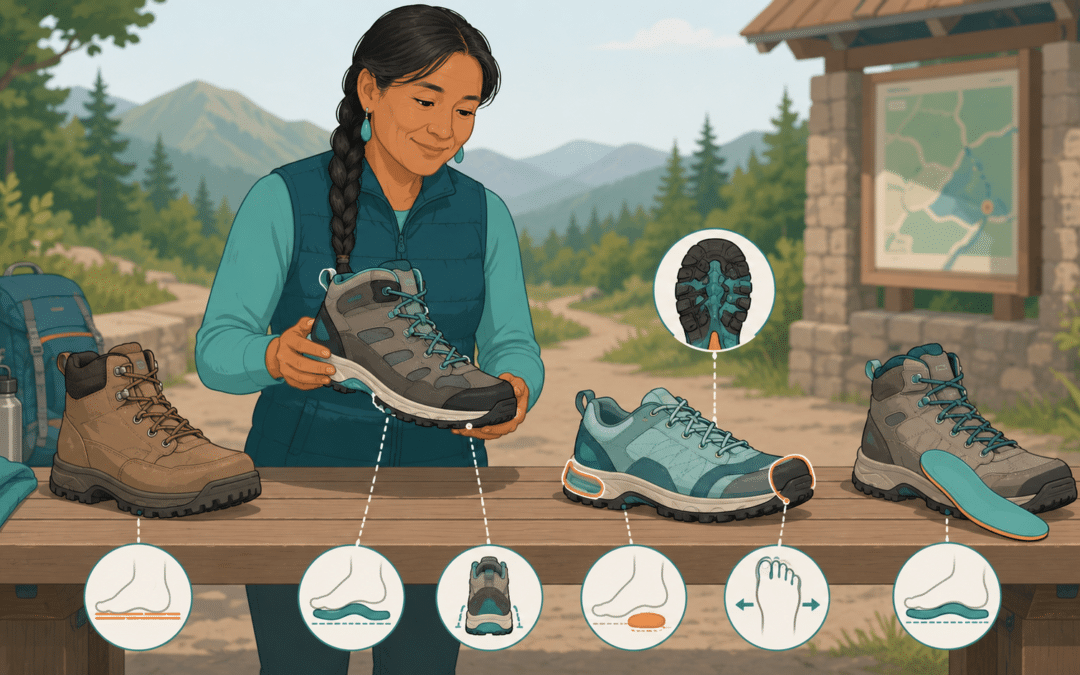
AEO Answer: Best Hiking Boots for Plantar Fasciitis
The best hiking boots for plantar fasciitis have arch support, heel cushioning, a stable heel counter, a firm-but-not-brutal midsole, good traction, and enough room for a supportive insole or orthotic. For trail walking, stability matters as much as softness. A boot that feels cushy but lets your foot wobble around can still make your heel cranky by mile two.
This Guide Is for You If…
- You want to keep hiking, walking trails, or exploring parks without waking up your heel pain goblin.
- Your old hiking boots feel stiff, flat, unstable, or dead under the heel.
- You need boots that can handle uneven ground but still leave room for inserts.
- You are trying to separate real trail support from “rugged-looking” fashion boots.
Hiking boots are supposed to protect your feet. But when you have plantar fasciitis, some boots feel less like trail gear and more like medieval foot armor designed by someone who has never owned a heel.
The trouble is simple: trails add impact, uneven ground, downhill braking, toe pressure, and long wear time. If your boot is flat, floppy, overly stiff, too narrow, or impossible to fit with an insert, your plantar fascia may file a complaint before you even reach the scenic overlook.
The good news: hiking boots for plantar fasciitis do exist. You just have to shop like a trail boss instead of trusting the word “rugged” on a product page.
Want the bigger footwear strategy? Start here: Best Footwear for Plantar Fasciitis 2026: The Ultimate Guide.
1) Why Hiking Boots Matter When You Have Plantar Fasciitis
Plantar fasciitis is often irritated by repeated strain, poor support, hard impact, and tight calf/Achilles mechanics. Major medical sources commonly recommend conservative care such as supportive footwear, stretching, icing, activity modification, and inserts or orthotics when appropriate.
On a sidewalk, a bad shoe is annoying. On a trail, a bad boot is annoying with rocks, roots, slopes, mud, and the occasional squirrel judging your life choices. Hiking boots need to do more than look tough. They need to keep your foot supported and steady while the ground refuses to behave.
Medical note: This guide is general education, not a diagnosis or treatment plan. If your heel pain is severe, worsening, lasts more than a few weeks, or comes with numbness, tingling, major swelling, diabetes-related foot concerns, or trouble bearing weight, get medical guidance before trying to hike through it.
References:
Mayo Clinic: plantar fasciitis diagnosis and treatment,
Cleveland Clinic: plantar fasciitis,
Harvard Health: plantar fasciitis symptoms, causes, and treatments.
2) The Hiking Boot Features That Matter Most
For plantar fasciitis, a good hiking boot is not just “comfortable.” It is supportive in the places where your foot gets tired and stable when the trail gets weird.
- Arch support or removable footbed: Many hiking boots do not have enough built-in arch support, so room for a supportive insole is a big deal.
- Heel cushioning: You want impact reduction under the heel, especially for rocky paths and downhill sections.
- Stable heel counter: The back of the boot should hold your heel without sloppy side-to-side movement.
- Firm midsole: Too soft can wobble; too stiff can punish. Look for steady support with some shock absorption.
- Traction: Slipping makes your foot tense and land strangely. Your heel does not need that drama.
- Roomy toe box: Downhill walking pushes toes forward. Cramped toes can change your gait and make your heel complain.
Action Box: The 60-Second Hiking Boot Reality Check
- [ ] Does the boot have arch shape or room for a supportive insole?
- [ ] Does the heel feel locked in without rubbing?
- [ ] Is there cushioning under the heel without marshmallow wobble?
- [ ] Can you wiggle your toes, especially for downhill walking?
- [ ] Does the outsole feel grippy enough for dirt, gravel, roots, and damp trail surfaces?
- [ ] Does the boot bend at the forefoot instead of folding in the middle like a taco?
3) Hiking Boots vs. Winter Boots: Don’t Mix the Missions
This post is about hiking boots for plantar fasciitis: trails, uneven ground, day hikes, parks, gravel paths, and outdoor walking where stability matters.
Winter boots are a related but different beast. Those need to prioritize snow, insulation, icy sidewalks, waterproofing, and cold-weather traction. We cover that separately here: Winter & Outdoor Boots for Plantar Fasciitis.
In Riker terms: hiking boots are the away team. Winter boots are the polar expedition. Both need support, but they are not the same mission.
4) Common Hiking Boot Mistakes That Anger the Heel
- Buying boots that are too stiff: Rugged is good. Cement blocks with laces are not.
- Ignoring heel slip: If your heel lifts with every step, friction and instability can build fast.
- Choosing soft over stable: Plush cushioning feels great in the store, but trail wobble can punish your fascia.
- Forcing thick orthotics into low-volume boots: If the insert makes the boot tight, you have solved one problem by creating three new ones.
- Skipping the break-in period: A new boot plus a long hike on day one is how people learn humility.
Bob’s trail rule: If the boot changes how you walk, it is not helping. It is giving your heel a side quest.
5) Hiking Boot Styles That Tend to Work Better
| Boot Type | Best For | PF Watch-Out |
|---|---|---|
| Lightweight hiking shoes | Easy trails, parks, errands, low-mile walks | May lack ankle support or enough structure for rough terrain |
| Mid-height hiking boots | Most day hikes and uneven trails | Needs good heel lockdown and enough toe room |
| Waterproof hikers | Wet grass, mud, light rain, damp trails | Can run warmer and stiffer; fit matters |
| Heavy backpacking boots | Loads, long trips, rough terrain | Often overkill for plantar fasciitis day hikes |
6) Hiking Boot Picks to Consider
These are common hiking boot categories and brands people often consider for trail stability and support. Model details change, so use the checklist above instead of trusting any logo like it came down from Mount Footmore.
- Stability-forward hiking boot: Salomon X Ultra series
- Budget-friendly day-hike boot: Columbia Newton Ridge
- Roomy toe box hikers: KEEN hiking boots and other wide-toe options
Lisa’s fit note: “If I’m hiking downhill, toe room matters more than store-pretty fit. A boot that feels snug in the aisle can feel like a toe vise on a slope.”
7) Inserts Can Make or Break a Hiking Boot
Many hiking boots have removable factory insoles that are… let’s be polite and call them “optimistic.” If the boot has enough volume, a supportive insole can upgrade arch support and heel cushioning fast.
- Bring your inserts when trying boots: Boots and inserts are a team, not separate purchases.
- Remove the factory footbed first: Stacking insoles can crowd the shoe and wreck the fit.
- Check heel lock after adding inserts: If the insert lifts your heel too high, you may get slippage.
- Break in the boot-insole combo gradually: Your feet need time to adapt.
Helpful add-ons if they fit your situation:
- Supportive insoles: useful when the boot is stable but the arch support is weak.
- Foot roller or massage ball: good for post-walk recovery and under-the-desk relief.
- Night splint: can help some people with morning heel pain, though not everyone loves sleeping in one.
- Supportive indoor slippers: because coming home from a hike and walking barefoot on hard floors is how the heel goblin respawns.
For the bigger insert strategy, see Insoles Basics for Plantar Fasciitis and Why Insoles Matter for Plantar Fasciitis in 2026.
Bob note: Night splints looked like medieval devices to me at first, but they helped. Lisa never got used to sleeping with them. She still keeps a foot roller under her desk because, apparently, civilized people prepare for foot mutiny.
8) Break-In Rules for Hiking Boots
New boots and new inserts can both change how your foot loads. That can be helpful, but it can also irritate things if you go too hard too fast.
- Day 1–2: Wear the boots indoors or on short errands for 30–90 minutes.
- Day 3–4: Try a short walk on flat ground if everything feels okay.
- Next step: Test a short, easy trail before committing to a real hike.
- Stop and reassess: Sharp new pain, numbness, tingling, blisters, or limping are not “break-in.” They are warning lights.
This is especially important if you are adding orthotics. Your boot may technically fit, but if your foot is now crowded, lifted too high, or slipping at the heel, the trail will reveal the truth with all the subtlety of a brick.
9) Stretch Before and After Trail Days
Boots help during the walk. Stretching helps reduce the tug that can keep aggravating the plantar fascia, especially if your calves and Achilles are tight. Harvard Health notes stretching as a common conservative approach for plantar fasciitis management.
- Standing wall calf stretch: hold 15–30 seconds per side, 2–3 rounds.
- Seated towel stretch: gentle pull, 15–30 seconds per side.
- Post-hike rolling: use a massage ball or frozen water bottle if your heel feels irritated.
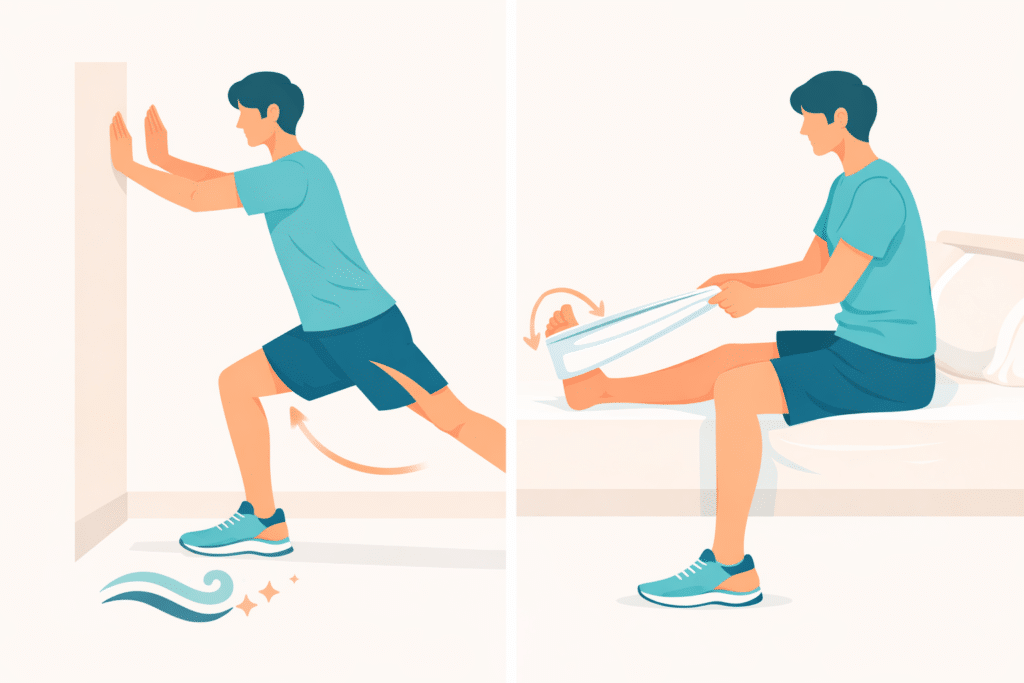
Standing wall calf stretch + seated towel stretch
For more stretch guidance, see Effective Stretches for Heel Pain Relief: Step-by-Step and Exercises for Plantar Fasciitis.
FAQ: Hiking Boots and Plantar Fasciitis
Q: Do hiking boots help plantar fasciitis?
A: They can, if they are supportive, stable, cushioned, and fit well. A hiking boot with a steady heel, supportive midsole, and room for an insole is often better than a flat or flimsy casual shoe on uneven ground.
Q: Are hiking shoes or hiking boots better for plantar fasciitis?
A: It depends on the trail and your foot. Hiking shoes can work for easy paths if they are supportive. Mid-height hiking boots may be better for uneven terrain because they often provide more structure and heel stability.
Q: Should I put orthotics in hiking boots?
A: Many people do. Just make sure the boot has enough volume, remove the factory insole first, and confirm that your heel still locks in without slipping.
Q: Are soft hiking boots better for heel pain?
A: Not always. Cushioning helps absorb impact, but too much softness without structure can increase wobble. For plantar fasciitis, the sweet spot is cushioning plus stability.
Q: What should I avoid in hiking boots if I have plantar fasciitis?
A: Avoid boots that are flat, twisty, overly stiff, too narrow, worn out, or unable to fit a supportive insert. Also be careful with boots that feel great in the store but let your heel slip when walking.
Q: When should I see a healthcare professional?
A: If pain is severe, persistent, worsening, or not improving with supportive footwear and basic home care, get evaluated. Also seek guidance sooner if you have numbness, tingling, major swelling, diabetes, or trouble bearing weight.
Wrap-Up: Keep the Trail, Lose the Heel Scream
Hiking with plantar fasciitis is not about buying the toughest-looking boot on the shelf. It is about finding a boot that supports your arch, cushions your heel, stabilizes your foot, grips the ground, and leaves room for the insert your feet may need.
Start with short walks, break boots in gradually, stretch before and after, and retire boots when the support is gone. Your goal is not to prove you can suffer through the trail. Your goal is to enjoy the trail without your heel writing angry letters afterward.
Next steps:
Back to the Footwear Pillar Guide,
Winter & Outdoor Boots for Plantar Fasciitis,
and for a broader recovery plan,
Healing Plantar Fasciitis Naturally: 5 Proven Home Remedies for Fast Relief.
Medical Disclaimer: Bob and Lisa are not doctors. We’re sharing personal experience and practical, empathy-first guidance. For medical advice, diagnosis, or treatment plans, please consult a qualified healthcare professional. We reference reputable sources like Mayo Clinic, Cleveland Clinic, and Harvard Health for general education.
Keep reading
- Start here: Best Footwear for Plantar Fasciitis 2026: The Ultimate Guide
- Dress Shoes for Plantar Fasciitis: Heel-Safe Style
- Office Shoes for Plantar Fasciitis: 9-to-5 Comfort
- Winter Boots for Plantar Fasciitis: Heel-Pain Friendly Support