
Disclosure: This post may contain affiliate links. If you buy through them, we may earn a small commission at no extra cost to you.
As an Amazon Associate I earn from qualifying purchases.
The Bottom Line: Winter Boots Need Warmth and Support
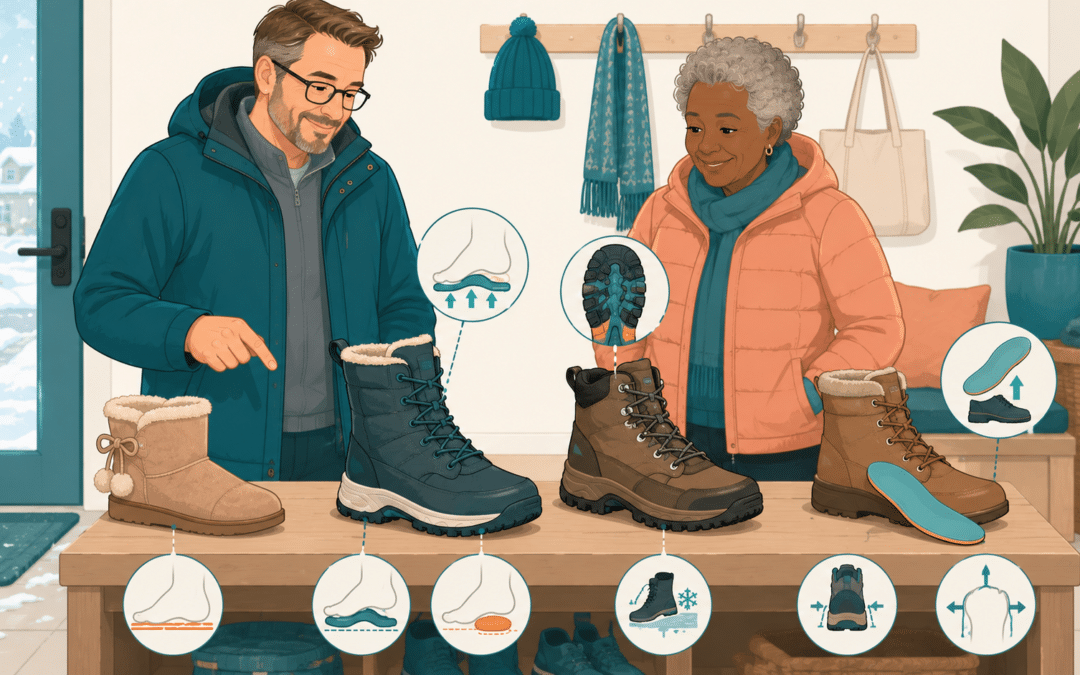
The best winter boots for plantar fasciitis are insulated, stable, grippy, and supportive—or at least roomy enough for a structured insole. Warmth matters, but a warm boot that is flat, floppy, or dead underfoot can still keep your heel irritated all winter.
Quick Answer: What Should You Look for First?
For plantar fasciitis, choose winter boots with arch support or removable insoles, heel cushioning, a stable heel counter, a roomy toe box, and traction you trust on cold sidewalks. If the boot is warm but flat inside, plan on adding a low-profile supportive insole if the fit allows it.
Winter has a special talent for making plantar fasciitis worse: hard sidewalks, cold-stiff boots, slippery surfaces, thick socks that crowd your toes, and that nasty first-step shock when your foot is still half asleep.
The good news is you do not have to choose between warm feet and a calmer heel. You just need the right boot features—and sometimes a smart insole upgrade.
Want the big picture? Start here:
Best Footwear for Plantar Fasciitis 2026: The Ultimate Guide.
This Guide Is for You If…
- You need winter boots that do not make your heel bark at you by lunchtime.
- You walk on snow, slush, frozen sidewalks, parking lots, or cold hard floors.
- Your current boots are warm but flat, stiff, unstable, or impossible to use with inserts.
- You want winter/outdoor boots, not hiking boots. For trail-focused boots, see Hiking Boots for Plantar Fasciitis.
Medical note: Plantar fasciitis can have several causes, and winter footwear is only one piece of the puzzle. If your heel pain is severe, persistent, worsening, or paired with numbness, tingling, swelling, diabetes, or trouble bearing weight, check with a qualified healthcare professional.
1) Why Winter Boots Can Trigger Heel Pain
A lot of winter boots are built to keep out snow and slush first, with support treated like an afterthought. That is how you end up with a boot that is warm and waterproof but still manages to annoy your heel every time you walk to the mailbox.
Flat, stiff boots can increase strain through the arch and heel, especially on hard frozen ground or when you start doing that awkward cautious “don’t slip, don’t slip, don’t slip” winter walk. Supportive shoes, stretching, and inserts or orthotics are commonly recommended as part of conservative plantar fasciitis care, which is exactly why boot choice matters.
References:
Mayo Clinic: plantar fasciitis treatment,
Cleveland Clinic: supportive shoes and inserts.
Lisa’s winter lesson: “My third PF flare happened during a freezing season. The difference between fuzzy boots and supportive boots was night and a very long day.”
Action Box: The 45-Second Winter Boot Test
- [ ] Can I feel real arch shape, not just soft lining?
- [ ] Does the heel feel stable instead of sloppy or wobbly?
- [ ] Does the boot have a removable insole so I can add better support?
- [ ] Is there enough cushioning under the heel for hard sidewalks?
- [ ] Is the outsole grippy enough for icy sidewalks so I do not start walking like a nervous penguin?
2) Insulation vs. Arch Support: The Balance That Matters
Warmth matters. Nobody wants frozen feet. But warmth without support can still leave you limping around like winter personally insulted you.
The best winter boot setup is usually one of these:
- A boot with built-in support that gives you some arch contour, heel cushioning, and a stable rearfoot.
- A boot with a removable footbed so you can swap in a structured insole that actually helps.
If the boot is roomy enough to accept an insert without crushing your toes, that is a big win. Removable insole winter boots are often easier to work with than pretty-looking boots that are flat as plywood inside.
Bob’s rule: if the boot feels like a sleeping bag attached to a cutting board, keep shopping.
3) What to Look For in Winter Boots for Plantar Fasciitis
- Insulation that does not turn the inside into a shapeless marshmallow: warm is good; unstable is not.
- Arch support or room for a supportive insert: the boot should support your midfoot or allow an upgrade.
- A stable heel and midsole: avoid boots that twist, collapse, or wobble underfoot.
- Removable insole design: this gives you options if the factory liner is too flat.
- Traction for icy sidewalks: slippery footing makes your gait guarded and weird, which can irritate the heel.
- A toe box with enough room: thicker socks should not turn your toes into packed cargo.
- Reasonable weight: heavy boots can fatigue your feet faster, especially if you already walk cautiously in winter.
This is one of those categories where a boot can be rugged-looking and still not actually helpful. Looks are nice. Heel pain does not care.
| Boot Feature | Why It Helps | Red Flag |
|---|---|---|
| Removable footbed | Lets you add a better insole or orthotic. | Fixed fuzzy liner with no support. |
| Stable heel counter | Helps keep your foot from slopping around. | Heel slips with every step. |
| Grippy outsole | Reduces guarded walking on ice and slush. | Smooth fashion sole. |
| Roomy toe box | Allows thicker socks without crowding your foot. | Tight forefoot or toe pressure. |
4) Winter & Outdoor Boot Starting Points
These are common lines people often check for insulation, traction, and insert compatibility. Model quality varies, so use the checklist above instead of trusting branding alone.
- Insulated outdoor hikers:
Merrell Thermo Series - Winter and hiking crossover boots:
Columbia Ice Maiden / Columbia Newton Ridge - Orthotic-friendly winter boots:
OrthoFeet winter boots
For a related category, also see
Hiking Boots for Plantar Fasciitis.
That post leans toward trails and uneven terrain. This one is focused on winter and outdoor daily-life conditions: snow, slush, cold sidewalks, parking lots, errands, dog walks, and staying upright without making your heel mutiny.
5) If You Need More Support: Insole Upgrades
If your winter boot is warm and stable but feels dead flat inside, the fix is often an insole swap, assuming the fit allows it. Look for structured support plus a stable heel cup, not just extra squish.
- Firm structured support:
Superfeet insoles - Balanced support and cushioning:
PowerStep insoles
Pro tip: remove the boot’s original liner first. Stacking insoles can make boots too tight, crowd your toes, and change your gait in all the wrong ways.
For more on that, see
Why Insoles Matter for Plantar Fasciitis in 2026
and
Insoles Basics for Plantar Fasciitis.
6) Cold-Weather Habits That Keep Plantar Fasciitis Calmer
- Warm up before you head out: a quick calf stretch or gentle foot roll can reduce first-step shock.
- Take traction seriously: slipping, or walking strangely to avoid slipping, can irritate your heel.
- Dry boots properly: wet boots can break down cushioning and structure faster than you think.
- Do not live in unsupportive house shoes all evening: winter pain often gets fed by what you wear indoors too.
- Rotate if you can: one pair doing every snowy errand, every dog walk, and every slushy parking lot will wear down faster.
Johns Hopkins includes stretching as part of conservative plantar fasciitis care, especially for the plantar fascia and Achilles chain. In cold weather, that little warm-up matters more than most people realize.
Reference:
Johns Hopkins Medicine: stretching and supportive options.
For at-home relief help, see
Healing Plantar Fasciitis Naturally: 5 Proven Home Remedies for Fast Relief.
For indoor support, especially after being outside in boots, see
Slippers for Plantar Fasciitis.
FAQ: Winter Boots and Heel Pain
Q: Are flat winter boots bad for heel pain?
A: A lot of them are. Flat plus stiff plus hard sidewalks is a pretty reliable recipe for a heel that stays irritated. If a boot has no arch shape and no room for an insert, be cautious.
Q: Can I use inserts in winter boots?
A: Usually yes, if the boot has a removable footbed and enough room in the toe box. Do not stack an insert on top of the original liner unless you enjoy cramped toes and bad decisions.
Q: What matters more, insulation or support?
A: You need both. Warmth keeps winter bearable, but support is what keeps your heel from protesting every step. If you must choose, pick a stable boot with enough room to add warmth and support intelligently.
Q: Are hiking boots the same as winter boots?
A: Not quite. Hiking boots are usually built for trails, uneven ground, and heel lockdown. Winter boots are built for cold, snow, slush, and icy sidewalks. Some boots overlap, but the buying priorities are not identical.
Q: Should winter boots feel soft?
A: They should feel cushioned, not mushy. Too much softness without structure can let your foot wobble, which may irritate plantar fasciitis.
Q: When should I see a healthcare professional?
A: If pain is severe, persistent, or not improving with supportive changes and basic home care, get evaluated. Also get help sooner if you have numbness, tingling, swelling, diabetes, or trouble bearing weight.
Wrap-Up: Brave the Cold Without Your Heel Biting Back
Winter does not have to turn heel pain into a daily event. Choose insulated boots with support, or at least enough room for a proper insert. Prioritize traction, warm up before the cold shock hits, and do not assume “outdoor boot” automatically means “good for plantar fasciitis.”
Warm feet plus stable steps usually equals a much calmer plantar fascia. And yes, your heel will notice the difference. Heels are petty like that.
Next steps:
Back to the Footwear Pillar Guide,
Hiking Boots for Plantar Fasciitis,
and, for the broader relief plan,
Healing Plantar Fasciitis Naturally: 5 Proven Home Remedies for Fast Relief.
Medical Disclaimer: Bob and Lisa are not doctors. We’re sharing personal experience and practical, empathy-first guidance. For medical advice, diagnosis, or treatment plans, please consult a qualified healthcare professional. We reference reputable sources for general education.
Keep reading
- Start here: Best Footwear for Plantar Fasciitis 2026: The Ultimate Guide
- Hiking Boots for Plantar Fasciitis: Trail Support
- Dress Shoes for Plantar Fasciitis: Heel-Safe Style
- Work Boots for Plantar Fasciitis