Disclosure: This post may contain affiliate links. If you buy through them, we may earn a small commission at no extra cost to you.
As an Amazon Associate I earn from qualifying purchases.
Quick Answer: The Best Office Shoes for Plantar Fasciitis
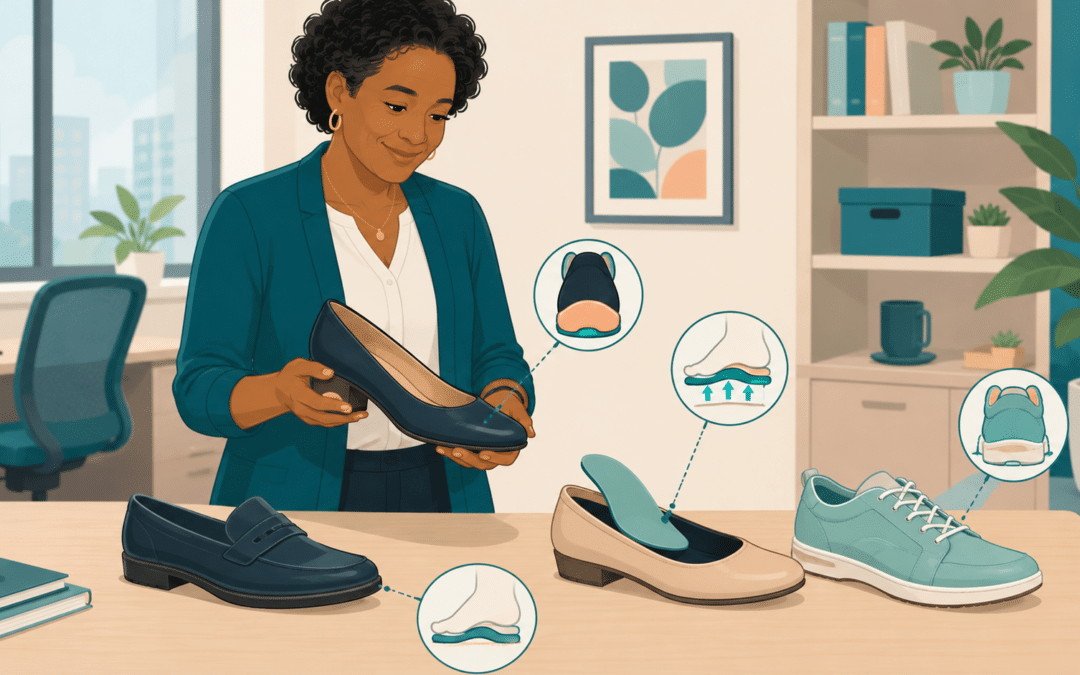
The best office shoes for plantar fasciitis have real arch support, heel cushioning, a stable heel counter, a roomy toe box, and enough structure to survive a full workday. For 9-to-5 comfort, think supportive loafers, low-heel work shoes, orthotic-friendly flats, comfort oxfords, and dressy sneakers if your workplace allows them.
This guide is for you if…
- You need office shoes that look professional but do not punish your heels.
- You stand, walk, commute, or pace around the office during the day.
- Your current flats, loafers, or dress shoes feel fine at 8 a.m. and evil by 2 p.m.
- You want practical shoe features, not vague fashion-magazine nonsense in a shiny wrapper.
If you have plantar fasciitis, the office can turn into a slow-motion endurance test. Not because your job is hard, although sometimes it absolutely is, but because your shoes are quietly plotting against you under your desk.
The good news is you do not have to choose between “looks appropriate” and “can still walk at 5 p.m.” You just need the right features, a realistic workday strategy, and the discipline to stop trusting shoes that have already betrayed you.
Want the big picture? Start here: Best Footwear for Plantar Fasciitis 2026: The Ultimate Guide.
1) Why Office Shoes Can Keep Plantar Fasciitis Angry
Plantar fasciitis tends to hate three things that a lot of office shoes love: stiff flat soles, minimal cushioning, and long hours on hard floors. Medical sources commonly recommend supportive shoes, stretching, and sometimes inserts or orthotics as part of conservative plantar fasciitis care.
That is why “looks polished” is not enough. If a shoe is thin, unstable, or dead underfoot, your heel may spend the whole day absorbing the consequences while you sit there pretending everything is fine in a meeting.
Medical Note
Office shoes can help reduce irritation, but they are not a medical cure. If your heel pain is severe, persistent, spreading, or not improving with supportive footwear and basic home care, it is time to talk with a qualified healthcare professional.
Reference: Mayo Clinic: Plantar Fasciitis Diagnosis & Treatment
2) The 4 Non-Negotiable Features
- Real arch support: not just padding, but actual shape that supports your midfoot.
- Stable heel plus heel cushioning: reduces both slam-impact and wobble with each step.
- Low-to-moderate heel height: often more plantar-fasciitis-friendly than dead-flat pancake shoes.
- Roomy toe box: cramped toes can change your gait and make everything worse.
Action Box: The 60-Second Office Shoe Reality Check
- [ ] Can I feel arch shape, not just softness?
- [ ] Does the heel feel stable, not wobbly?
- [ ] Is there cushioning under the heel?
- [ ] Do my toes have room to relax?
- [ ] Can I wear these for 6 to 8 hours without wanting to crawl home?
Cleveland Clinic also emphasizes supportive, well-cushioned shoes, avoiding flat shoes without arch support, and using orthotics or inserts when appropriate.
Reference: Cleveland Clinic: Plantar Fasciitis
3) Office Shoes vs. Dress Shoes: Same Family, Different Job
This post is about office shoes for plantar fasciitis: shoes you can wear through a normal workday, commute, meeting schedule, desk time, hallway walking, and maybe a lunch errand that turns into a surprise quest.
For more formal shoes—weddings, interviews, dinners, church, ceremonies, and situations where “business casual” is not quite enough—see Dress Shoes for Plantar Fasciitis: Look Sharp Without Paying in Heel Pain.
4) Styles That Usually Work, and the Ones That Usually Betray You
Not every office shoe is a villain. Here is the general pattern we have seen:
| Usually Better Choices | Usually Riskier Choices |
|---|---|
| Supportive loafers with structured footbeds | Dead-flat ballet flats with paper-thin soles |
| Comfort oxfords or lace-ups with stable heels | Stiff hard-bottom shoes with no cushioning |
| Low-heel pumps or block heels with support | Sky-high heels or narrow pointed toe boxes |
| Dressy sneakers, if your workplace allows them | Backless slip-ons that make you grip with your toes |
Lisa’s rule of thumb: “If it’s flat and flimsy, it’s basically a plantar fasciitis audition tape.”
For more casual daily options, see Sneaker Confidential: Everyday Shoes for Plantar Fasciitis That Don’t Betray You.
5) Office-Friendly Shoe Picks
These are examples of office-appropriate brands and lines that people commonly use for comfort and support. Sometimes the real magic is not the shoe itself. It is the fact that the shoe is orthotic-friendly and does not fight your insert.
- Classic dress shoe comfort: Rockport Total Motion
- Built-in orthotic support: Vionic work styles / office collection
- Quality leather plus comfort: ECCO dress styles
- Orthotic-friendly practical comfort: OrthoFeet office-friendly shoes
6) Fit Rules That Prevent the 2 p.m. Flare-Up
- Try shoes later in the day: feet swell a bit, so fit for reality.
- Walk on a hard floor if possible: carpet lies. Tile tells the truth.
- Heel slip is a red flag: wobble usually equals irritation.
- Do not trust break-in too much: minor break-in is normal, pain is not.
- Bring the socks or inserts you actually wear: because fantasy-fit shoes turn into reality-pain shoes fast.
Bob’s take: “If the shoe needs a three-week relationship phase before it stops hurting you, that’s not a shoe. That’s a hostage situation.”
7) Insoles Can Save a Work Shoe That Is Almost Good Enough
Sometimes the office shoe is close. It looks fine, fits okay, but still feels flat or dead by lunchtime. That is where an insert can rescue the situation, assuming the shoe has room and does not squeeze your foot into submission.
- Use a shoe with a removable liner if possible: that makes insert upgrades much easier.
- Choose low-profile support for tighter work shoes: bulky inserts do not belong in every office shoe.
- Do not stack insoles if the fit gets cramped: cramped toes create brand-new problems.
- Break in the shoe-plus-insert combination gradually: do not make Monday morning your test lab.
For the bigger insert strategy, see Why Insoles Matter for Plantar Fasciitis in 2026 and Insoles Basics for Plantar Fasciitis.
8) Office Hacks for Happier Heels
- Keep a second pair at your desk: rotate shoes midday if you can.
- Bring a supportive commute shoe: especially if you walk a lot before you even reach the office.
- Alternate sitting and standing: long stretches of either one can be rough on some feet.
- Replace worn shoes sooner than you want to: flattened cushioning can bring the pain roaring back.
- Use under-desk relief tools: a massage ball, foot roller, or frozen water bottle can help you manage the day.
Harvard Health highlights supportive shoes and stretching as part of common plantar fasciitis management, which is why those tiny desk stretches and calf stretches are worth more than people think.
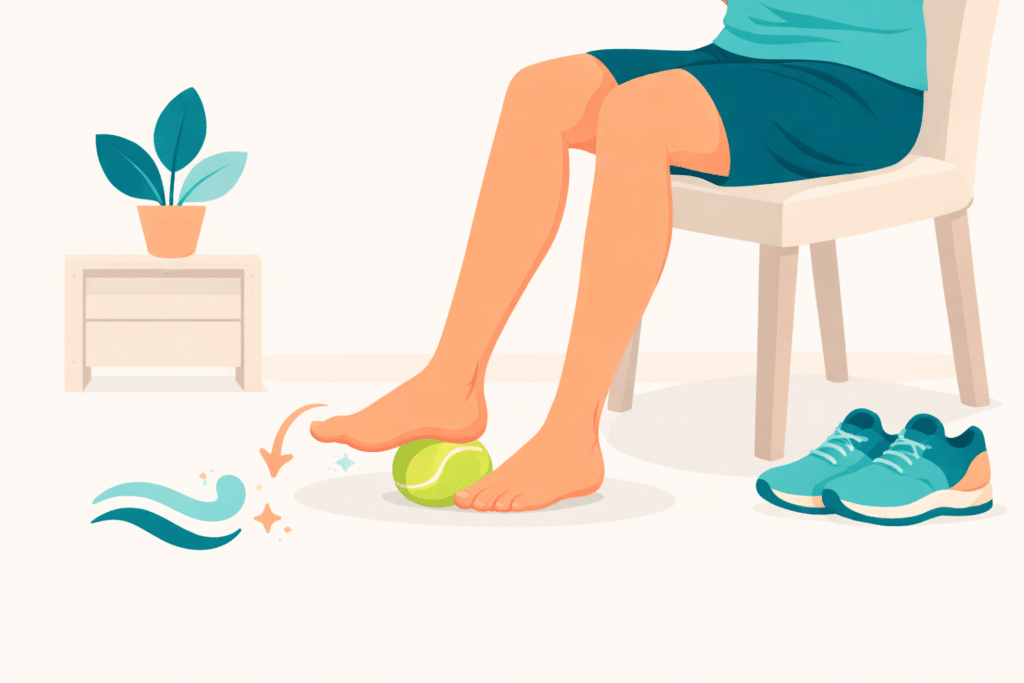
Bob’s take: “What you use under your desk, stays under your desk!” That includes frozen water bottles and genuine foot massage rollers.
Reference: Harvard Health: Plantar Fasciitis Symptoms, Causes, and Treatments
For help with that side of the equation, also see Heel Pain Relief Stretches, Exercises for Plantar Fasciitis, and 2026 Guide: When to Replace Your Plantar Fasciitis Shoes.
FAQ: Office Shoes and Plantar Fasciitis
Q: What are the best office shoes for plantar fasciitis?
A: The best office shoes for plantar fasciitis have arch support, heel cushioning, a stable heel, a roomy toe box, and enough structure for a full workday. Supportive loafers, low-heel work shoes, comfort oxfords, dressy sneakers, and orthotic-friendly flats can all work if they pass the support test.
Q: Are flats bad for plantar fasciitis?
A: A lot of flats are too thin and unsupportive, but flat is not automatically evil. If a flat has real arch support and cushioning, it can work. Most bargain flats do not.
Q: Is a small heel better than totally flat?
A: Often, yes. A low-to-moderate heel can reduce strain compared to dead-flat shoes. The goal is support and stability, not height for height’s sake.
Q: Should I use insoles in office shoes?
A: If the shoe is removable-insole-friendly, inserts can be a game-changer, especially for arch support and heel cushioning. Just do not cram a bulky insert into a tight shoe and create a new problem.
Q: What if my job requires dress shoes and I walk a lot?
A: Prioritize cushioning and stability, bring a backup pair if you can, and consider a supportive commute shoe. Small changes can prevent daily flare-ups.
Q: When should I see a healthcare professional?
A: If pain is severe, persistent, or not improving with supportive changes and basic home care, it is time to get evaluated.
Wrap-Up: Look Professional, Walk Like a Human
You should not have to limp into the office like you are walking on hidden Legos. With the right arch support, stable heel, cushioning, and fit, office shoes can be both polished and plantar-fasciitis-friendly.
The winning move is not fancy. It is boring in the best possible way: support, cushioning, stability, room, and a backup plan for long days. Your feet are not being dramatic. They are giving you performance data.
Next steps: Back to the Footwear Pillar Guide, compare more formal options in Dress Shoes for Plantar Fasciitis, or build the broader relief plan with Healing Plantar Fasciitis Naturally: 5 Proven Home Remedies for Fast Relief.
Medical Disclaimer: Bob and Lisa are not doctors. We’re sharing personal experience and practical, empathy-first guidance. For medical advice, diagnosis, or treatment plans, please consult a qualified healthcare professional. We reference reputable sources for general education.
Keep reading
- Start here: Best Footwear for Plantar Fasciitis 2026: The Ultimate Guide
- Best Slippers for Plantar Fasciitis in 2026
- Supportive Sandals for Plantar Fasciitis 2026
- Dress Shoes for Plantar Fasciitis: Heel-Safe Style