Disclosure: This post may contain affiliate links. If you buy through them, we may earn a small commission at no extra cost to you.
As an Amazon Associate I earn from qualifying purchases.
The Bottom Line: High-Impact Insoles Need Support Plus Shock Control
The best insoles for high-impact activities usually combine firm arch support, a deep heel cup, stable heel control, and enough cushioning to soften repeated pounding. For plantar fasciitis, the goal is not to turn your shoe into a pillow. The goal is to reduce strain while keeping your foot stable when running, walking fast, training, or spending long days on hard surfaces.
Quick Answer: What Insole Works Best for Running or High-Impact Plantar Fasciitis?
For running and other high-impact activities, look for a plantar fasciitis insole with firm arch support, a deep or structured heel cup, shock absorption, and a fit that does not crowd your running shoe. Soft foam alone can feel nice at first, but if it collapses under impact, your plantar fascia may still be doing too much of the work.
Running, fast walking, pickleball, aerobics, court sports, long gym sessions, and “I only meant to do a quick errand but accidentally walked around Costco for 90 minutes” all have one thing in common: your feet take a beating.
When plantar fasciitis is already in the room, high-impact activity can feel like inviting a drumline to rehearse on your heel. The right insole can help. The wrong one can make your shoe feel crowded, unstable, or weirdly mushy in all the wrong places.
If you are still choosing your overall insole strategy, start with Best Insoles for Every Budget and Lifestyle. If you need a premium comparison before choosing, see Superfeet vs PowerStep. And if fit is your main problem, see Which Insole Fits My Favorite Shoe?.
This Guide Is for You If…
- You run, jog, power-walk, train, play court sports, or spend lots of time on hard floors.
- Your heel pain flares after impact, not just after standing around.
- You need more than a soft drugstore insert but are not ready for custom orthotics.
- You want help choosing between supportive, cushioned, and sport-focused insoles.
- You want practical Bob-and-Lisa guidance without turning insole shopping into a graduate seminar.
Medical note: High-impact activity can aggravate plantar fasciitis. If your heel pain is severe, worsening, sharp, persistent, or changes your gait, get evaluated by a qualified healthcare professional before trying to run through it. “No pain, no gain” is terrible foot-management policy.
1) Why High-Impact Activities Need a Different Kind of Insole
A casual walking insole and a high-impact insole are not always the same animal. When you run or jump, your foot is dealing with repeated loading, landing, push-off, and side-to-side movement. Your plantar fascia does not just need softness. It needs help staying supported while your foot moves through the whole stride.
Mayo Clinic includes stretching, activity modification, supportive shoes, and orthotics among common conservative plantar fasciitis strategies. Cleveland Clinic also lists supportive shoes and over-the-counter or custom inserts as part of nonsurgical care. That lines up with the practical lesson: your shoe and insole should work together, especially when impact is part of the mission.
References: Mayo Clinic: plantar fasciitis treatment, Cleveland Clinic: plantar fasciitis.
Lisa’s note: “My plantar fasciitis always got louder after busy walking days. The insole had to support me, not just feel squishy for five minutes.”
Action Box: The High-Impact Insole Test
- [ ] Does the arch support feel firm instead of floppy?
- [ ] Does the heel cup help center the heel?
- [ ] Is there cushioning under the heel without turning the shoe unstable?
- [ ] Does the insole fit after removing the factory liner?
- [ ] Can you move naturally without your foot sliding or popping out of the shoe?
2) The Four Features That Matter Most
Firm Arch Support
For plantar fasciitis, arch support is the backbone of the operation. A high-impact insole should support the arch without feeling like you stepped on a broom handle. Too soft, and it collapses. Too aggressive, and your foot may revolt before lunch.
Deep Heel Cup
A deep heel cup helps steady the heel. That matters when your foot is landing repeatedly, especially if your heel wobbles, rolls inward, or feels unstable in your running shoe.
Shock Absorption
Cushioning matters, but it has to work with the support. Think suspension system, not marshmallow. AAOS notes that heel cushions can help absorb impact and relieve stress on the heel and ankle during walking or running.
Shoe Compatibility
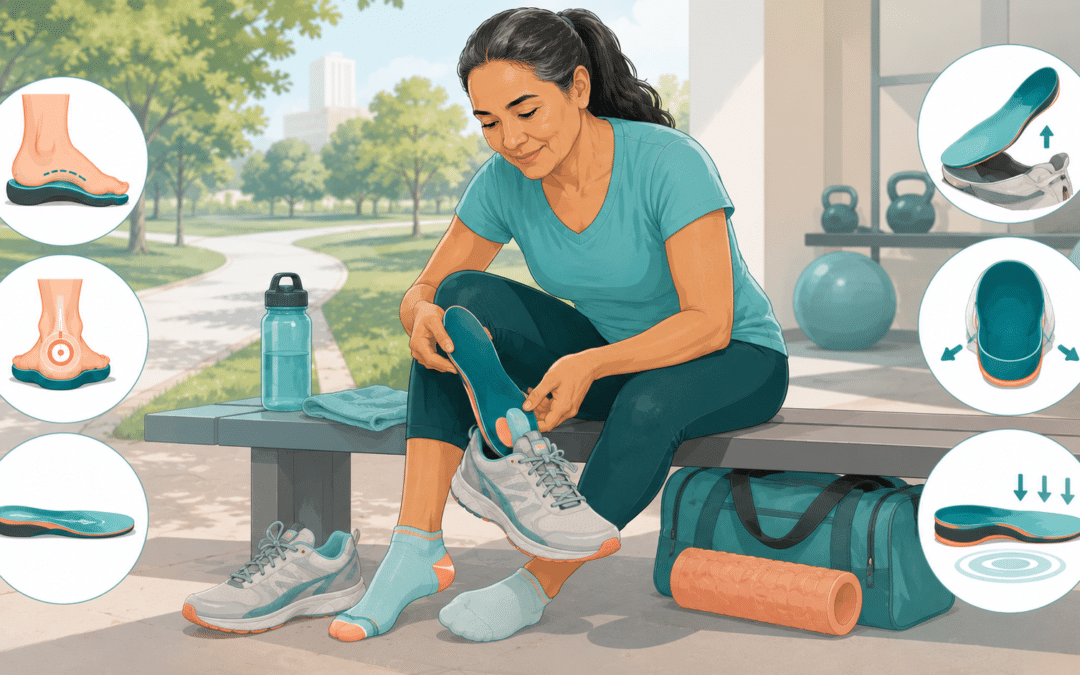
Running shoes usually have removable factory liners, which is good news. Pull the factory liner out, compare it with the new insole, and make sure the new insole does not raise your foot so high that your toes or heel get crowded.
Reference: AAOS: Orthotics.
3) Good Insole Types for High-Impact Use
For running and high-impact workouts, I would usually look at these categories before anything else:
| Insole Type | Best For | Watch Out For |
|---|---|---|
| Firm arch-support insoles | Runners who need structure, heel control, and reduced arch strain. | May need a break-in period. |
| Cushioned support insoles | People who need impact protection but still want arch support. | Too much softness can reduce stability. |
| Running-specific insoles | Higher-mileage runners or people who want arch-height options. | Fit and arch profile matter a lot. |
| Heat-moldable insoles | People wanting a semi-custom feel without full custom orthotic cost. | Follow molding instructions carefully. |
4) Product Paths to Consider
I’m not going to pretend one insole is the royal ruler of every foot in the kingdom. Your arch height, shoe shape, running style, body weight, mileage, and tolerance for firmness all matter.
- For firm support with cushioning: PowerStep Pinnacle Maxx is a reasonable option to compare if you want support plus cushioning in athletic shoes.
- For a firmer, structured feel: Superfeet has several athletic/running models. Browse Superfeet running insoles on Amazon.
- For running-specific arch profiles: Currex RunPro-style insoles are worth comparing if you want low, medium, or high arch-profile options. Browse Currex RunPro insoles on Amazon.
- For semi-custom DIY support: heat-moldable or wear-moldable insoles may be useful if standard insoles never quite match your foot. Browse heat-moldable and wear-moldable insoles on Amazon.
Bob’s tip: If your running shoe already has a lot of cushion, don’t automatically chase the thickest insole. Sometimes the winning combo is a stable shoe plus a thinner supportive insole, not a shoe stuffed like a Thanksgiving turkey.
5) Running Shoe Fit: Don’t Overstuff the Cockpit
The best insole in the world can fail if it does not fit the shoe. That is especially true with running shoes, where the shoe’s geometry already matters.
- Remove the factory liner first. Stacking insoles usually creates crowding and instability.
- Use the old liner as a trimming template. Trim slowly. Foam does not grow back, despite our hopes and science fiction dreams.
- Check heel lock. Your heel should feel secure, not lifted out of the shoe.
- Check toe room. If your toes are mashed upward, the insole is too thick for that shoe.
- Walk before you run. Test the setup indoors before taking it on a three-mile “what have I done?” adventure.
For a deeper shoe-fit breakdown, see Which Insole Fits My Favorite Shoe? and 2026 Athletic Shoes That Won’t Punish Your Fascia.
Fit Check Before Your First Run
- [ ] I removed the original shoe liner.
- [ ] The new insole sits flat without curling.
- [ ] My heel feels secure.
- [ ] My toes are not jammed into the upper.
- [ ] I walked around the house before using the setup outside.
6) Break-In and Replacement for Active Feet
Firm running insoles can feel odd at first. That does not always mean they are wrong. Your feet may need time to adjust to more structure. But there is a line between “new support” and “this thing is trying to murder my arch.”
- Start short: wear them around the house or for short walks first.
- Build gradually: use them for shorter runs before trusting them on longer routes.
- Stop if pain changes sharply: numbness, tingling, sharp pain, or limping means reassess.
- Replace when flattened: active use can wear out cushioning and support faster than casual wear.
Many runners replace shoes somewhere around a few hundred miles depending on wear, body mechanics, terrain, and shoe type. Insoles can also flatten or lose support, so check them when your shoes start feeling tired. For a broader replacement guide, see When to Replace Your Plantar Fasciitis Shoes.
7) When to Back Off High-Impact Training
This is the part nobody wants to hear, so I’ll say it gently: sometimes the smartest training move is not another run. If your heel pain is escalating, your gait is changing, or you’re limping afterward, the insole may help but the activity load may still be too much.
Mayo Clinic specifically mentions modifying or staying away from activities that cause pain as part of conservative treatment. That does not mean surrender. It means not turning a fixable flare into a long campaign.
Try lower-impact substitutions while things calm down: cycling, swimming, gentle strength work, or walking only as tolerated. Pair that with supportive shoes, the right insole, and basic stretching.
For stretching support, see Effective Stretches for Heel Pain Relief and Exercises to Relieve Plantar Fasciitis.
FAQ: Insoles for Running and High-Impact Activities
Q: What are the best insoles for high-impact activities with plantar fasciitis?
A: Look for firm arch support, a structured heel cup, shock absorption, and a good fit inside your athletic shoe. The best choice depends on your arch height, shoe volume, and how much cushioning you need.
Q: Are soft gel insoles good for running with plantar fasciitis?
A: Soft gel may feel comfortable at first, but gel alone may not provide enough structure for plantar fasciitis. Many active people need support plus cushioning, not just softness.
Q: Should I remove the factory liner before adding running insoles?
A: Usually, yes. Most athletic shoes are designed with a removable liner. Removing it helps prevent crowding, heel lift, and toe pressure.
Q: Can insoles let me keep running with plantar fasciitis?
A: Sometimes they help, but they are not a license to ignore worsening pain. If running increases your pain or changes your gait, reduce impact and get professional guidance.
Q: How long do running insoles last?
A: It depends on mileage, body mechanics, terrain, and material. Active users should check for flattened cushioning, worn top covers, reduced support, or returning heel pain.
Q: Are custom orthotics better than running insoles?
A: Custom orthotics may help in tougher or more complex cases, but many people start with quality over-the-counter running insoles first. If symptoms persist, a podiatrist or qualified clinician can help decide whether custom support makes sense.
Wrap-Up: Protect the Heel Before You Chase the Miles
High-impact activity asks a lot from your feet. If plantar fasciitis is already grumbling, the right insole can reduce strain, improve stability, and soften the repeated pounding that makes your heel feel like it filed a complaint with management.
Start with support, not squish. Make sure the insole fits your shoe. Break it in gradually. Replace it when it wears down. And when your body tells you to back off, treat that signal like useful intelligence, not a personal insult.
Next steps: return to Best Insoles for Every Budget and Lifestyle, compare Superfeet vs PowerStep, or match insoles to your favorite shoes.
Medical Disclaimer: Bob and Lisa are not doctors. We’re sharing personal experience and practical, empathy-first guidance. For medical advice, diagnosis, or treatment plans, please consult a qualified healthcare professional. We reference reputable sources for general education.
Keep reading
- Start here: Best Insoles for Every Budget and Lifestyle
- Fashion or Function? Balancing Arch Support with Style
- Which Insole Fits My Favorite Shoe? Master Mix & Match!
- Heat-Moldable Insoles: DIY Comfort or Gimmick?