
Disclosure: This post may contain affiliate links. If you buy through them, we may earn a small commission at no extra cost to you.
As an Amazon Associate I earn from qualifying purchases.
The Bottom Line: Style and Support Can Share the Same Shoe Rack
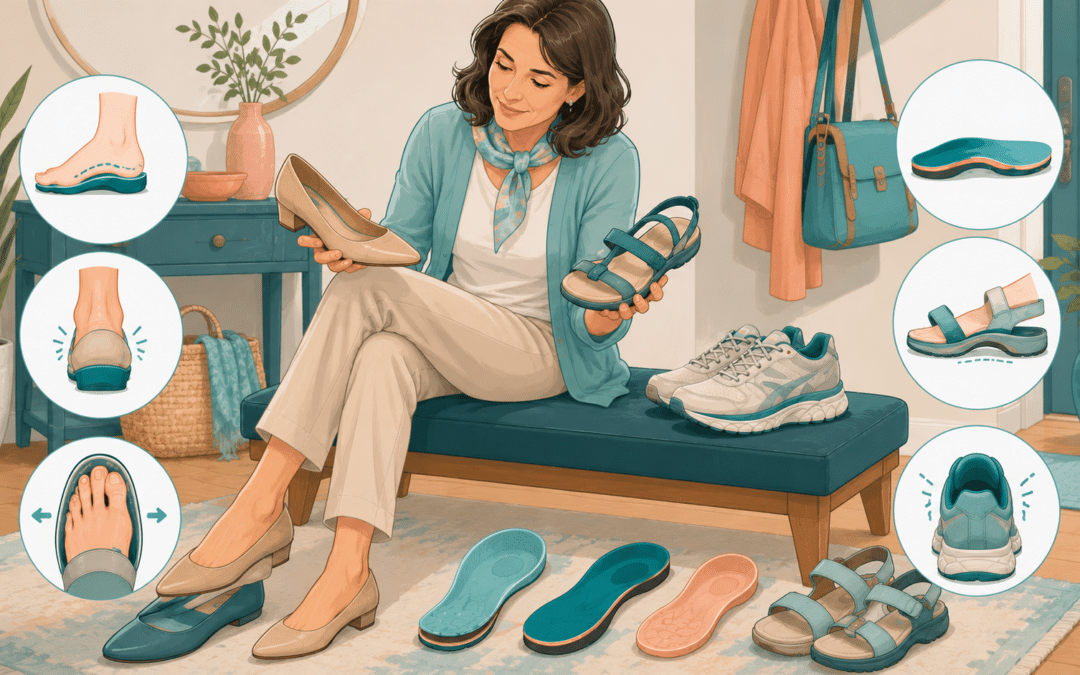
You do not have to choose between looking good and protecting your plantar fascia. The trick is matching the shoe to the situation, using slimmer insoles when space is tight, choosing built-in support when an insert will not fit, and refusing to let one beautiful but hostile shoe boss your heel around all day.
Quick Answer: How Do You Balance Arch Support with Style?
Balance arch support with style by choosing shoes that already have decent structure, then using the lowest-profile insole that gives your foot enough support without crowding your toes. For sandals, dress shoes, and low-volume footwear, built-in arch support or slim inserts often work better than forcing a thick orthotic into a shoe that was never designed for it.
There is a cruel little joke hidden inside plantar fasciitis: the shoes that look the sharpest are often the ones most likely to make your heel write angry letters to management.
But I do not buy the idea that people with plantar fasciitis have to surrender every nice-looking shoe and spend the rest of life clomping around like they escaped from a medical supply catalog. Support matters. Style matters too. The mission is not to pick one and exile the other to a lonely moon base.
The real trick is knowing when an insole can rescue a stylish shoe, when the shoe needs built-in support, and when your favorite pair is just not worth the daily heel drama.
For the bigger insole decision path, start with Best Insoles for Every Budget and Lifestyle. For shoe-specific fit issues, see Which Insole Fits My Favorite Shoe?.
This Guide Is for You If…
- You need plantar fasciitis support but do not want every shoe to look orthopedic.
- You wear dress shoes, flats, loafers, sandals, or office shoes and struggle to fit regular insoles.
- You keep trying to force thick inserts into sleek shoes and wondering why your toes hate you.
- You want to know when to use slim insoles, half insoles, built-in support, or a more supportive shoe.
- You want practical Bob-and-Lisa-style guidance, not a fashion lecture from someone who never had heel pain.
Medical note: Shoes and insoles can help many people with plantar fasciitis, but persistent heel pain deserves proper evaluation. If your pain is severe, worsening, or not improving with sensible footwear changes, stretching, and basic home care, talk with a qualified healthcare professional.
1) The Style vs. Support Trap
Plantar fasciitis does not care whether your shoes match your outfit. It only cares about what happens under your arch and heel every time you stand, walk, or pretend the grocery store is “just a quick stop” before somehow doing 4,000 steps between produce and checkout.
Stylish shoes often cause trouble because they usually have one or more of these problems:
- Little or no arch support: flat interiors leave your plantar fascia doing too much work.
- Shallow shoe volume: not enough interior room for a supportive insole.
- Narrow toe box: toes get crowded once an insert lifts the foot higher.
- Flimsy soles: the shoe bends and twists too easily, so the insole has to fight the whole battle alone.
- High or unstable heels: too much pressure shifts forward and can irritate the whole foot mechanics chain.
Mayo Clinic and Cleveland Clinic both include supportive shoes and arch supports or orthotics among common plantar fasciitis care options. That does not mean every supportive shoe has to look like it came with a prescription pad. It means your stylish choices need some structure hiding under the hood.
Lisa’s note: “After my plantar fasciitis flared up again, I stopped asking, ‘Is this shoe cute?’ and started asking, ‘Is this shoe cute enough and not plotting against me?’ That second question saved me a lot of limping.”
References: Mayo Clinic: plantar fasciitis treatment, Cleveland Clinic: plantar fasciitis.
Action Box: The Stylish Shoe Reality Check
- [ ] Does the shoe bend only at the ball of the foot instead of folding like a taco?
- [ ] Is there enough room for my toes after adding an insole?
- [ ] Can I remove the factory liner if needed?
- [ ] Does the heel feel stable instead of sloppy or wobbly?
- [ ] Can I wear this for the real event, not just the mirror test?
2) Slim Insoles for Dress Shoes, Flats, and Office Shoes
The biggest mistake with dress shoes is trying to use the same thick insole you use in your walking sneakers. That is how a perfectly good pair of shoes turns into a toe prison.
Dress shoes, flats, loafers, and many office shoes are usually low-volume. That means there is less vertical space inside the shoe. A thick insole can lift your foot too high, crowd the top of your toes, and make your heel slip out the back.
For style-friendly shoes, look for:
- Low-profile arch support: enough shape to help, not so much bulk that the shoe becomes unwearable.
- Three-quarter length or half insoles: useful when the toe box is already tight.
- Firm support instead of thick padding: in a dress shoe, structure usually matters more than pillow-soft cushioning.
- Trim-to-fit options: helpful, but only if you trim slowly and test often.
If you wear office shoes regularly, also see Office-Appropriate Shoes for 9-to-5 Comfort and Dress Shoes for Plantar Fasciitis.
Bob’s tip: forcing a bulky insole into a sleek shoe is like trying to park a snowplow in a garden shed. The math does not improve because you really want it to.
3) When Built-In Support Beats Add-On Insoles
Some shoes simply do not play nicely with removable insoles. Sandals, open-back shoes, strappy shoes, shallow flats, and many dress shoes do not have enough structure to hold a separate insert safely.
In those cases, the better strategy is not “find a way to cram in an insert.” The better strategy is choose a shoe with support already built in.
This is where brands with built-in arch support, removable liners, wider widths, or orthotic-friendly designs can make sense. Vionic, OrthoFeet, Clarks, Rockport, and similar comfort-focused brands may be worth considering depending on your style needs, foot shape, and the type of shoe you need.
Notice the phrase “worth considering.” That is not a royal decree from the Footwear Throne. It just means these kinds of brands often design shoes around support and comfort instead of treating your arch like an inconvenient rumor.
For sandals specifically, see Supportive Sandals for Plantar Fasciitis. For everyday sneaker options, see Everyday Shoes for Plantar Fasciitis That Don’t Betray You.
| Shoe Type | Best Support Strategy | Watch Out For |
|---|---|---|
| Dress shoes | Low-profile or three-quarter insole; supportive shoe base. | Toe crowding and heel slip. |
| Flats | Built-in support or very slim arch insert. | Too-flat soles and no room for inserts. |
| Sandals | Supportive footbed built into the sandal. | Flat flip-flops and unstable straps. |
| Sneakers | Removable liner plus full-length insole. | Overstuffing already cushioned shoes. |
| Boots | Full-length structured insole with heel cup. | Liners that slide or make the boot too tight. |
4) The Heel Question: Stylish Does Not Mean Spiky
Heels are tricky. A small heel can sometimes feel better than a completely flat shoe because it slightly reduces tension through the calf and plantar fascia. But high heels, narrow heels, and unstable stilettos can create a whole new circus of problems.
If you need a dressier look, aim for:
- Lower heel height: often around 1 to 2 inches instead of skyscraper mode.
- Block heel or wedge: more stable than a thin spike heel.
- Cushioned footbed: especially under the heel and forefoot.
- Secure fit: straps, heel counters, or shoe shape that keeps the foot from sliding.
- Roomy toe box: because your toes should not have to file for workers’ compensation.
If a shoe makes your heel pain worse within the first hour, that is useful data. Annoying data, yes. But useful.
Lisa’s Event Shoe Strategy
For dressier events, Lisa’s practical strategy is simple: wear the nicest supportive shoe that can survive the actual event, and bring backup flats or supportive shoes if the day is long. Cute shoes are fun. Limping through the parking lot afterward is less charming.
5) Half Insoles, Heel Cups, and Other Sneaky Helpers
Full-length insoles are not the only tool in the drawer. Sometimes the shoe is too shallow for a full insert, but a smaller support can help.
- Three-quarter insoles: add arch and heel support while leaving the toe box less crowded.
- Half-length arch supports: useful in shoes where forefoot space is tight.
- Heel cups: may add cushioning and mild heel stability, though they are not a complete arch-support solution.
- Metatarsal pads: more relevant for ball-of-foot pain than plantar fasciitis, but sometimes helpful depending on the shoe.
The warning: smaller inserts can shift if the shoe is too roomy or the insert does not sit securely. Test them at home before trusting them for a full workday, wedding, conference, or “I’ll just run five errands” adventure.
If an insole keeps sliding, bunching, squeaking, or changing your walking pattern, check “I Still Hurt!” Troubleshooting Insole Woes & Common Mistakes.
6) Stylish Shoe Rules That Protect Your Feet
Here is the practical rulebook we use for style-friendly plantar fasciitis choices:
Action Box: The Style + Support Checklist
- [ ] Choose a shoe that feels stable before adding an insole.
- [ ] Remove the factory liner before adding a replacement insole when possible.
- [ ] Use low-profile insoles for low-volume shoes.
- [ ] Use built-in support for sandals and open shoes.
- [ ] Avoid shoes that bend, twist, or collapse too easily.
- [ ] Rotate shoes instead of wearing one stylish-but-borderline pair all day, every day.
- [ ] Keep backup supportive shoes nearby for long events or travel days.
APMA’s shoe-fit guidance recommends shoes that support the front and back of the foot, remain stiff in the middle, bend at the ball of the foot, and do not twist easily. That is a good standard for style shoes too. If the shoe passes the “looks good” test but fails the “doesn’t fold like a tortilla” test, your plantar fascia may not be amused.
Reference: APMA: shoe fit tips.
7) When to Stop Negotiating with a Bad Shoe
Some shoes cannot be saved. I know. Sad violins. Tiny black armband for the cute loafer. But sometimes the most foot-friendly move is admitting the shoe is the villain.
Stop negotiating if:
- Your toes go numb after adding the insole.
- Your heel slips because the insole lifts your foot too high.
- The shoe bends or twists easily even with a supportive insert.
- The insole creates pressure points under your arch.
- You keep limping after wearing that shoe, even for short periods.
At that point, the problem may not be your insole. It may be the shoe-insole combo. Or the shoe alone. Either way, your heel has cast its vote.
FAQ: Arch Support and Style
Q: Can stylish shoes really work for plantar fasciitis?
A: Some can. Look for stable soles, decent cushioning, enough room for your toes, and either built-in arch support or enough space for a slim insole.
Q: What kind of insole works best in dress shoes?
A: Usually a low-profile, three-quarter, or slim arch-support insole. Thick athletic insoles often crowd dress shoes and make the fit worse.
Q: Are sandals okay for plantar fasciitis?
A: Flat, flimsy flip-flops are usually a bad idea. A sandal with built-in arch support, cushioning, and secure straps can be a better option.
Q: Should I buy a bigger shoe to fit an insole?
A: Sometimes going up a half size or choosing a wider/deeper shoe helps, but do not buy a sloppy shoe just to fit an insert. Heel slip can create new problems.
Q: Can I wear heels with plantar fasciitis?
A: Some people tolerate lower, stable heels better than flat unsupportive shoes. High, narrow, unstable heels are more likely to cause trouble.
Q: When should I stop wearing a stylish shoe?
A: If it causes numbness, sharp pain, heel slipping, toe crowding, or a clear return of heel pain, it is probably not worth the drama.
Wrap-Up: Your Feet Deserve Better Than Ugly or Agony
Balancing arch support with style is not about finding one magical shoe that does everything. It is about matching the right support strategy to the shoe, the event, and your actual feet.
Use slimmer insoles for dressier shoes. Choose built-in support for sandals and shallow footwear. Keep stable shoes in the rotation. And when a beautiful shoe keeps picking fights with your heel, let it go before your plantar fascia files a formal complaint.
Next steps: return to Best Insoles for Every Budget and Lifestyle, read Which Insole Fits My Favorite Shoe?, or compare style-friendly shoe choices in Dress Shoes for Plantar Fasciitis and Office-Appropriate Shoes for 9-to-5 Comfort.
Medical Disclaimer: Bob and Lisa are not doctors. We’re sharing personal experience and practical, empathy-first guidance. For medical advice, diagnosis, or treatment plans, please consult a qualified healthcare professional. We reference reputable sources for general education.
Keep reading
- Start here: Best Insoles for Every Budget and Lifestyle
- Which Insole Fits My Favorite Shoe? Master Mix & Match!
- Troubleshooting Insole Woes & Common Mistakes
- Runners’ Relief: Best Insoles for High-Impact Activities