

Quick Answer: If you have plantar fasciitis and you want to keep walking, working out, or running, your athletic shoes need three things: (1) real heel cushioning, (2) steady arch/midfoot support, and (3) a stable heel counter so your foot doesn’t wobble. Replace worn-out shoes before the cushioning flattens and your heel starts paying the price.
Disclosure: This post may contain affiliate links. If you buy through them, we may earn a small commission at no extra cost to you.
Medical note: This article is educational and not medical advice. If your pain is severe, worsening, or not improving, consider seeing a qualified clinician.
The Bottom Line: Shoes Should Help You Heal, Not Hurt You
If you’ve got plantar fasciitis, you already know the mood: you wake up, take that first step, and your heel responds like you just stepped on a Lego… made of lava.
The good news is that you do not need some magical unicorn shoe. You need the right structure. Get that right, and you give your feet a much better chance of staying calm while you stay active.
For the full footwear master plan (walking shoes, boots, sandals, slippers, insoles), start here: Best Footwear for Plantar Fasciitis 2026: The Ultimate Guide
1) The “Big Three” Features Your Athletic Shoes Must Have
A) Heel cushioning that actually cushions
You’re not shopping for “soft vibes.” You’re shopping for impact reduction. Look for a cushioned heel that compresses slightly, without feeling mushy or unstable.
B) Midfoot/arch support that doesn’t quit mid-run
Plantar fasciitis often flares when your arch collapses inward (overpronation) and your fascia gets stretched like an overworked bungee cord. A stable midfoot helps your foot stop “slumping” with every step.
C) A firm heel counter (so your heel stops doing the cha-cha)
The heel counter is the supportive cup at the back of the shoe. A firm one helps keep your foot aligned and reduces the wobble that can aggravate heel pain.
Reference:
Mayo Clinic — Plantar fasciitis: diagnosis & treatment
2) Two Store Tests You Can Do in 10 Seconds
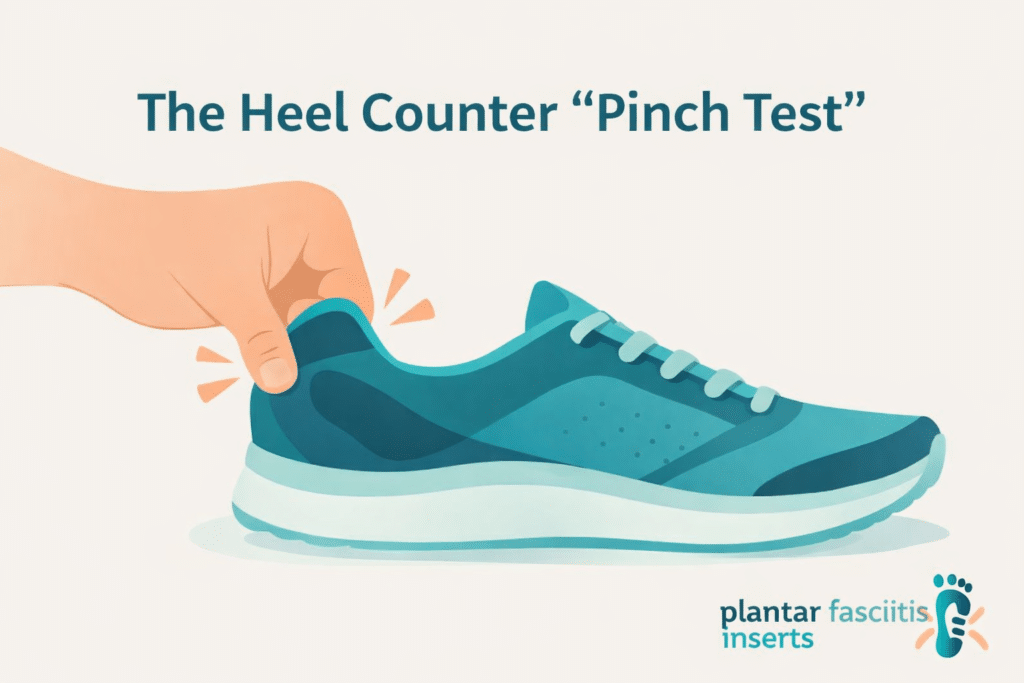
The Heel Counter “Pinch Test”
Squeeze the heel back. It should resist. If it collapses like a cheap lawn chair, your heel may not be happy long-term.
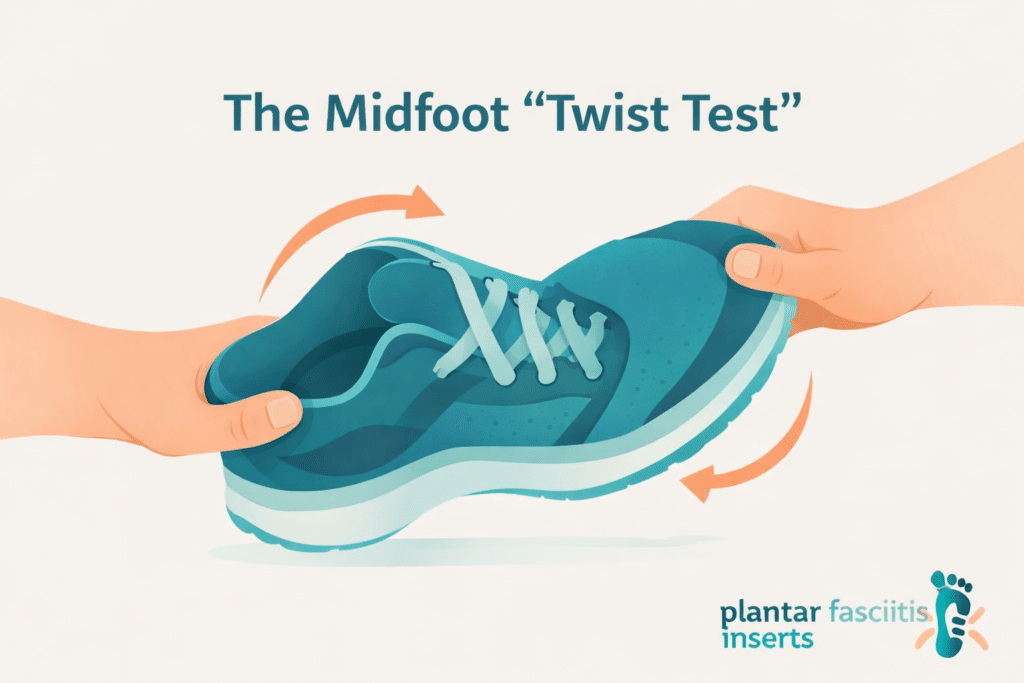
The Midfoot “Twist Test”
Hold the shoe and gently twist. A PF-friendly athletic shoe should resist twisting through the midfoot. (Some flex is fine—no shoe should be a brick—but the midfoot shouldn’t wring out like a dish rag.)
Reference:
Harvard Health — Plantar fasciitis: symptoms, causes, treatments
3) Shoe Types That Tend to Work Well for Plantar Fasciitis
Stability running shoes (great if you overpronate)
Stability models typically add midfoot structure and guide your foot so it doesn’t roll inward as much.
Max-cushion running shoes (great if impact is your #1 trigger)
If heel strike is what lights you up, you may benefit from a cushier platform—as long as it stays stable.
Wide toe-box options (if your forefoot hates being squeezed)
Toe pinch can change your gait. Gait changes can cascade into heel pain. Comfort up front matters.
4) Starter Picks
These are the kinds of athletic shoes people often look at first when they need more support, more cushioning, or both. The best one for you is the one that fits your foot shape, supports your arch, and keeps your heel stable without making your gait feel weird.
- Brooks Adrenaline GTS — a popular stability runner for people who need more structure.
- ASICS Gel-Kayano — a long-running support-and-cushioning option.
- OrthoFeet athletic-style walking shoes — comfort-focused support with a foot-friendly fit. (Honestly, Lisa has a closet full of Orthofeet. For whatever reason, she just won’t wear anything else.)
5) Helpful Extras
If you’re hurting, you want options. These are common add-ons people use alongside better shoes. Don’t try everything at once. Pick one or two that actually match your situation.
- Supportive insoles: If your shoe is close-but-not-quite, an insole can add structure and reduce strain.
- Night splints: These can help with that miserable first-step-in-the-morning pain by keeping the plantar fascia gently stretched overnight.
- Massage and rolling tools: Good for people who get relief from gentle tissue work. (Free option – any old tennis ball.)
- Cold therapy: Simple, cheap, and often helpful after activity. (Remember Lisa’s Italian tour – frozen veges will do the trick in an emergency – or any ice pack in your freezer. Never more than 25 mins. max.)
If you want to go deeper on inserts, see our Why Insoles Matter for Plantar Fasciitis in 2026 guide.
References:
Harvard Health — night splints, supportive shoes, stretching
Cleveland Clinic — supportive shoes, inserts, frozen bottle rolling
6) Pair the Right Shoes with Two Simple Stretches
Supportive shoes are your foundation. These stretches help reduce the tug-of-war on your heel and arch.
Wall calf stretch
Hands on wall, one leg back straight with heel down, front knee bent. Hold 15–30 seconds. Repeat 2–3 times per side.
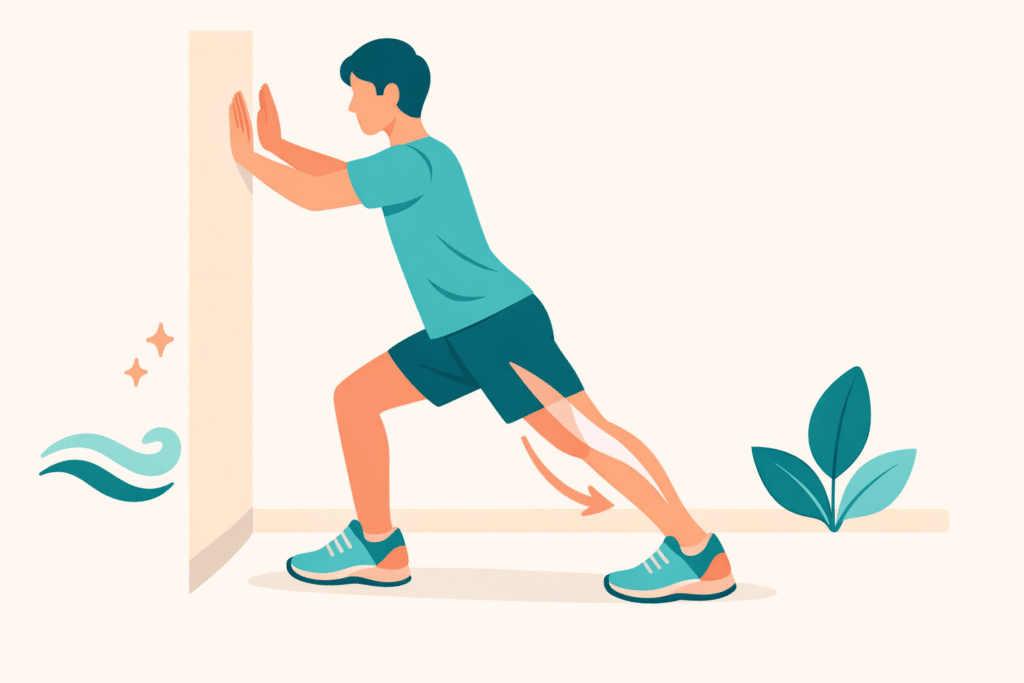
Standing wall calf stretch
Towel stretch
Seated with leg extended, loop a towel around the forefoot and pull toes gently toward you. Hold 20–30 seconds. Repeat 2–3 times.
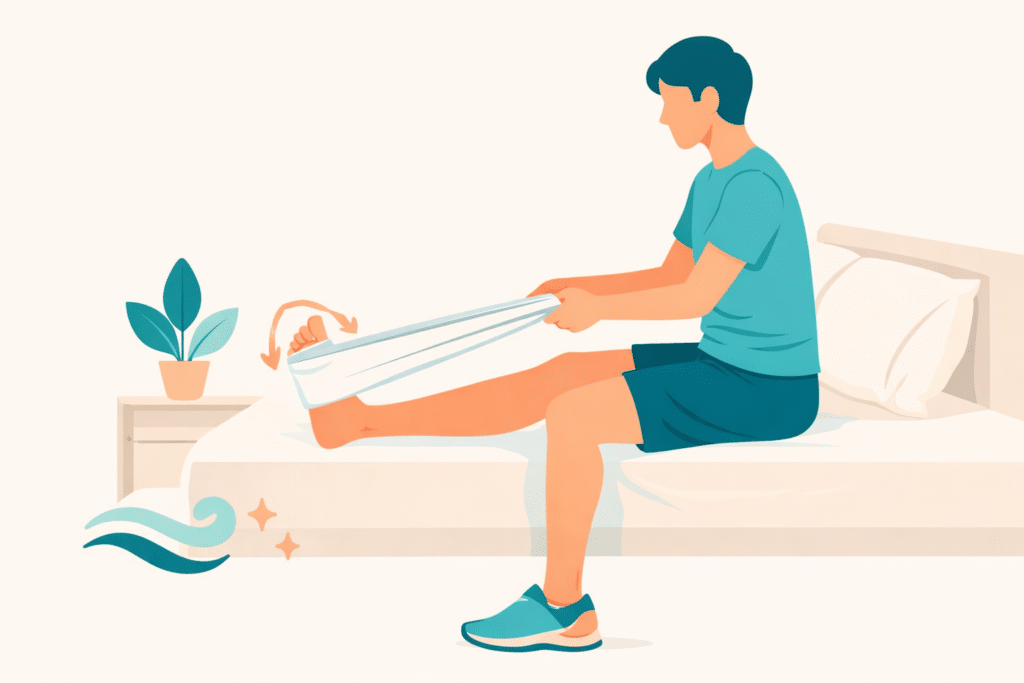
Seated towel stretch
Frozen bottle roll (bonus)
Roll your arch slowly over a frozen water bottle for 1–2 minutes.
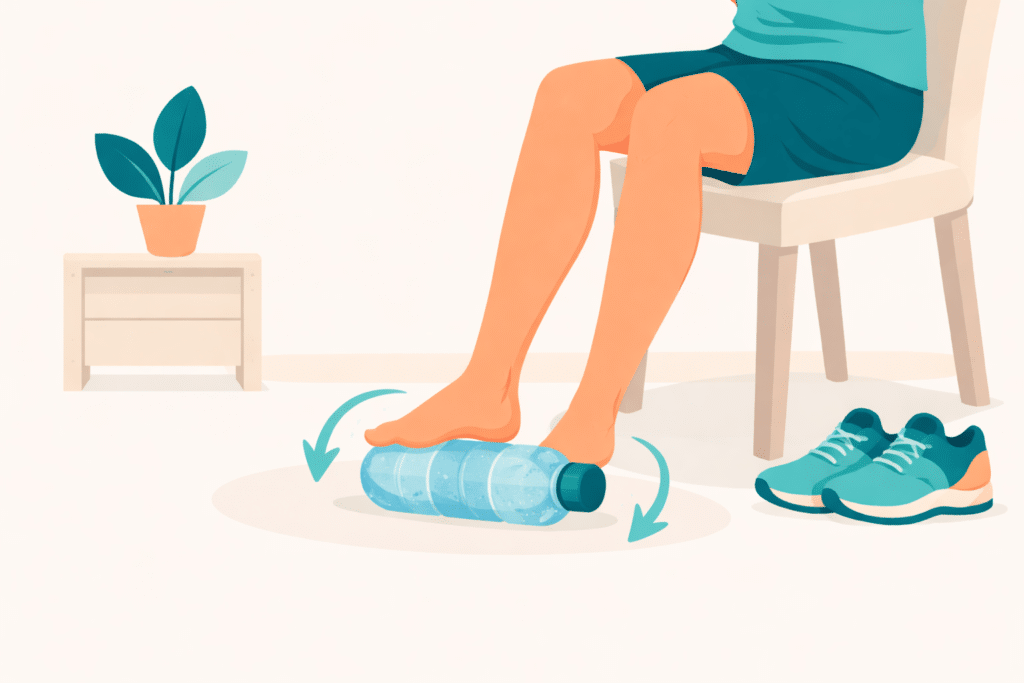
Frozen water bottle roll (or substitute a bag of frozen peas. Then cook for dinner!)
If stretching is a big part of your recovery, see our Effective Stretches for Heel Pain Relief: Step-by-Step guide.
Reference:
Mayo Clinic — stretching and rolling a frozen bottle
Recommended Next Reads
- Why Insoles Matter for Plantar Fasciitis in 2026
- 2026 Guide: When to Replace Your Plantar Fasciitis Shoes
- Slippers for Plantar Fasciitis 2026: Cozy Support That Saves Your Heels at Home
- Boot Up for 2026: Hiking Boots for Plantar Fasciitis
- Work Boots for Plantar Fasciitis 2026: Surviving Outdoor & Factory Conditions
FAQ
What are the best athletic shoes for plantar fasciitis?
Typically, shoes with strong heel cushioning, steady arch/midfoot support, and a firm heel counter. If you overpronate, stability running shoes are often a good starting point.
How often should I replace running shoes if I have plantar fasciitis?
Many people replace them around 300–500 miles, but the real rule is: replace them when the cushioning feels flattened or the shoe feels unstable. Worn-out athletic shoes can worsen symptoms.
Do I need orthotics for plantar fasciitis?
Not always. Some people do fine with supportive shoes alone. Others benefit from OTC inserts, especially if arch collapse is part of the problem.
Are super-soft shoes always better?
No. Some shoes are soft but unstable, which makes your foot work harder to stabilize—sometimes worsening PF. Support + cushioning beats “pillow with laces.”
What if pain is getting worse?
If pain is worsening, persistent, or changing (numbness/tingling, sharp spikes, altered gait), consider professional evaluation to rule out other issues and get tailored care.
The Bottom Line
Your plantar fascia doesn’t need a miracle shoe—it needs the right structure: heel cushioning, midfoot support, and heel stability. Add a couple simple stretches and one helpful tool (insole, night splint, roller), and you’ll give your feet a real shot at calming down.