
Disclosure: This post may contain affiliate links. If you buy through them, we may earn a small commission at no extra cost to you.
What are simple exercises to relieve plantar fasciitis?
Simple exercises to relieve plantar fasciitis include the wall calf stretch, seated towel stretch, frozen water bottle roll, standing plantar fascia stretch, and seated foot flex with massage. These beginner-friendly moves help loosen tight tissue, reduce morning stiffness, and support a gentle daily recovery routine.
Medical note: Bob and Lisa are not doctors. We’re sharing what helped us and what reputable medical sources commonly recommend. If your pain is severe, persistent, worsening, or affecting how you walk, see a qualified healthcare professional.
This guide is for you if:
- you want a simple beginner routine for plantar fasciitis,
- your feet feel stiff or painful first thing in the morning,
- you need gentle moves that do not require fancy equipment,
- or you want a quick daily routine that combines stretching, rolling, and self-massage.
Part of our home-treatment series: For the full recovery overview, start with our Healing Plantar Fasciitis Naturally: 5 Proven Home Remedies for Fast Relief guide.
A Simple Routine for Cranky Morning Feet
If your first steps in the morning feel like trying to start an old snowblower in January, you are in the right place. Plantar fasciitis can make your foot feel stiff, cranky, and deeply opposed to cooperation.
The trick is not to yank the starter cord harder. The trick is to warm things up slowly, loosen the tight spots, and give your foot a routine it can actually tolerate.
That is what these exercises are for.
This is not a workout designed to impress anyone. It is a simple beginner routine to help you stretch, roll, and gently wake up your feet before they start filing complaints with management.
Lisa and I have both learned that plantar fasciitis does not usually reward the “push through it” approach. It rewards consistency. Small moves. Repeated often. Done gently. Preferably before your heel starts yelling.
Bob & Lisa’s beginner rule:
Do not turn this into a toughness contest. These exercises should feel like gentle maintenance, not a punishment ritual for your feet. If pain gets sharp, back off.
How This Routine Is Different from Our Other Exercise Guides
We already have a deeper guide to strengthening exercises for plantar fasciitis relief and a focused guide to effective stretches for heel pain relief.
This post is different.
This is the beginner “what should I do today?” routine. It combines a few easy stretches, a cold rolling move, and gentle self-massage into one simple daily sequence.
Think of it as the starter kit.
- If you want strength work: use the strengthening exercises guide.
- If you want a deeper stretching routine: use the heel pain stretches guide.
- If you want a simple daily routine: start here.
Before You Start: Safety Basics
These exercises should feel controlled and tolerable. You may feel pulling, tightness, or mild discomfort. You should not feel sharp pain, numbness, tingling, burning, or a sudden increase in heel pain.
- Start gently: especially first thing in the morning.
- Do not bounce: hold stretches steadily.
- Use support: a wall, chair, bed, or towel can help you stay controlled.
- Stop if pain spikes: sharp pain is information, not a dare.
- Support your feet afterward: stretching and then walking barefoot on hard floors is a classic self-sabotage maneuver.
As an Amazon Associate I earn from qualifying purchases.
Simple setup:
You do not need a home gym. A wall, a towel, a chair, and a frozen water bottle can get you started. If hard floors keep undoing your progress, supportive slippers or recovery sandals may help protect your feet after the routine.
Home support option: Browse supportive slippers on Amazon.
The 10-Minute Beginner Routine
Here is the simple version.
- Wall calf stretch: 2 rounds per side.
- Seated towel stretch: 2 rounds per foot.
- Frozen water bottle roll: 5 minutes total.
- Standing plantar fascia stretch: 1–2 rounds per foot.
- Seated foot flex and massage: 1 minute per foot.
Do not worry about doing this perfectly. Start with the moves your foot tolerates best and build from there.
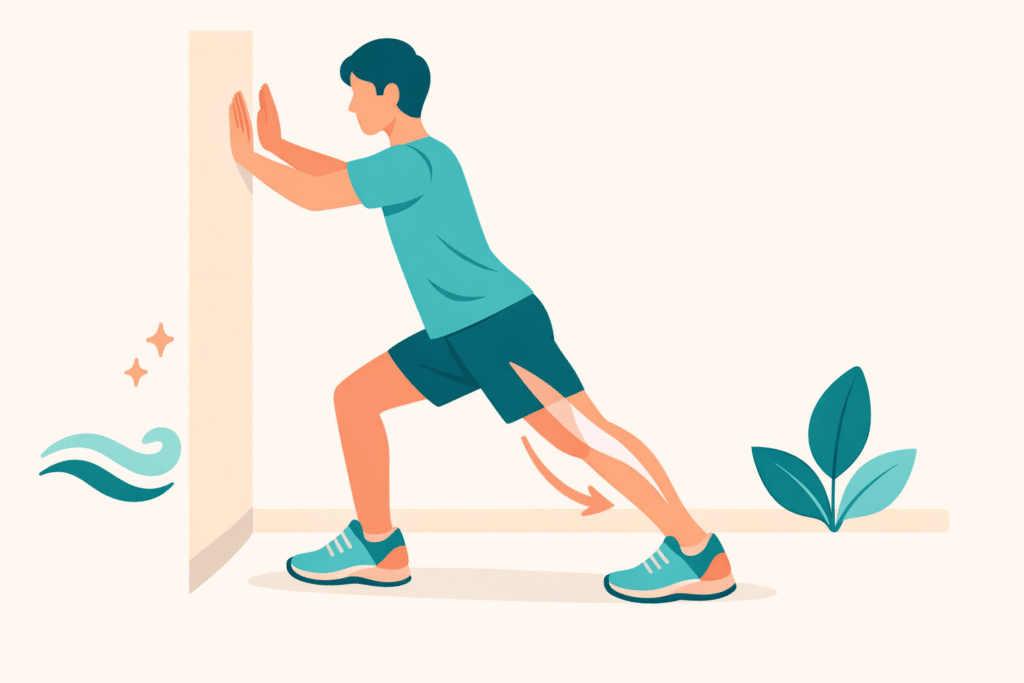
1. Wall Calf Stretch
Tight calves can increase tension through the Achilles tendon and into the plantar fascia. Loosening the calf can reduce some of that pull on the heel and arch.
How to do the wall calf stretch
- Stand facing a wall with your hands flat against it.
- Step one foot back.
- Keep the back heel flat on the ground.
- Keep the back leg straight.
- Bend your front knee and lean forward slowly.
- Hold for 20–30 seconds.
- Switch sides and repeat.
Lisa’s Tip: “I started doing this before coffee, which is saying something. Anything that happens before coffee has to earn its place.”
Medical Authority: AAOS – Plantar Fasciitis and Bone Spurs
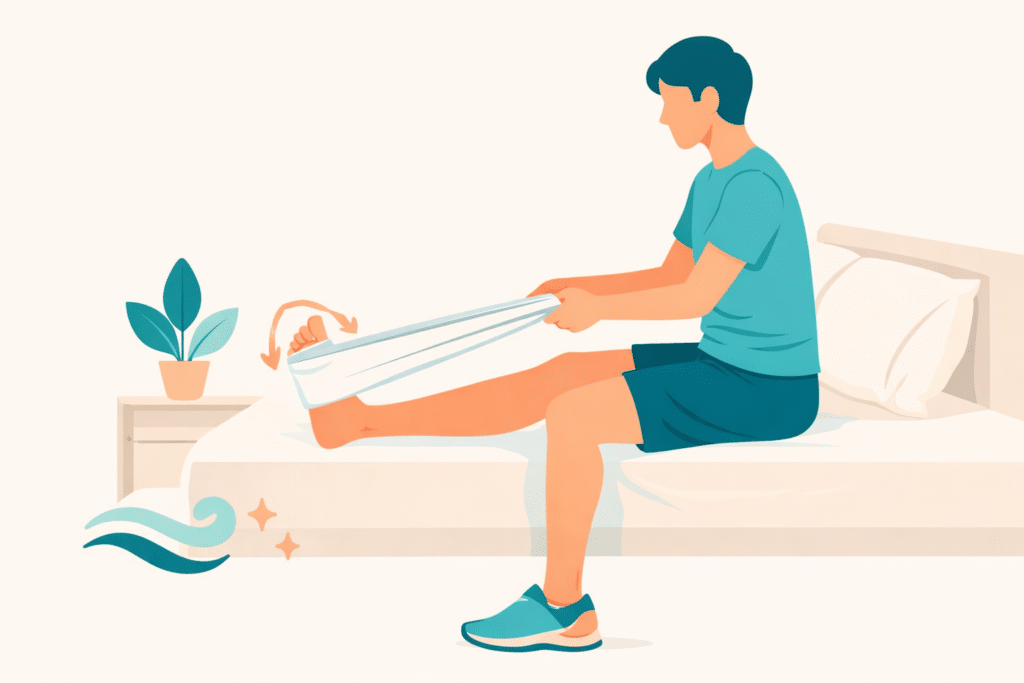
2. Seated Towel Stretch
The seated towel stretch is especially useful in the morning because you can do it before your first real steps. That matters because plantar fasciitis often causes sharp pain with those first steps after getting out of bed.
How to do the seated towel stretch
- Sit on your bed, floor, or a firm chair.
- Extend one leg in front of you.
- Loop a towel around the ball of your foot.
- Gently pull the towel toward you.
- Stop when you feel a stretch through the arch and calf.
- Hold for 15–30 seconds.
- Repeat 2–3 times per foot.
Lisa’s Tip: Hotel towels became emergency foot equipment during her Italy trip. Not exactly glamorous, but when your heel is angry, glamour gets demoted fast.
Medical Authority: Mayo Clinic – Towel Stretch
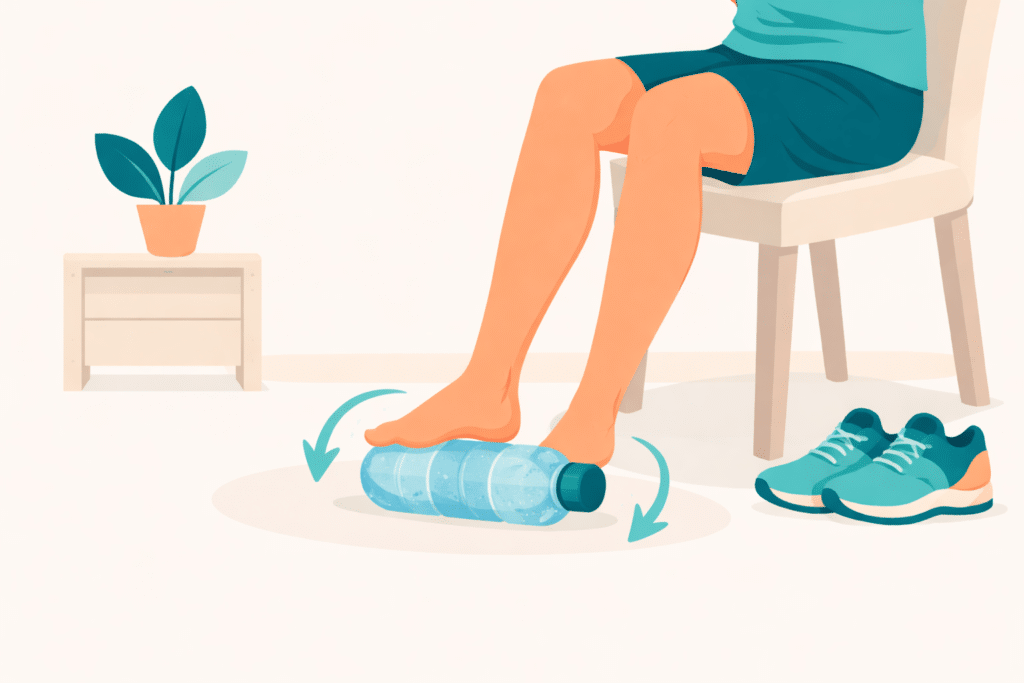
3. Frozen Water Bottle Roll
The frozen water bottle roll combines cold therapy with gentle pressure along the bottom of the foot. It can be especially useful when your heel feels sore after activity or after too much standing.
How to do the frozen water bottle roll
- Freeze a plastic water bottle.
- Sit in a chair.
- Place the bottle under your arch.
- Roll slowly from the ball of your foot toward the heel.
- Use light to moderate pressure.
- Try 5–10 minutes.
Bob’s Tip: If you do not have a frozen water bottle, frozen vegetables can work in a pinch. Just maybe retire them from dinner duty afterward unless your household has unusually flexible standards.
Cold therapy option: Browse gel ice wraps for plantar fasciitis on Amazon.
Medical Authority: Mayo Clinic – Plantar Fasciitis Diagnosis & Treatment
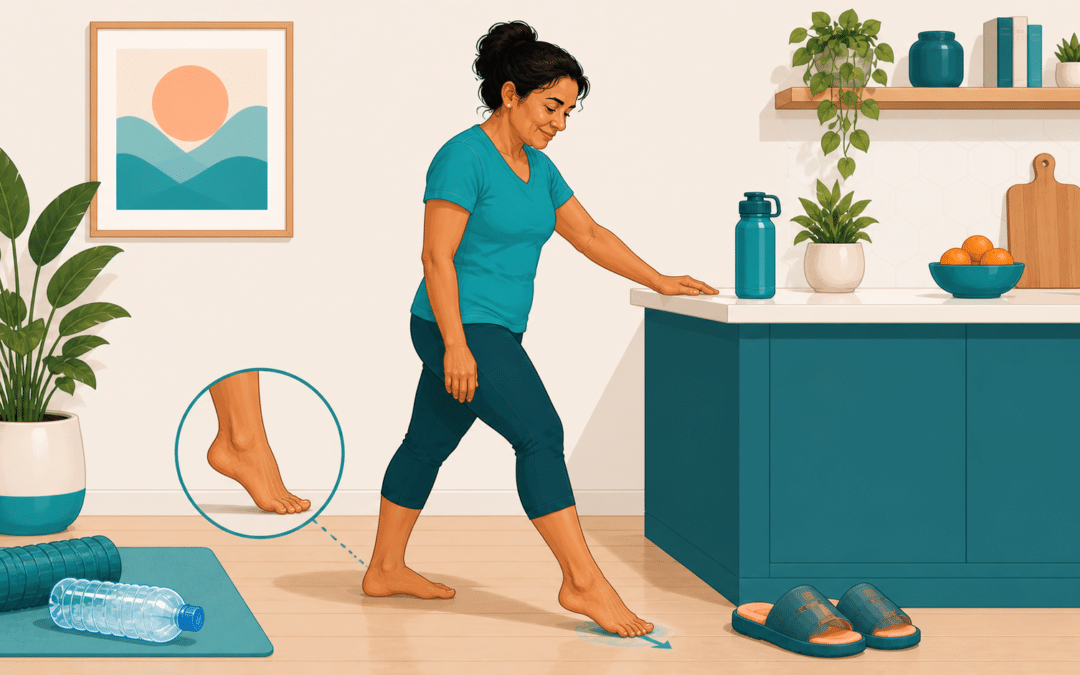
4. Standing Plantar Fascia Stretch (see featured image at top of page)
This move targets the arch and bottom of the foot more directly. It is useful when the fascia feels tight, but it needs to be done gently.
The original idea is simple: use the toes and ball of the foot to create a controlled stretch through the arch.
How to do the standing plantar fascia stretch
- Stand near a wall, counter, or sturdy chair for balance.
- Place one foot slightly forward.
- Gently press the toes of that foot into the floor.
- Let the arch stretch lightly.
- Hold for 10–20 seconds.
- Switch feet and repeat.
Bob’s Note: This should feel like a mild arch stretch, not like you are trying to crack open a walnut with your toes. If it hurts sharply, back off.
Balance note: If standing makes this awkward, skip it and use the seated foot flex and massage below instead.
Medical Authority: APMA – Plantar Fasciitis
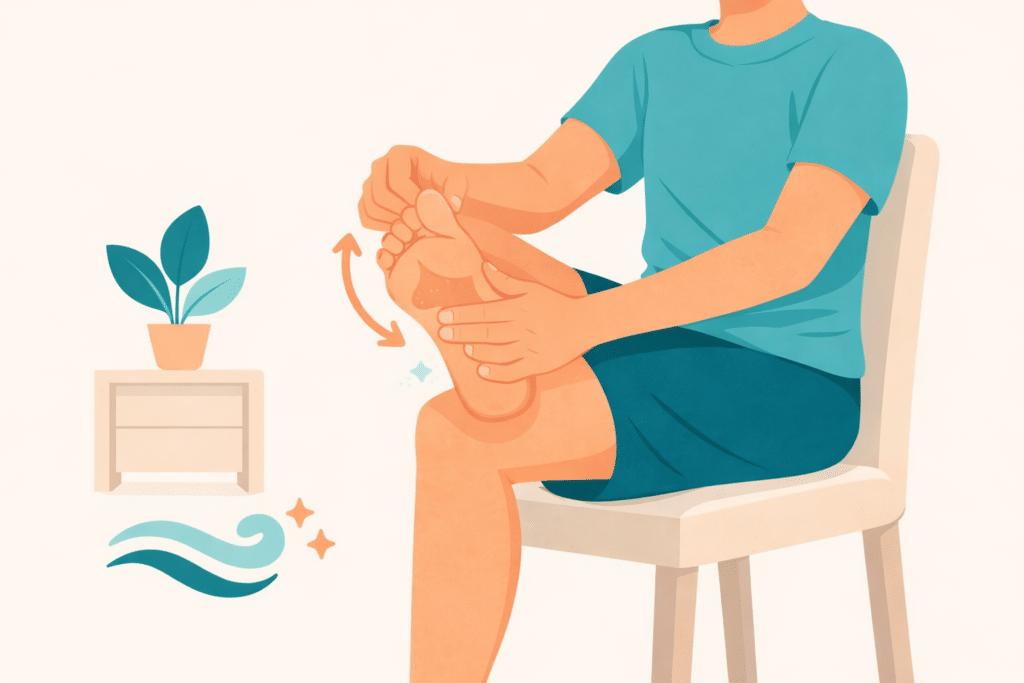
5. Seated Foot Flex and Massage
This is a simple stretch-and-massage combination. It helps you gently pull the fascia into a stretch while using your thumb to work through tight spots in the arch.
How to do seated foot flex and massage
- Sit in a chair.
- Cross one foot over the opposite knee.
- Use one hand to gently pull your toes back toward your shin.
- Use your other thumb to massage the arch in small circles.
- Focus near the arch and the area just in front of the heel.
- Try 1–2 minutes per foot.
Lisa’s Tip: “This is my TV-time ritual. It feels like a little spa day for my feet, minus the spa prices and the robe.”
Massage tool option: Browse massage balls and foot rollers on Amazon.
Medical Authority: Johns Hopkins Medicine – Plantar Fasciitis
When Should You Do These Exercises?
Consistency matters more than intensity. Think of this routine as basic foot maintenance.
- Morning: Do the towel stretch before your first serious walking.
- Before walking: Use the wall calf stretch to loosen up.
- After walking or standing: Use the frozen water bottle roll if your heel is sore.
- Evening: Use seated foot flex and massage while watching TV.
Simple 7-Day Starter Plan
- Days 1–2: Towel stretch and wall calf stretch only.
- Days 3–4: Add frozen water bottle rolling if your heel feels sore.
- Days 5–6: Add seated foot flex and massage.
- Day 7: Review how your foot feels in the morning. If it is calmer, keep going. If it is angrier, reduce intensity.
Mistakes to Avoid
These exercises are simple, but simple does not mean impossible to mess up. Avoid these common mistakes:
- Skipping the routine: Doing it once and quitting will not impress your fascia.
- Overstretching: This is not a flexibility contest. Go slow and gentle.
- Bouncing: Hold stretches steadily.
- Pressing too hard during massage: Your thumb is not a drill bit.
- Walking barefoot afterward: Even short trips across hard floors can undo progress.
- Ignoring worsening pain: If symptoms keep getting worse, get evaluated.
If walking is part of your recovery plan, see our Walking with Plantar Fasciitis guide.
If you want more focused stretch work, see our Effective Stretches for Heel Pain Relief guide.
FAQ: Exercises to Relieve Plantar Fasciitis
What are the easiest exercises to relieve plantar fasciitis?
The easiest exercises to start with are the seated towel stretch, wall calf stretch, frozen water bottle roll, and seated foot flex with massage. They are gentle, simple, and do not require special equipment.
Should I do plantar fasciitis exercises every day?
Many people do best with gentle daily stretching and rolling, especially in the morning. Start small and increase gradually only if your foot tolerates it.
Can exercises make plantar fasciitis worse?
Yes, if you push too hard, stretch aggressively, ignore sharp pain, or do too much too soon. These exercises should feel controlled and gentle.
Should I stretch before getting out of bed?
If morning heel pain is your main problem, yes. A gentle towel stretch before standing can help reduce that first-step shock.
Do I need special equipment?
No. You can start with a towel, wall, chair, and frozen water bottle. Massage balls, foot rollers, and supportive slippers can make the routine easier, but they are optional.
What should I do after these exercises?
Protect your feet. Put on supportive shoes, slippers, or recovery sandals instead of walking barefoot on hard floors.
Conclusion: Start Small and Stay Consistent
Dealing with plantar fasciitis does not have to mean wincing through every step. These simple exercises can help loosen stiff tissue, calm morning foot drama, and give your heels a better shot at recovery.
Start slow. Listen to your body. Support your feet after you stretch.
Or as Lisa says: “Your feet carry you through life—treat them like VIPs.”
Ready for the next step?
Medical Disclaimer: Bob and Lisa have no medical training. We share personal experience and practical, empathy-first guidance. For diagnosis, treatment, or medical advice, consult a qualified healthcare professional.