
Quick answer: With plantar fasciitis, the first steps after sleep or a long sit often hurt the most. While you rest, the thick band under your foot (the plantar fascia) sits in a relaxed, shortened position. Your first steps stretch it all at once. The pain usually eases after a few minutes of walking. Gentle stretching before you stand up, supportive footwear waiting by the bed, and staying off hard floors in bare feet can make those first steps easier. If the pain is severe, getting worse, or comes with numbness or tingling, get it checked.
You swing your legs out of bed, stand up, and your heel lets you know it is there.
A few hobbling steps later, the sharp edge fades to a dull complaint. By lunchtime you may barely notice it. Then you sit through a movie or a long drive, stand up, and the whole thing starts over.
If that pattern sounds familiar, you are in good company. That first-step pain is one of the most recognizable signs of plantar fasciitis. This article explains what is going on inside your foot and what you can do about it before your feet ever touch the floor.
What Happens to Your Foot Overnight
The plantar fascia is a thick band of tissue that runs along the bottom of your foot, from your heel bone to the base of your toes. It helps hold up your arch every time you stand, walk, or climb stairs.
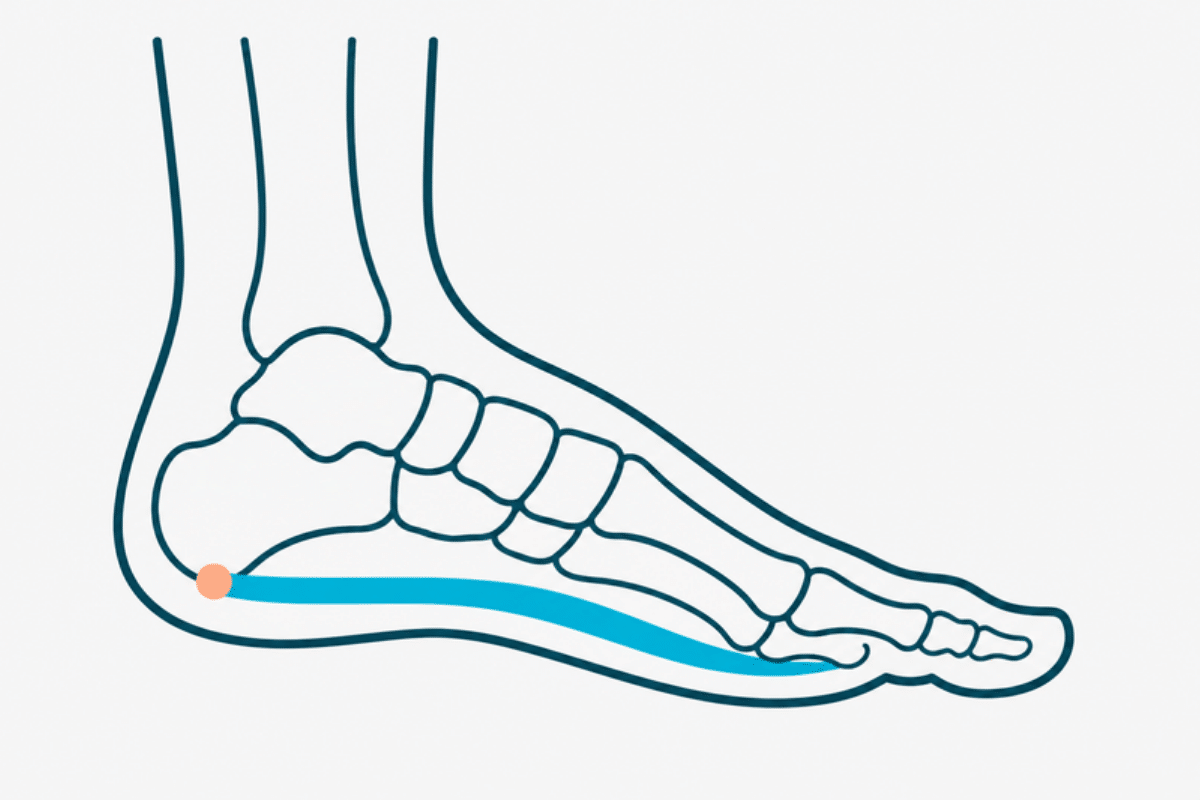
When you sleep, your feet usually rest with the toes pointed down. The American Academy of Orthopaedic Surgeons (AAOS) notes that this position relaxes the plantar fascia and is one of the reasons for morning heel pain. For hours, the band sits in a shortened, relaxed position.
Then you stand up. Your full body weight lands on your foot, your arch flattens a little, and the fascia gets stretched all at once. If that tissue is already irritated, the sudden pull is what you feel.
Picture a stiff rope that sat coiled up all night. The first hard tug is the one you notice.
Why It Eases Up, Then Comes Back
Most people find the pain fades after a few minutes of walking, once the tissue warms up and loosens. The NHS describes the pattern this way: the pain is often much worse when you first start walking after sleeping or resting, and it eases once you get moving.
But better is not the same as gone. The NHS also notes the pain can come back if you stand, walk, or run for a long time. And because sitting puts your foot back into that relaxed position, the first steps after a long car ride, a meeting, or a movie can bring the same sharp start.
That pattern is useful. It tells you two things:
- The worst moments are predictable, so you can get ready for them.
- Long stretches of standing or walking still count, even after the morning pain is gone.
A Two-Minute Routine Before You Stand Up
The problem is a sudden stretch on cold, tight tissue. So the simplest fix is to stretch it gently first, while you are still sitting on the edge of the bed. The AAOS lists stretching the calves and the plantar fascia among the first treatments for plantar fasciitis.
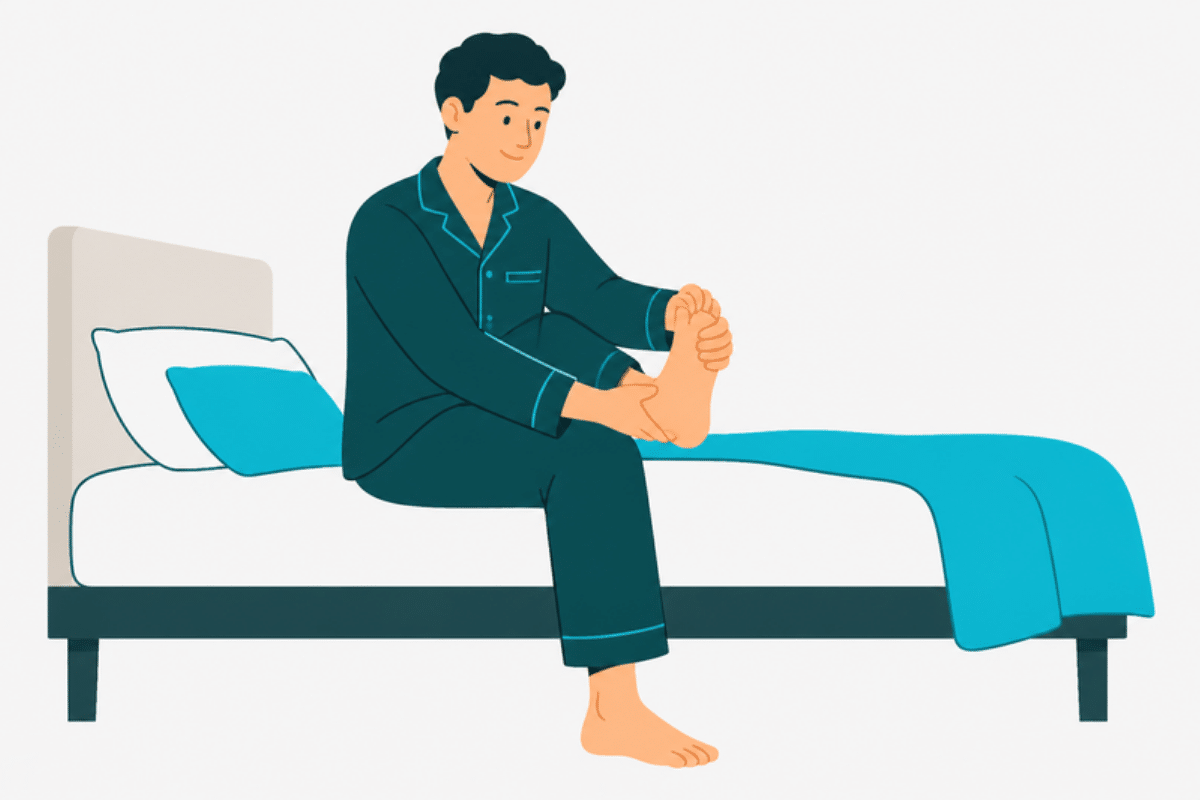
Try this before your first steps of the day:
- Toe pull. Sit on the edge of the bed. Cross the sore foot over your other knee. Hold your toes and gently pull them back toward your shin until you feel a stretch along the bottom of your foot. Hold for a slow count of 10. Repeat a few times.
- Towel stretch. Keep a towel or a belt by the bed. Sit with your leg straight out in front of you, loop the towel around the ball of your foot, and gently pull the top of your foot toward you. You should feel it in your calf and the bottom of your foot. Hold for 20 to 30 seconds. Repeat two or three times.
- Ankle pumps. Slowly point and flex your foot 10 times, then draw a few slow circles in each direction. This gets things moving before they have to carry your weight.
Gentle is the goal. A stretch should feel like a pull, not a stab. If any of these causes sharp pain, stop.
For more free, at-home ideas, see Free Plantar Fasciitis Help Starts With Stretches, a Towel, and…Frozen Peas?
Put Supportive Footwear Where Your Feet Land
The first few steps of the day are often taken barefoot on a hard floor. That is about the worst possible start for a sore heel.
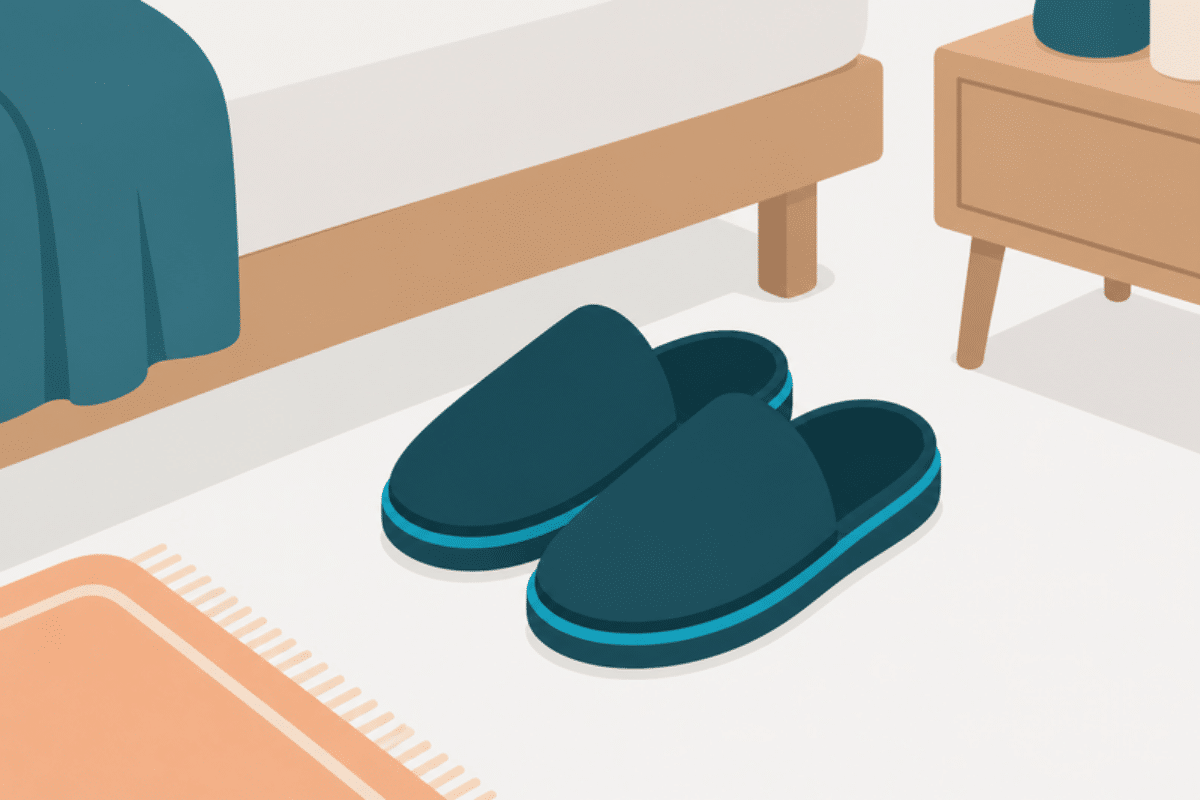
The NHS suggests wearing shoes with cushioned heels and good arch support, and avoiding walking barefoot on hard surfaces. It also lists flip-flops and backless slippers among the footwear to avoid.
The easy fix: keep a pair of supportive shoes or supportive house shoes right next to the bed, where your feet land in the morning. Step into them before you take your first real steps.
If you are not sure what counts as supportive, our footwear guide walks through what to look for.
Night Splints: Keeping the Stretch While You Sleep
The AAOS also lists night splints among the nonsurgical treatments for plantar fasciitis. A night splint holds your foot with the toes pointed up while you sleep. That keeps the plantar fascia and calf gently stretched, so they do not tighten up in that shortened position overnight.
Some people find a night splint helps with morning pain. Others find it hard to sleep in. It is worth knowing about, but it does not have to be your first purchase. The free routine above is a sensible place to start.
Don’t Forget the Afternoon Version
The same thing can happen any time you sit for a while. Before you stand up from the couch, your desk, or the car, take a few seconds to point and flex your feet and pull your toes back. Then stand up slowly and take your first few steps carefully.
It feels like a small thing. Done several times a day, it adds up.
How Long Does This Last?
There is no single answer, and it takes patience. Cleveland Clinic says healing can take anywhere from a few weeks to a few months once treatment begins. The AAOS reports that more than 90% of patients improve within 10 months of starting simple treatment.
The word that matters most there is simple. Most people get better with consistent, unglamorous habits: stretching, smart footwear, and backing off the activities that clearly make things worse.
When First-Step Pain Is a Reason to Get Checked
Morning heel pain is a classic sign of plantar fasciitis, but other problems can cause pain in the same area. This article cannot tell you what is causing your pain.
The NHS suggests seeing a doctor if:
- Your foot pain has not improved after treating it yourself for 2 weeks.
- The pain is severe or stops you from doing normal activities.
- The pain is getting worse or keeps coming back.
- You have tingling or loss of feeling in your foot.
- You have diabetes and foot pain.
The American Academy of Family Physicians also points out a few patterns worth mentioning to a doctor. Burning, tingling, or numbness can point to a nerve problem rather than plantar fasciitis. Pain that started after a jump in activity or a switch to harder surfaces, and that begins to hurt even at rest, can be a sign of a stress fracture in the heel bone.
The Bottom Line
Those brutal first steps have a simple explanation: a sore band of tissue that tightened up while you rested is being stretched all at once.
You can take some of the sting out of it:
- Stretch your foot and calf before you stand up.
- Keep supportive footwear by the bed.
- Stay off hard floors in bare feet.
- Do a quick stretch after long periods of sitting, too.
- Get checked if the pain is severe, unusual, getting worse, or not improving.
You can’t skip the first steps of the day. But you can stop them from ambushing you.
Keep reading
- Plantar Fasciitis vs. Heel Spurs: What’s the Difference?
- Free Plantar Fasciitis Help Starts With Stretches, a Towel, and…Frozen Peas?
- Natural Plantar Fasciitis Relief: 5 Home Remedies
- Walking with Plantar Fasciitis: Stay Active and Pain Free
Sources
- American Academy of Orthopaedic Surgeons: Plantar Fasciitis and Bone Spurs
- NHS: Plantar Fasciitis
- Cleveland Clinic: Plantar Fasciitis
- American Family Physician: Heel Pain: Diagnosis and Management
Medical-Information Disclaimer
We are not medical professionals. This article shares general educational information and personal experience. It cannot diagnose the cause of foot pain, replace an examination, or determine which exercises are safe for a particular person. Stop any activity that causes sharp pain or a marked worsening of symptoms. Persistent, severe, unusual, or worsening foot pain deserves evaluation by a qualified healthcare professional.