
Disclosure: This post may contain affiliate links. If you buy through them, we may earn a small commission at no extra cost to you.
Can you treat plantar fasciitis naturally?
Yes—many cases improve with conservative care. Targeted calf stretches, cold therapy, massage, and supportive footwear can reduce strain on the plantar fascia and help most people recover without surgery.
Medical note: Bob and Lisa are not doctors. We’re sharing what helped us and what reputable medical sources commonly recommend. If your pain is severe, persistent, worsening, or affecting how you walk, see a qualified healthcare professional.
This guide is for you if:
- your heel pain is worst first thing in the morning,
- you want conservative home-care options before trying more expensive treatments,
- you keep re-triggering pain by walking barefoot at home,
- or you need a simple routine you can actually stick with.
Part of our home-treatment series: If you want the broader overview first, start with our best home remedy for plantar fasciitis guide.
I’ve Been There: The Morning “Ouch”
You wake up, swing your legs out of bed, and the moment your foot hits the floor it feels like you stepped on a railroad spike. If you’ve got plantar fasciitis, you know exactly what I’m talking about.
Lisa has gone through three separate rounds of PF, including one meltdown on a stone-floored tour in Italy where frozen peas became emergency medical equipment. I’ve had my own share of “I can tough this out” stupidity too. What we learned—sometimes the hard way—is that you do not always need fancy treatment to get relief started. In many cases, the biggest wins come from simple, consistent habits done at home.
This guide walks through the natural remedies that helped us most and that line up with common conservative-care advice from major medical sources: stretching, icing, massage, and supportive footwear. None of this is magic. It’s basic, boring, consistency-driven stuff — which is annoying, but it works.
Bob & Lisa’s simple plantar fasciitis starter setup:
- Supportive slippers or recovery sandals for no-barefoot walking at home
- A gel ice wrap for cold therapy
- A massage ball or foot roller for short daily arch work
You do not need all of this on day one, but these are the low-drama tools we’d look at first.
1. Targeted Stretching: The Foundation of Recovery
If you only build one new habit, make it stretching. Tight calf muscles and tight tissue through the back of the leg can increase the pull on your plantar fascia. That is why stretching shows up over and over in plantar fasciitis treatment advice.
The goal is not to “stretch through pain.” The goal is to reduce tension gradually and consistently.
The Standing Wall Stretch
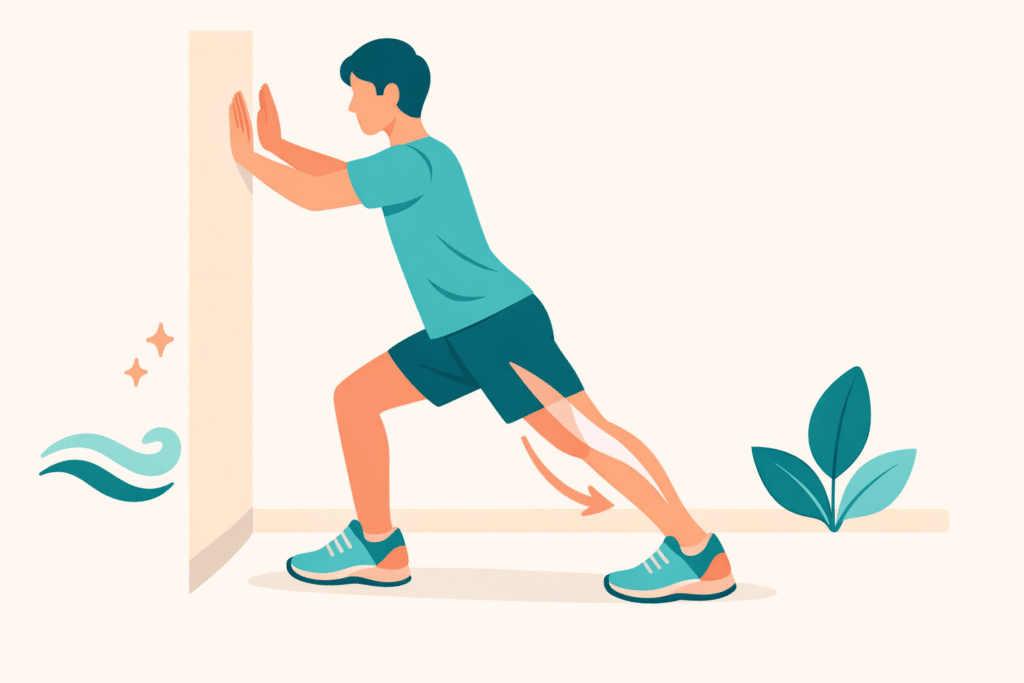
This stretch targets the gastrocnemius muscle. If this muscle is tight, it can increase tension all the way down the chain into the Achilles tendon and plantar fascia.
- Lean forward against a wall with one knee straight and the heel flat on the ground.
- Place the other leg in front with the knee bent.
- Push your hips toward the wall in a slow, controlled motion.
- Hold for 20–30 seconds. Repeat 3 times per side.
Good next step: For a fuller routine, see our step-by-step heel pain stretches guide and our top strengthening exercises for plantar fasciitis.
Medical resource: AAOS – Plantar Fasciitis Treatment & Stretching
2. Cold Therapy: Lisa’s Italy-Tour Lifesaver
Inflammation is the “fire” in your foot. Cold therapy helps calm it down. It will not fix the root cause by itself, but it can take the edge off enough to help you function and stick with the rest of your recovery plan.
Important: Never leave cold under your foot for too long (25 minutes max.). Keep sessions short and controlled.
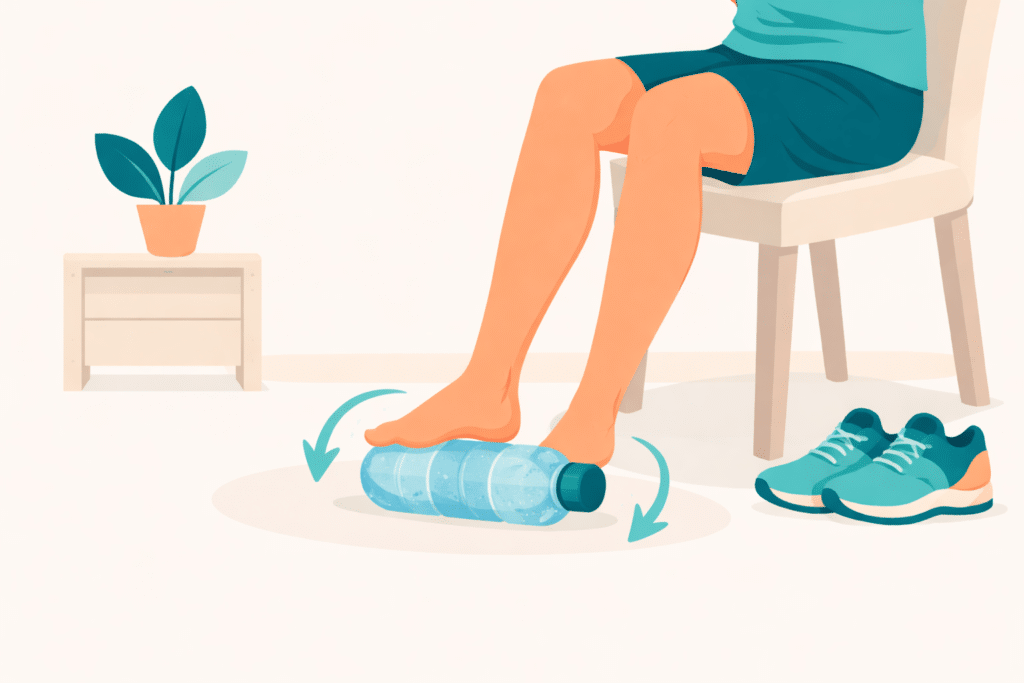
The Frozen Water Bottle Roll
This is one of Lisa’s favorite emergency moves because it gives you two benefits at once: cold to calm things down and gentle rolling pressure to massage the arch.
- Freeze a plastic water bottle.
- While seated, roll your arch over the bottle for 10–15 minutes.
- Use moderate pressure only. Sharp pain means back off.
- Lisa’s Tip: If you’re traveling and don’t have a freezer handy, a bag of frozen peas can save your dignity and your evening. Italy proved that. My hotel didn’t have ice, but a little shop across the street had frozen veggies.
Medical resource: Mayo Clinic – Plantar Fasciitis Diagnosis & Treatment
3. Massage Therapy: Breaking the Tension
Self-massage will not turn your foot into a miracle story overnight, but it can help relax tight tissue and make the area feel less angry. This is especially useful after long days on hard floors or after walking in the wrong shoes.
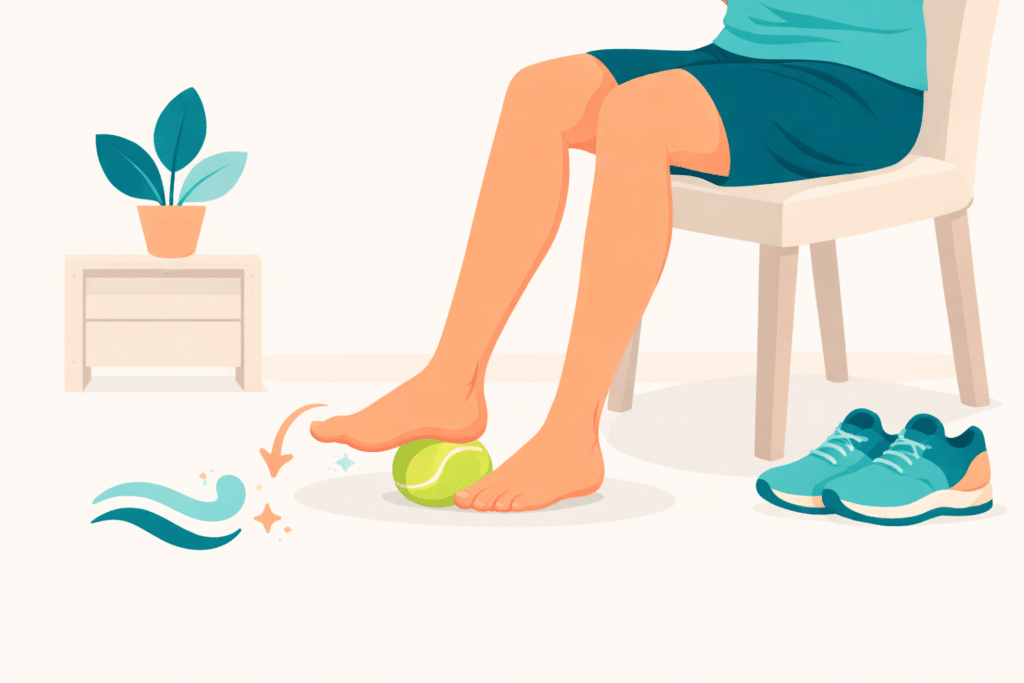
Seated Tennis Ball Roll
- Place a tennis ball, lacrosse ball, or foot massage ball under your arch while seated.
- Slowly move your foot back and forth.
- Focus on the area just in front of the heel, but avoid turning the session into a torture contest.
- Start with 1–2 minutes and build gradually if it feels helpful.
If walking is part of your recovery plan, also see Walking with Plantar Fasciitis: Tips for Staying Active and Pain-Free.
4. Proper Footwear: Never Go Barefoot
This is where a lot of people accidentally sabotage their healing. They wear decent shoes outside, then come home and walk barefoot on hardwood, tile, or concrete basement floors. That can keep re-irritating the plantar fascia, especially first thing in the morning or after sitting.
For us, the “no barefoot in the house” rule was not optional. It was one of the most important recovery changes Lisa made during her third bout of PF.
- Inside the house: Keep supportive slippers or indoor-only recovery sandals right by the bed.
- Why it helps: Arch support and heel cushioning reduce the strain that hits your fascia with every first step.
- What to avoid: Flimsy slippers, flat flip-flops, and “soft” memory foam shoes that feel good for ten seconds but provide no real structure.
Lisa finally got ahead of one flare by switching to supportive house footwear and refusing to go barefoot at home.
As an Amazon Associate I earn from qualifying purchases.
Supportive slipper pick: Compare supportive plantar fasciitis slippers on Amazon
More footwear help: Read our slippers guide and our full Best Footwear for Plantar Fasciitis guide.
Medical resource: APMA – Plantar Fasciitis Fact Sheet
5. Recovery Tools That Can Make Home Treatment Easier
You do not need to buy your way out of plantar fasciitis, but a few low-drama tools can make your home routine much easier to stick with.
- Gel ice wrap: easier and tidier than improvising with frozen vegetables every night.
- Massage ball or foot roller: helpful for short daily sessions.
- Night splint: for some people, this helps reduce that awful first-step pain in the morning.
- Supportive slippers: probably the highest-priority purchase if you are still padding around barefoot at home.
Cold-therapy option: Browse gel ice wraps for plantar fasciitis on Amazon
Massage option: Browse massage balls and foot rollers on Amazon (Lisa keeps the wooden roller under her desk, and I love the cork ball, but if you’ve got a tennis ball lying around, that will work fine.)
Night support option: Browse plantar fasciitis night splints on Amazon (The night splint was my saving grace. It looks like a Mongolian torture device but it was amazingly effective for me. Lisa hated it. It worked but she couldn’t get comfortable so she couldn’t sleep. Don’t spend over $30 bucks.)
Home support option: Browse supportive recovery slippers on Amazon
What to Do This Week: A Simple 3-Step Plan
If your heel is barking and you need a practical starting point, do this for the next 7 days:
- Stretch twice a day. Start with the wall calf stretch and build a basic routine from our heel pain relief stretches guide.
- Stop going barefoot at home. Put supportive slippers or sandals by your bed and wear them every time you get up.
- Audit your shoes. If your daily shoes are flat, flimsy, or worn down, start with our footwear pillar and our insoles basics guide.
Try these next:
When Natural Remedies Are Not Enough
Natural home treatment is often the right place to start, but there is a line between “annoying heel pain” and “this needs medical attention.” Get checked out if:
- your pain is severe or keeps getting worse,
- you have pain for weeks with no real improvement,
- you start changing the way you walk,
- you notice numbness, tingling, major swelling, or unusual symptoms,
- or you are not sure it is plantar fasciitis at all.
There is no trophy for suffering longer than necessary.
FAQ: Natural Relief for Plantar Fasciitis
What is the fastest natural way to calm plantar fasciitis pain?
For quick relief, many people do best with a combination of cold therapy, reduced barefoot walking, and gentle calf stretching. Fast relief is great, but consistency is what usually moves recovery forward.
Is walking barefoot bad for plantar fasciitis?
For a lot of people, yes—especially on hard surfaces. If your fascia is already irritated, barefoot walking around the house can keep re-triggering pain. Supportive slippers or indoor recovery sandals are usually a much smarter move.
Do I need expensive gear to treat plantar fasciitis naturally?
No. A stretch routine, cold therapy, and better footwear habits do a lot of the heavy lifting. A few inexpensive tools can help, but you do not need a garage full of gadgets.
Should I stop walking completely?
Not always. Many people can stay active with the right shoes, supportive inserts, and smarter recovery habits. If even easy walking is making things worse, scale back and consider professional evaluation.
Conclusion: One Step at a Time
Plantar fasciitis recovery is not glamorous. It is a consistency game. Stretch a little. Ice a little. Support your feet better. Stop doing the dumb stuff that keeps re-aggravating the fascia. Then repeat.
That may not sound heroic, but it is exactly how a lot of people get better.
Ready to build a smarter recovery setup?
Medical Disclaimer: Bob and Lisa have no medical training. We share personal experience and practical, empathy-first guidance. For diagnosis, treatment, or medical advice, consult a qualified healthcare professional.
The complete treatment and relief series
- Free Plantar Fasciitis Help: Stretches, a Towel & Frozen Peas
- Best Way to Relieve Plantar Fasciitis Pain
- Best Home Remedies for Plantar Fasciitis: Quick Relief
- Effective Stretches for Heel Pain Relief: Step-by-Step
- Strengthening Exercises for Plantar Fasciitis Relief
- Exercises to Relieve Plantar Fasciitis
- Walking with Plantar Fasciitis: Stay Active and Pain Free
Working on a different part of the problem? Find better shoes in our footwear guide, or Find the right insole for your budget.