
Disclosure: This post may contain affiliate links. If you buy through them, we may earn a small commission at no extra cost to you.
What is the best way to relieve plantar fasciitis pain?
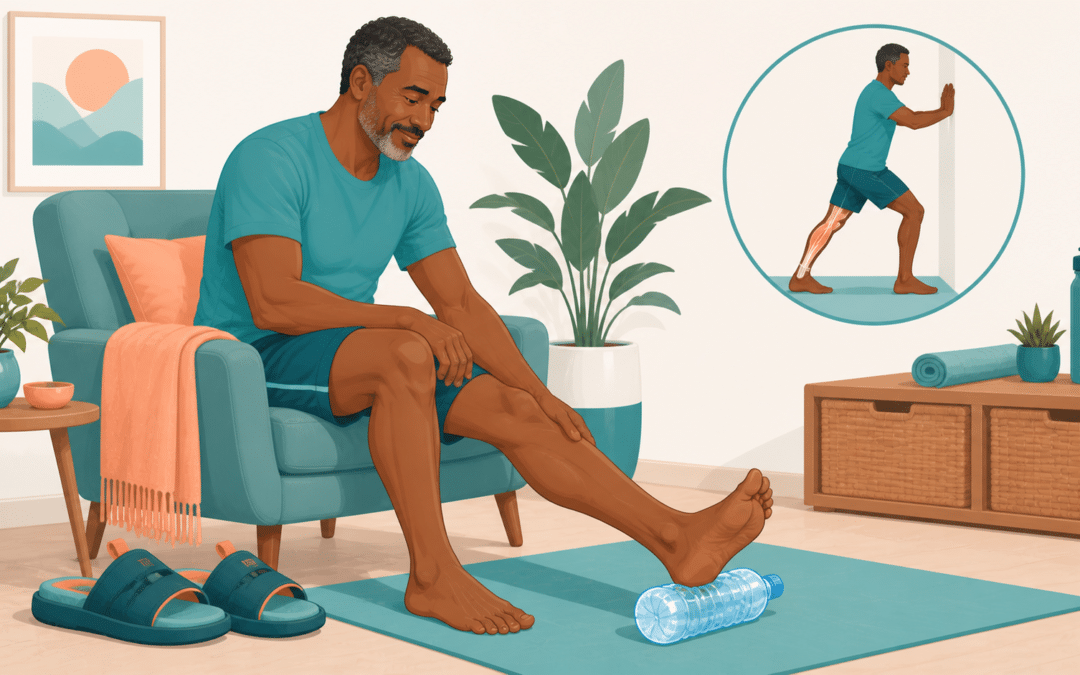
The best way to relieve plantar fasciitis pain is to combine short-term relief with long-term support: use ice or a frozen water bottle roll to calm pain, stretch the calf and plantar fascia, massage the arch gently, wear supportive shoes or slippers, and avoid barefoot walking on hard floors.
Medical note: Bob and Lisa are not doctors. We’re sharing what helped us and what reputable medical sources commonly recommend. If your pain is severe, persistent, worsening, or affecting how you walk, see a qualified healthcare professional.
This guide is for you if:
- your heel pain is worst first thing in the morning,
- you need fast relief but also want a longer-term plan,
- you are not sure whether to start with ice, stretching, shoes, or inserts,
- or you keep trying one thing at a time and getting nowhere.
Part of our home-treatment series: For the full at-home recovery overview, start with our Healing Plantar Fasciitis Naturally: 5 Proven Home Remedies for Fast Relief guide.
The Morning “Knife in the Heel”
You know the feeling. You wake up, swing your legs out of bed, and—BAM—it feels like you stepped on broken glass while someone twists a rusty knife into your heel.
If you’ve wondered why your feet seem to hate you every morning, welcome to the club.
Lisa and I have tried a lot of things: orthotics, stretches, ice packs, massage, different shoes, different slippers, different routines, and a few “maybe this will work” experiments that deserved to be laughed out of the room.
What we found is that there usually is not one magic fix. The best relief usually comes from doing a few simple things together:
- calm the pain with ice or cold therapy,
- loosen the tight tissue with stretching,
- massage the arch gently,
- support the foot with better footwear or inserts,
- and stop re-irritating the fascia by walking barefoot on hard floors.
That may not sound glamorous. But neither is limping to the coffee maker like a wounded pirate before breakfast.
Bob & Lisa’s pain-relief rule:
Do not look for one heroic trick. Plantar fasciitis usually responds better to a small routine done consistently. Ice calms it down. Stretching loosens it up. Supportive footwear keeps you from re-starting the problem every time you stand up.
1. Immediate Relief: Ice and Gentle Massage
When the pain is fresh, sharp, or intense, your first job is to calm things down. Cold therapy can help reduce pain and swelling, and rolling the foot over a frozen water bottle gives you cold plus gentle massage in one low-drama move.
Before the frozen bottle roll, you can also try a short self-massage. Personally, I would rather do this myself. If someone presses the wrong spot, you may hit the ceiling and invent new vocabulary.
Seated foot flex and massage
- Sit in a chair.
- Cross one foot over the opposite knee.
- Gently pull your toes back toward your shin.
- Use your thumb to massage the arch and the area just in front of the heel.
- Use light to moderate pressure only.
- Try 1–2 minutes per foot.
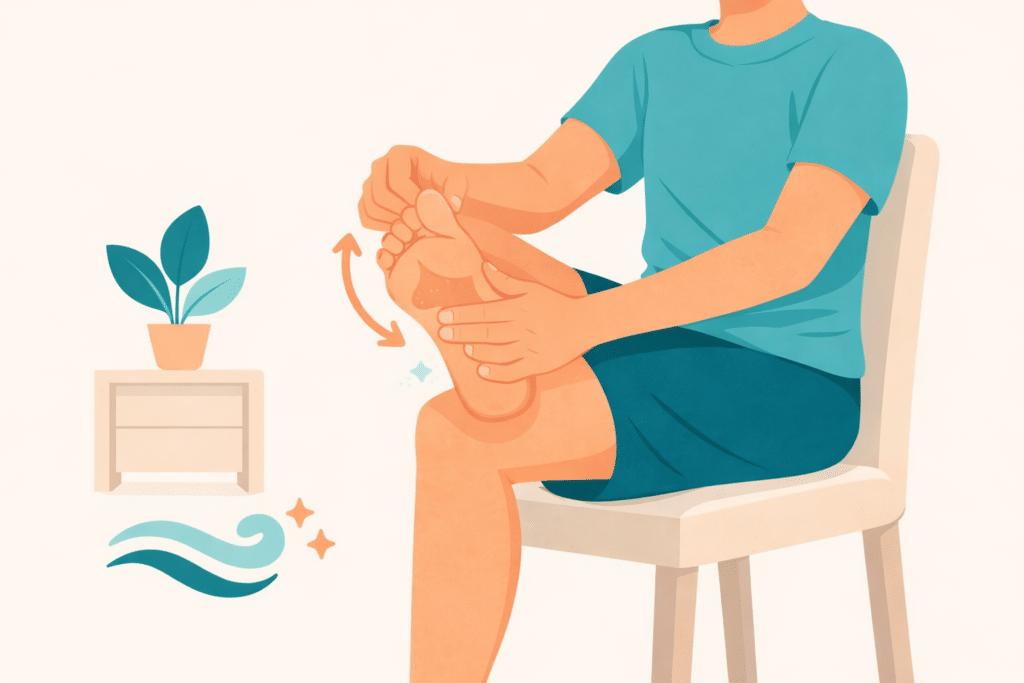
Pull your toes back gently and massage the arch and area just ahead of the heel.
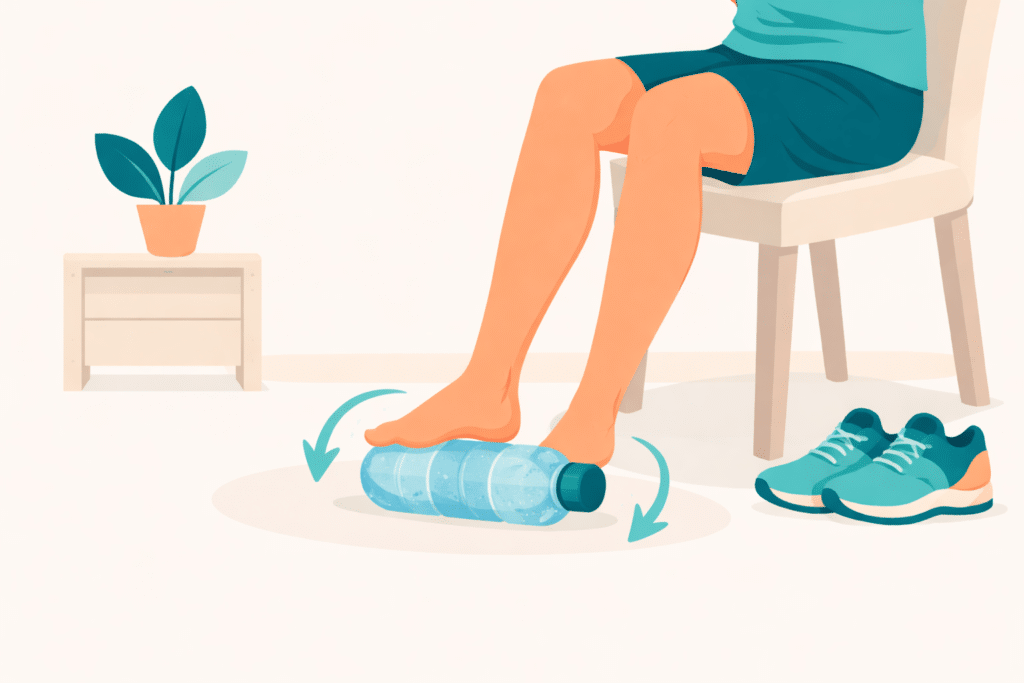
The frozen water bottle roll
- Freeze a plastic water bottle.
- Sit in a chair.
- Place the bottle under your arch.
- Roll slowly from the ball of your foot toward the heel.
- Use gentle pressure.
- Try 5–10 minutes.
Bob’s Tip: No water bottle? Grab a can of frozen orange juice concentrate. Then you can tell your friends you put an “orange-aid” on your foot. I apologize for nothing.
Cold therapy option: Browse gel ice wraps for plantar fasciitis on Amazon.
Medical Authority: Mayo Clinic – Plantar Fasciitis Diagnosis & Treatment
2. Stretching: The Long-Term Secret Weapon
Stretching is like untangling a knotted rope. Fast yanking makes things worse. Slow, steady work gets the kinks out.
For plantar fasciitis, stretching usually focuses on the calf, Achilles tendon, and plantar fascia. That matters because tightness up the back of the lower leg can increase strain down into the heel and arch.
The wall calf stretch
- Stand facing a wall with your hands flat against it.
- Step one foot back.
- Keep the back heel flat on the floor.
- Keep the back leg straight.
- Lean forward until you feel a calf stretch.
- Hold for 20–30 seconds.
- Repeat 2–3 times per side.
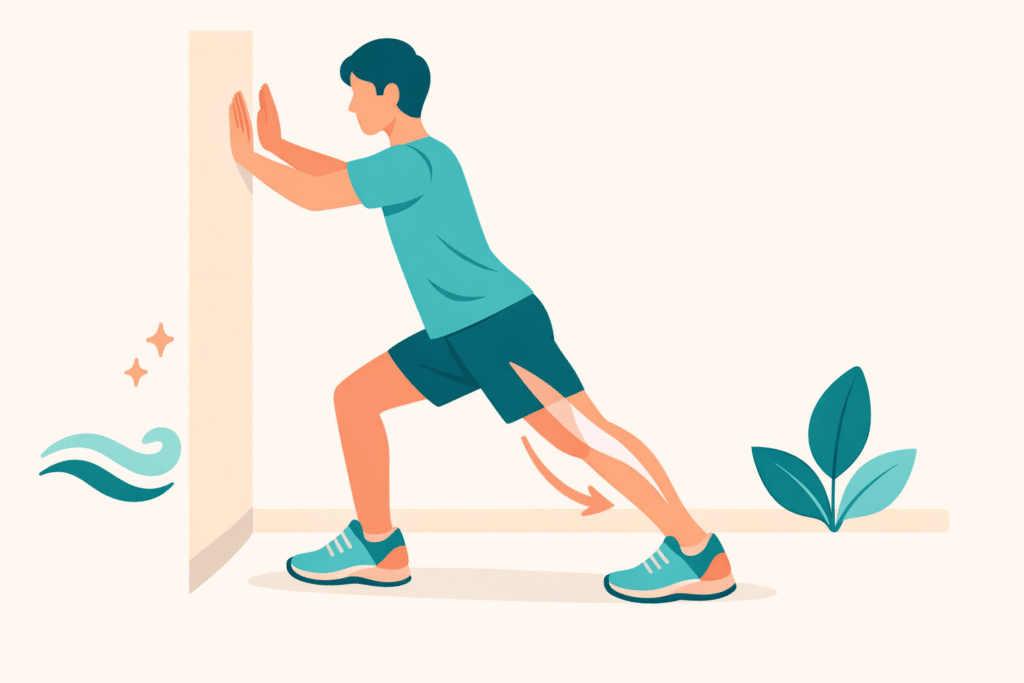
Standing wall calf stretch. Keep your back heel down and lean gently until you feel the stretch in your calf.
The towel stretch
This one is perfect before you even get out of bed.
- Sit with one leg extended.
- Loop a towel around the ball of your foot.
- Gently pull the towel toward you.
- Stop when you feel a stretch through the arch and calf.
- Hold for 15–30 seconds.
- Repeat 2–3 times per foot.
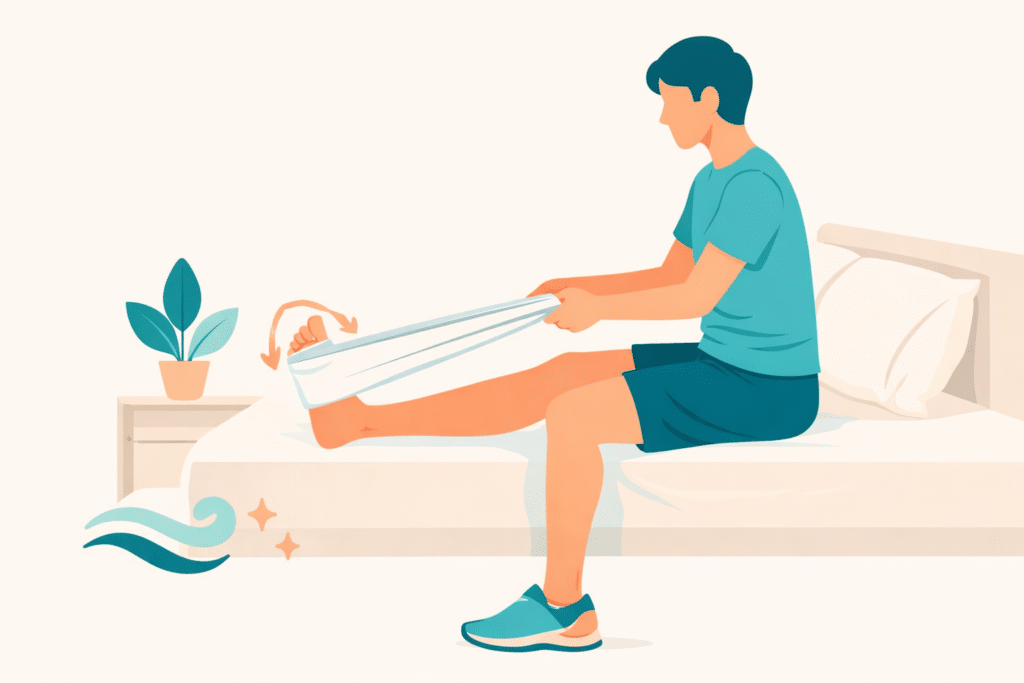
Seated towel stretch for morning heel pain and plantar fascia tightness.
Medical Authority: AOFAS – Plantar Fasciitis
If stretching is where your feet need the most help right now, see our Effective Stretches for Heel Pain Relief guide for a more focused step-by-step routine.
3. Supportive Footwear: Stop Re-Starting the Pain
You cannot beat plantar fasciitis while spending the day in unsupportive shoes and walking barefoot at home. That is like trying to bail water out of a boat while drilling new holes in the bottom.
Supportive footwear helps reduce strain on the plantar fascia by giving your arch, heel, and foot structure more help.
Look for:
- arch support,
- heel cushioning,
- a stable heel counter,
- a sole with structure,
- and enough comfort that you will actually wear the shoes.
Lisa, our resident San Diego beach girl, had to give up her beloved flat flip-flops. That was not emotionally easy. But when she finally switched to more supportive sandals, shoes, and slippers, her feet stopped staging daily rebellions.
Actually, she just walked into the kitchen in her slippers. I do not remember what she called them, but they were gray with black stitching around the top and backless. I know they’re OrthoFeet because that is almost all she buys anymore.
Bob’s Recommendation:
Good supportive footwear can make a huge difference, especially if hard floors and bad shoes keep re-aggravating your heel. If you are still walking barefoot at home, start there before buying a cabinet full of gadgets.
Supportive footwear option: Browse supportive plantar fasciitis sandals and slippers on Amazon.
More help: See our Best Footwear for Plantar Fasciitis guide, supportive slippers guide, and insoles basics guide.
Medical Authority: APMA – Plantar Fasciitis
4. The “Secret Sauce” Routine
You cannot do just one thing and expect a miracle. The best routine is boring, simple, and repeatable—which is annoying, because boring and simple are often what work.
Try this:
- Morning: Stretch before your feet hit the floor.
- During the day: Wear supportive shoes or slippers. Avoid barefoot walking on hard floors.
- After activity: Use the frozen water bottle roll or cold therapy if your heel flares up.
- Evening: Stretch again and check whether your shoes or inserts are helping or hurting.
Quick Relief Stack
- Calm it: Ice or frozen water bottle roll.
- Loosen it: Calf stretch and towel stretch.
- Support it: Better shoes, slippers, or inserts.
- Protect it: Avoid barefoot walking and worn-out shoes.
Which Relief Step Should You Try First?
If you are overwhelmed, start with the most obvious weak link.
| If your main problem is… | Start with… | Why it helps |
|---|---|---|
| Sharp pain after activity | Ice or frozen water bottle roll | Helps calm soreness and irritation |
| First-step morning pain | Towel stretch before walking | Gently warms the fascia before load-bearing |
| Tight calves | Wall calf stretch | Reduces tension through the Achilles and heel |
| Pain from standing or walking | Supportive shoes or inserts | Reduces strain during daily movement |
| Pain keeps coming back at home | Supportive slippers; no barefoot walking | Protects your feet on hard indoor floors |
A Simple 7-Day Pain Relief Plan
Here is a practical starting plan. Do not try to become a foot-rehab superhero on Day 1.
- Morning: Do the towel stretch before your first serious walking.
- Daily: Wear supportive shoes or slippers, especially on hard floors.
- Before or after walking: Do the wall calf stretch.
- After flare-ups: Use a frozen water bottle roll for 5–10 minutes.
- Evening: Check pain level and adjust tomorrow’s activity.
Bob’s rule: The next morning tells the truth. If your heel is worse when you get out of bed, yesterday’s plan was too aggressive.
When Home Pain Relief Is Not Enough
Home care can help a lot of people, but it is not a substitute for medical evaluation when symptoms are severe or stubborn.
Get checked out if:
- your pain is severe,
- your heel pain keeps getting worse,
- you are limping or changing how you walk,
- you have numbness, tingling, swelling, or unusual symptoms,
- or you have tried conservative care for several weeks without improvement.
There is no medal for suffering longer than necessary.
FAQ: Relieving Plantar Fasciitis Pain
What is the fastest way to relieve plantar fasciitis pain at home?
For many people, the fastest at-home relief comes from cold therapy, gentle stretching, and avoiding barefoot walking. A frozen water bottle roll can combine cold therapy with gentle arch massage.
What is the best long-term way to reduce plantar fasciitis pain?
The best long-term approach usually combines stretching, supportive footwear, activity modification, strengthening, and reducing habits that re-irritate the fascia.
Should I use ice or heat for plantar fasciitis?
Ice is commonly used when the heel feels sore, irritated, or inflamed, especially after activity. Heat may feel soothing for some people, but cold therapy is more commonly recommended for calming pain and swelling.
Do supportive shoes really help plantar fasciitis?
Supportive shoes can help reduce strain on the plantar fascia, especially if your current shoes are flat, worn out, or unsupportive. Arch support and cushioning matter.
Can stretching alone fix plantar fasciitis pain?
Sometimes stretching helps a lot, but many people also need supportive shoes, reduced barefoot walking, cold therapy, massage, strengthening exercises, or professional care.
When should I see a doctor for plantar fasciitis pain?
See a healthcare professional if your pain is severe, worsening, affecting how you walk, or not improving after several weeks of conservative care.
Conclusion: The Best Relief Comes from a Routine
Plantar fasciitis usually does not calm down because of one heroic trick. In our experience, the best relief comes from a routine:
- calm things down with ice,
- loosen things up with stretching,
- support your arch with better footwear,
- and stop re-irritating your heel every time you stand up.
That may not be glamorous, but it works a whole lot better than wishful thinking.
Want the full at-home plan?
Keep reading
- Start here: Natural Plantar Fasciitis Relief: 5 Home Remedies
- Best Home Remedies for Plantar Fasciitis: Quick Relief
- Effective Stretches for Heel Pain Relief: Step-by-Step
- Free Plantar Fasciitis Help: Stretches, a Towel & Frozen Peas
Medical Disclaimer: Bob and Lisa have no medical training. We share personal experience and practical, empathy-first guidance. For diagnosis, treatment, or medical advice, consult a qualified healthcare professional.