
Disclosure: This post may contain affiliate links. If you buy through them, we may earn a small commission at no extra cost to you.
What is the best footwear for plantar fasciitis?
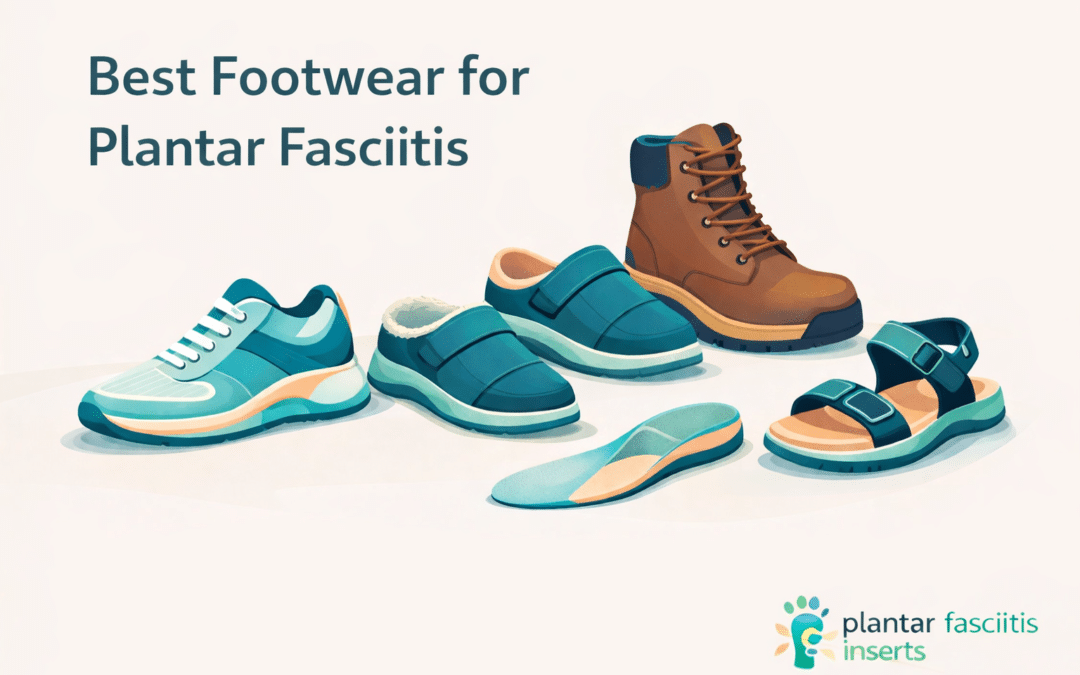
The best footwear for plantar fasciitis has firm arch support, a cushioned heel, a stable heel counter, and enough structure to keep your foot from collapsing inward. Supportive walking shoes, slippers, sandals, work boots, dress shoes, and insoles can all help reduce strain on the plantar fascia when matched to your daily life.
Medical note: Bob and Lisa are not doctors. We’re sharing what helped us and what reputable medical sources commonly recommend. If your pain is severe, persistent, worsening, or affecting how you walk, see a qualified healthcare professional.
This guide is for you if:
- your heel pain gets worse in flat, flimsy, or worn-out shoes,
- you need help choosing shoes, slippers, sandals, work boots, or dress shoes,
- you are not sure whether you need new shoes or better insoles,
- or you keep re-triggering plantar fasciitis by walking barefoot at home.
Part of our recovery series: If you want the full home-treatment plan first, start with our Healing Plantar Fasciitis Naturally: 5 Proven Home Remedies for Fast Relief guide.
Why Footwear Can Make or Break Your Recovery
If you have plantar fasciitis, your shoes are not just fashion. They are either helping your recovery or quietly mugging it in an alley.
I learned that the hard way. I used to wear flimsy sneakers because they felt “comfortable.” They were soft, light, and easy to throw on. Unfortunately, “soft” is not the same thing as “supportive.” A marshmallow is soft too, but I would not build a bridge out of one.
Lisa and I have spent way too much time—and money—trying different shoes, slippers, sandals, inserts, and recovery tools. We have had the flare-ups, the travel meltdowns, the “I can’t walk another block” moments, and the grim realization that some cute shoes are basically heel-pain delivery systems with laces.
The big lesson:
You cannot beat plantar fasciitis while spending your day in unsupportive footwear.
That includes your house shoes. Actually, for a lot of people, the house-shoe problem is the sneaky villain. They wear decent shoes outside, then come home and walk barefoot on hardwood, tile, or concrete floors. That can re-irritate the plantar fascia over and over, especially first thing in the morning.
Bob & Lisa’s footwear rule:
Do not judge plantar fasciitis shoes by softness alone. You want supportive cushion, not mush. The right footwear should support your arch, cushion your heel, and help keep your foot stable with every step.
1. The Big Three: What Your Shoes Actually Need
Before you look at price, color, brand, or whether the shoe looks like something issued by a hospital supply depot, check the basics.
The best footwear for plantar fasciitis should usually have three core features:
- Firm arch support: helps reduce the strain on the plantar fascia.
- Cushioned heel: helps absorb impact when your heel hits the ground.
- Stable heel counter: helps keep your foot from wobbling or rolling too much inside the shoe.
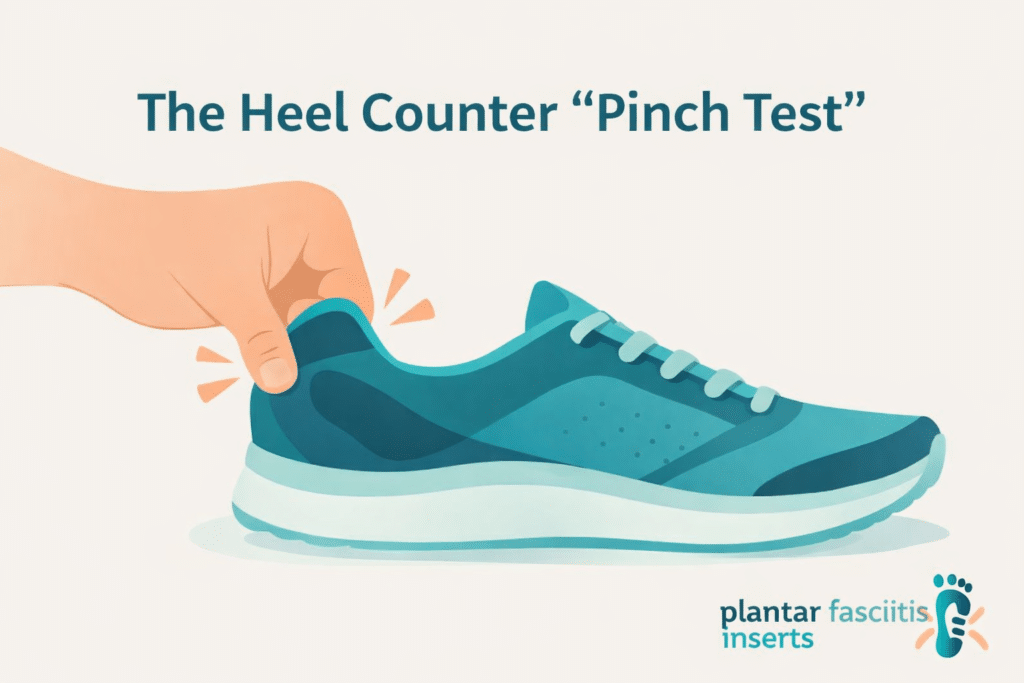
The heel counter “pinch test”
Pick up the shoe and squeeze the back of it—the part that wraps around your heel.
- If it collapses like wet cardboard, it is probably too flimsy.
- If it holds its shape, that is a better sign.
The flex test
A supportive shoe should usually bend at the toes, not fold in half through the middle.
If a shoe folds like a taco, your plantar fascia may be the filling.
Medical resource: APMA – Selecting the Right Footwear
2. Walking Shoes: Your Daily Drivers
For most people, walking shoes are the main event. They are the shoes you wear for errands, daily movement, light exercise, travel, and all the “I’m just going to run in for one thing” trips that somehow turn into 4,000 steps.
For plantar fasciitis, walking shoes should provide:
- firm arch support,
- heel cushioning,
- a stable heel counter,
- enough room in the toe box,
- and a sole that does not twist or collapse too easily.
Lisa’s Favorite: “I’m an OrthoFeet girl all the way. A lot of healthy shoes look like something my grandma would wear to a bingo hall, but OrthoFeet actually has some style. More importantly, they feel like walking on a cloud that’s also holding your hand.”
As an Amazon Associate I earn from qualifying purchases.
Walking shoe options:
- Browse Brooks walking and athletic shoes on Amazon
- Browse ASICS supportive shoes on Amazon
- Browse Vionic shoes on Amazon
- Browse OrthoFeet shoes on Amazon
Do not buy by brand alone. Fit, support, and comfort still matter. The best shoe is the one that supports your foot and that you will actually wear.
Want the full breakdown? See our 2026 Athletic Shoes That Won’t Punish Your Fascia guide.
Medical resource: AAOS – Plantar Fasciitis and Bone Spurs
3. The No-Barefoot Rule: Slippers and House Shoes
This is where a lot of people sabotage themselves.
They wear good shoes all day, come home, take them off, and start walking barefoot on hardwood, tile, or concrete. Then they wonder why their heel pain keeps coming back.
For Lisa, the no-barefoot rule was a turning point. She had to stop treating the house like a California beach.
Supportive slippers or indoor-only recovery sandals can protect your feet during the exact moments plantar fasciitis often screams the loudest:
- first thing in the morning,
- after sitting for a while,
- during quick trips to the kitchen or bathroom,
- and while standing on hard floors at home.
Indoor support options:
Need indoor-only support? See our Slippers for Plantar Fasciitis 2026 guide.
4. Insoles: When the Shoe Is Okay but the Footbed Is Junk
Sometimes the shoe itself is not the whole problem. Sometimes the factory insole is just a sad little foam wafer pretending to be support.
If your shoes are still in good shape but lack arch support, an over-the-counter insole may help. This can be especially useful in walking shoes, work boots, dress shoes, and sneakers with removable footbeds.
Look for insoles with:
- firm arch support,
- heel cushioning,
- a stable shape,
- and the right volume for your shoe.
Bob’s Tip: If your favorite boots are still solid but the support has died, do not automatically toss them. Swapping the factory insole for something like PowerStep or Superfeet may give them a second life.
Insole option: Browse PowerStep Pinnacle insoles on Amazon.
More help: See our Insoles Basics for Plantar Fasciitis guide and our Why Insoles Matter post.
5. Work Boots and Professional Shoes
If you work in a warehouse, on a construction site, in healthcare, in retail, or anywhere that keeps you standing for long shifts, footwear is not optional equipment. It is survival gear.
For work boots, look for:
- a wide enough toe box,
- shock absorption,
- removable insoles,
- stable heel support,
- and job-appropriate safety features.
For dress shoes or office shoes, look for:
- hidden arch support,
- a cushioned footbed,
- a low, stable heel,
- and enough structure that the shoe does not collapse under you.
Work and professional footwear options:
Need more specific help? See our Work Boots for Plantar Fasciitis 2026, Dress Shoes for Plantar Fasciitis, and Office-Appropriate Shoes guides.
6. Sandals and Summer Footwear
Flat flip-flops are summer betrayal with a toe strap.
They offer little support, little stability, and often force your toes to grip to keep the sandal on. That can add strain through the foot and aggravate plantar fasciitis.
That does not mean you can never wear sandals. It means the sandals need to earn their place.
Look for:
- arch support,
- a contoured footbed,
- heel cushioning,
- adjustable straps if possible,
- and enough structure that the sandal does not fold in half.
Summer support options: Browse recovery sandals on Amazon or browse orthotic flip-flops on Amazon.
For summer footwear: See our Supportive Sandals for Plantar Fasciitis guide.
7. Athletic, Hiking, and Seasonal Footwear
Plantar fasciitis does not take a vacation just because you are walking trails, exercising, or dealing with winter sidewalks.
For athletic shoes, you need support that matches your activity. For hiking boots, you need stability, cushioning, and room for insoles. For winter boots, you need warmth without turning the boot into a sloppy, unsupported foot cave.
Useful guides:
- Athletic Shoes That Won’t Punish Your Fascia
- Everyday Sneakers for Plantar Fasciitis
- Hiking Boots for Plantar Fasciitis
- Winter Boots for Plantar Fasciitis
Which Footwear Should You Fix First?
If you are overwhelmed, start with the footwear problem that affects you most often.
| If your biggest problem is… | Start with… | Why it matters |
|---|---|---|
| Morning first-step pain | Supportive slippers or recovery sandals | Protects your feet before the fascia gets re-irritated |
| Pain during errands or daily walking | Supportive walking shoes | Improves support during your most common movement |
| Standing all day at work | Work shoes, work boots, or professional shoes | Reduces strain during long hours on hard surfaces |
| Good shoes but poor support | Orthotic insoles | Upgrades the footbed without replacing the whole shoe |
| Summer flare-ups | Supportive sandals | Replaces flat flip-flops with structured support |
The 3-Step Shoe Audit
Use this quick audit before buying anything new.
PFI Shoe Audit
- [ ] Flex test: Does the shoe bend only near the toes, or does it fold in the middle like a taco?
- [ ] Heel counter test: Does the back of the shoe stay firm when squeezed?
- [ ] Tread check: Is the heel worn unevenly or badly compressed?
- [ ] Insole inspection: Is the factory insole shaped and supportive, or just a flat foam insert?
- [ ] Indoor check: Are you walking barefoot at home on hard floors?
If your shoe passes most tests but the insole fails, start with our Insoles Basics for Plantar Fasciitis guide.
Common Footwear Mistakes
- Buying for softness only: Mushy shoes are not always supportive shoes.
- Ignoring indoor footwear: Barefoot walking at home can keep restarting the problem.
- Keeping dead shoes too long: Shoes can look okay after the support is gone.
- Using one shoe for everything: Work, walking, travel, hiking, and house use may need different support.
- Assuming expensive means better: Fit and support matter more than price alone.
FAQ: Best Footwear for Plantar Fasciitis
What is the best footwear for plantar fasciitis?
The best footwear for plantar fasciitis usually has firm arch support, heel cushioning, a stable heel counter, and enough structure to prevent the shoe from collapsing under your foot.
Are soft shoes good for plantar fasciitis?
Not always. Soft shoes may feel comfortable at first, but plantar fasciitis usually needs supportive cushion, not mushy cushion. The shoe should support your arch and stabilize your heel.
Should I wear slippers if I have plantar fasciitis?
Supportive slippers or indoor recovery sandals can help if you walk on hard floors at home. Avoid flat, floppy slippers with no arch support.
Can insoles help if my shoes are still good?
Yes. If your shoes are structurally sound but the footbed lacks support, over-the-counter insoles may help improve arch support and cushioning.
How often should I replace walking shoes?
It depends on use, body weight, surface, and shoe quality. If the midsole is compressed, the tread is uneven, or your heel pain increases in shoes that used to help, it may be time to replace them.
Are sandals bad for plantar fasciitis?
Flat flip-flops are often a problem. Supportive sandals with arch support, heel cushioning, and structure may be a better choice.
Wrap-Up: Match the Footwear to Your Real Life
Choosing the best footwear for plantar fasciitis is not about finding one magic shoe. It is about matching support to your real life.
If you walk a lot, start with walking shoes. If your mornings are brutal, start with supportive slippers. If you stand all day, fix your work footwear. If your shoes are decent but the footbed is junk, look at insoles.
Every step in a bad shoe can keep the irritation going. Every step in supportive footwear gives your heel a better chance to settle down.
Choose your next footwear guide:
- Slippers for Plantar Fasciitis
- Insoles Basics for Plantar Fasciitis
- Vionic vs OrthoFeet vs Skechers
- Everyday Sneakers for Plantar Fasciitis
- Work Boots for Plantar Fasciitis
- Dress Shoes for Plantar Fasciitis
- Supportive Sandals for Plantar Fasciitis
Working on a different part of the problem? Read the full natural home-remedy guide, or Find the right insole for your budget.
And if you need a broader recovery plan, see our Healing Plantar Fasciitis Naturally: 5 Proven Home Remedies for Fast Relief.
Medical Disclaimer: Bob and Lisa have no medical training. We share personal experience and practical, empathy-first guidance. For diagnosis, treatment, or medical advice, consult a qualified healthcare professional.
The complete footwear series
- Everyday Sneakers for Plantar Fasciitis
- Work Boots for Plantar Fasciitis
- Winter Boots for Plantar Fasciitis: Heel-Pain Friendly Support
- Hiking Boots for Plantar Fasciitis: Trail Support
- Dress Shoes for Plantar Fasciitis: Heel-Safe Style
- Office Shoes for Plantar Fasciitis: 9-to-5 Comfort
- Best Slippers for Plantar Fasciitis in 2026
- Supportive Sandals for Plantar Fasciitis 2026
- Vionic vs OrthoFeet vs Skechers for Plantar Fasciitis
- When to Replace Plantar Fasciitis Shoes
Working on a different part of the problem? Read the full natural home-remedy guide, or Find the right insole for your budget.